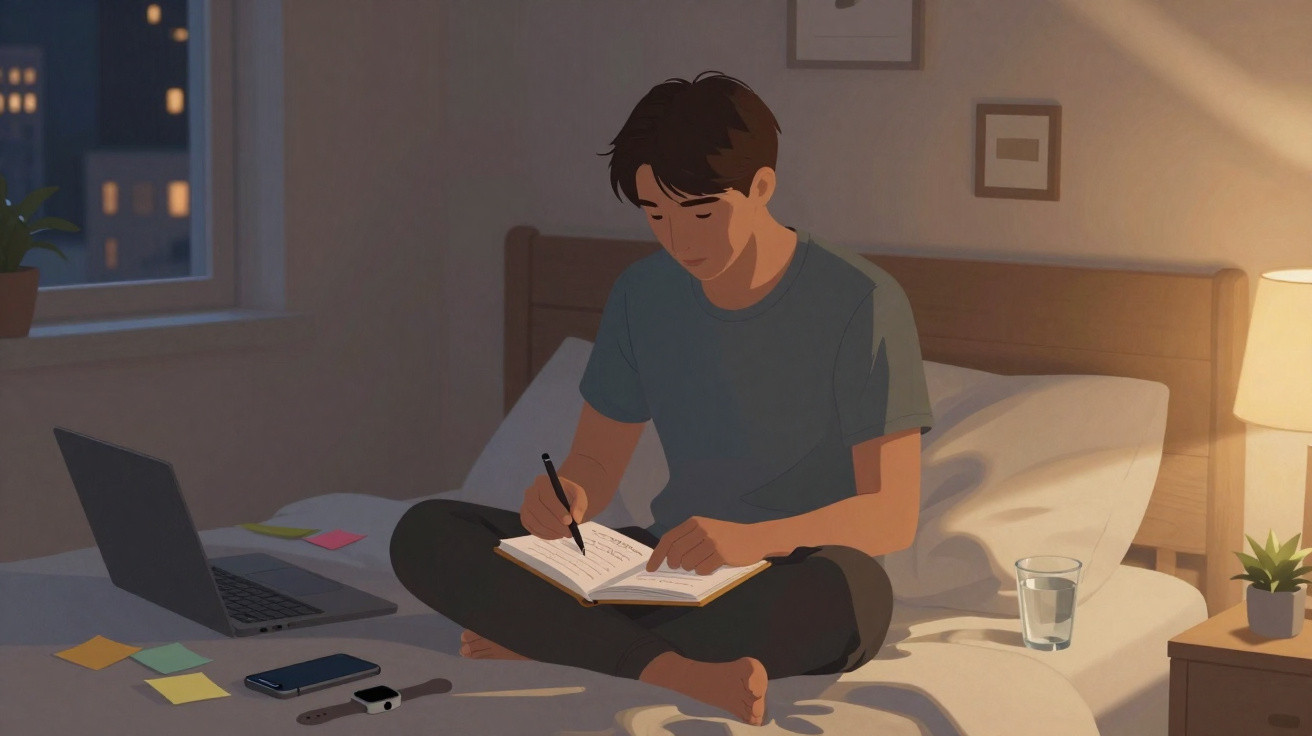
We are quick to blame poor sleep on our phones and laptops.
Yet an ordinary daily habit can disrupt our nights far more profoundly – often without us noticing.
People who put their smartphone aside in the evening may feel they have done everything right. No blue light and no flood of social media should mean better sleep at last. Even so, many still lie awake, wake repeatedly or feel exhausted in the morning. Recent insights from sleep research suggest that another, less obvious habit is undermining sleep – and it has nothing to do with screens.
What the brain really does at night
Although we appear motionless in bed, the brain is running an intensive programme. Roughly every 90 minutes, we move through different stages of sleep: light sleep, deep sleep and the so-called dream stage. Each phase has a distinct role for both body and mind.
- During light sleep, the body gradually winds down.
- In deep sleep, cells, muscles and the immune system recover.
- In the dream stage, the brain organises memories and emotions.
Structures including the hippocampus and amygdala are particularly active during the dream stage. They arrange the day’s experiences, create new connections between information and process emotional strain. This is where it is determined whether we begin the following day clear-headed and emotionally steady.
“Sleep is not an off switch, but a kind of overnight overhaul for the brain and body.”
Disrupting these internal processes – through frequent waking or a shifted routine, for example – unsettles this delicate interaction. We do not have to wait ten years to notice the consequences; they can be felt the very next morning.
The hidden sleep habit: carrying stress all the way to bed
The surprising finding from current analyses is that, in many cases, phone light is not the greatest sleep destroyer. Instead, it is how we deal with stress, particularly during the final hour before bed. The genuinely damaging habit is taking the day’s stress into bed without filtering it.
Common patterns include:
- Remaining mentally stuck at work (“What if I fail tomorrow?”)
- Quickly reviewing emails or to-do lists – even without a screen, purely in your mind
- Arguments or rumination immediately before trying to sleep
- Continually planning the next day instead of mentally winding down
The issue is not so much the activity itself as the physical response it triggers: stress hormones such as cortisol remain elevated, the pulse does not slow properly and the muscles stay tense. The autonomic nervous system does not switch into the resting state needed to move cleanly through sleep cycles.
“The most dangerous bedtime habit is mentally ‘carrying on working’ long after the laptop has been closed.”
Crucially, this stress loop can continue without a smartphone, television or laptop. Many people put every device away, yet the mental cinema keeps playing – and that is where the real problem begins.
How stress quietly damages the sleep rhythm
Persistent tension affects more than falling asleep; it can break an entire night’s sleep into fragments. Typical signs include:
- Frequent waking at around 3 or 4 am
- Sleep that feels “superficial”, with no genuine recovery
- Intense, unsettled dreams about work or everyday life
- Digestive discomfort or heart palpitations during the night
At these times, the body still tries to complete its normal cycles, but it is continually interrupted. Dream stages are shortened and deep-sleep periods remain too shallow. Internally, the outcome is clear: the day’s emotional processing is incomplete, while recovery falls behind.
This is when the risk rises for:
- Irritability and mood swings
- Suddenly nodding off at a desk despite trying to concentrate
- Frequent infections because the immune system is weakened
- Headaches and muscle pain in the morning
What dreams reveal about everyday life
Many people dismiss dreams as “random” or meaningless images. Sleep research has long taken a more nuanced view. Night-time scenes can often reflect whether we are overloaded or well balanced.
Examples from patient discussions reveal recurring patterns:
- Frantic chases or dreams of “never getting finished” often point to professional or organisational pressure.
- Repeated dreams of losing control frequently occur in people who have to function intensely during the day.
- Dreams that are barely remembered are common in extremely exhausted people whose overall sleep quality is very low.
Such content cannot replace a diagnosis, but it can offer clues: people who work in their dreams every night generally have too little real recovery during the day.
“Our dreams are often the body’s most honest commentary on our everyday life.”
What smartwatches can already show
Modern wearables, such as the Apple Watch or current Huawei models, now record sleep stages relatively accurately. They track movement, heart rate and, in some cases, temperature patterns. This creates a broad picture of when we slept lightly, deeply or experienced intense dreaming.
It becomes particularly interesting when users change their habits. Many report that simply cutting screen time before bed achieves less than consistently building in a stress brake during the evening. Their charts then show:
- Fewer periods of waking during the night
- Longer blocks of deep sleep
- A calmer heart rate in the early morning hours
The data are not perfect, but they reveal a pattern: what matters is whether your internal state tips towards alarm or relaxation before you fall asleep.
How to break the harmful habit
The good news is that this sleep-damaging habit can be addressed deliberately without turning your entire life upside down. A few practical adjustments are often enough to produce the first noticeable effects.
1. Set a fixed mental cut-off for problems
Choose a point in the evening, such as 90 minutes before going to bed. From then on, do not deal with work or organisational matters – either on a screen or in your thoughts. A short “parking space for thoughts” can help:
- Write down every unresolved task for tomorrow.
- Give each item the smallest possible next step.
- Fold up the note and put it away physically – symbolically taking it out of your mind.
The result is that the brain no longer needs to plan in bed, because clear markers for the next day already exist.
2. Establish a calming bedtime ritual
Rather than ruminating, the brain needs a repeated cue: “The day is over.” Simple routines that can provide this include:
- 10 to 15 minutes of quiet music or an audiobook at a moderate volume
- A book with uncomplicated content, rather than specialist reading or a gripping crime-story finale
- A brief breathing exercise, such as inhaling for four seconds and exhaling for six seconds
“The body remembers routines. When the same calm sequence happens every evening, switching into sleep becomes considerably easier.”
3. Avoid overstimulation late in the evening
It is not always the smartphone. Loud television programmes, heated discussions or intense exercise immediately before bed can also keep the nervous system on “alert”. Better options are to:
- Schedule demanding conversations for the afternoon
- Finish exercise one to two hours before bedtime
- Avoid bright lighting in the bedroom and use warm light instead
Why small changes can have major effects
The body responds extremely sensitively to routines. If stress levels remain high every evening until the moment you get into bed, the body becomes accustomed to this permanent state. Then even a minor trigger – an email, a thought or a sound – can wreck sleep.
Conversely, the brain also stores rituals of calm. Those who manage to turn down the internal noise an hour earlier give the night-time repair programmes a genuine head start. It is often enough for the first sleep stage to be noticeably more stable. The rest of the night benefits as a result.
Anyone who continues to experience severe sleep problems despite making changes, has intense nightmares or unexpectedly falls asleep during the day should seek medical advice. Physical conditions, breathing pauses or rare sleep disorders may lie behind these patterns.
For the vast majority, however, the main cause is closer than many would like to admit: it is not the smartphone that destroys sleep, but the persistent habit of failing to draw a clear line under the day. Understanding and deliberately breaking this mechanism gives the brain another chance at night to do what it does best: repair, organise and calm.

















Comments
No comments yet. Be the first to comment!
Leave a Comment