
Spain is dramatically expanding its traffic enforcement. Just in time for the Easter travel period, authorities are deploying a new arsenal against speeding: tiny laser speed cameras at the roadside, alongside helicopters and drones in the sky. Anyone relying on traditional fixed cameras or sat-nav alerts will be badly mistaken this year.
Mini laser speed cameras: a speeding trap in a rucksack
At the centre of the new approach is a radar device small enough to fit into an ordinary rucksack. Police can place the units on an unobtrusive tripod in the grass, attach them to the back of road signs or conceal them behind crash barriers. They can even be fitted to unmarked police cars.
"The devices use laser beams to measure a vehicle's speed from more than one kilometre away."
In practice, this means that by the time a driver notices the small box at the roadside, it is already too late. The unit will have taken several readings per second and recorded the vehicle's registration plate in high resolution.
Long, clear stretches of motorway and dual carriageway are among the favoured locations. These are precisely the places where many holidaymakers drive "just briefly" a little faster in the belief that they can make up time. Since the devices are so portable, their positions are changed regularly. This leaves navigation apps and community-based warnings struggling to keep up.
Why traditional speed cameras are becoming less effective
Regular visitors to Spain have long been familiar with the grey fixed camera columns beside the road. Many know the routes by heart, while navigation apps provide advance warnings. The result is predictable: drivers brake briefly, pass the camera slowly and then accelerate again.
Authorities want to disrupt exactly this behaviour. The new laser devices are intended to catch drivers unawares, particularly those who depend on habit and technology. Their tiny size also means they can be used on rural roads, where monitoring has often been lacking until now.
- Fixed camera columns: clearly visible and easy to anticipate
- Mobile laser devices: barely noticeable, with constantly changing locations
- Objective: consistently appropriate speeds rather than isolated braking
Traffic enforcement from the air: helicopters in silent mode
Drivers who think that constantly checking the hard shoulder will help them avoid enforcement are mistaken. Spain is also using a small fleet of helicopters equipped with high-performance cameras. They circle several hundred metres overhead and are generally inaudible to motorists.
"The cameras track vehicles over distances of around one kilometre and detect speeding drivers at speeds between 80 and 350 km/h."
The crew can monitor entire motorway sections, identifying excessive speed, tailgating and dangerous overtaking manoeuvres. Registration plates and speeds can be clearly documented from the air. A ground patrol does not need to be immediately nearby. This makes widespread checks possible, especially on days with heavy traffic.
Drones as a discreet addition
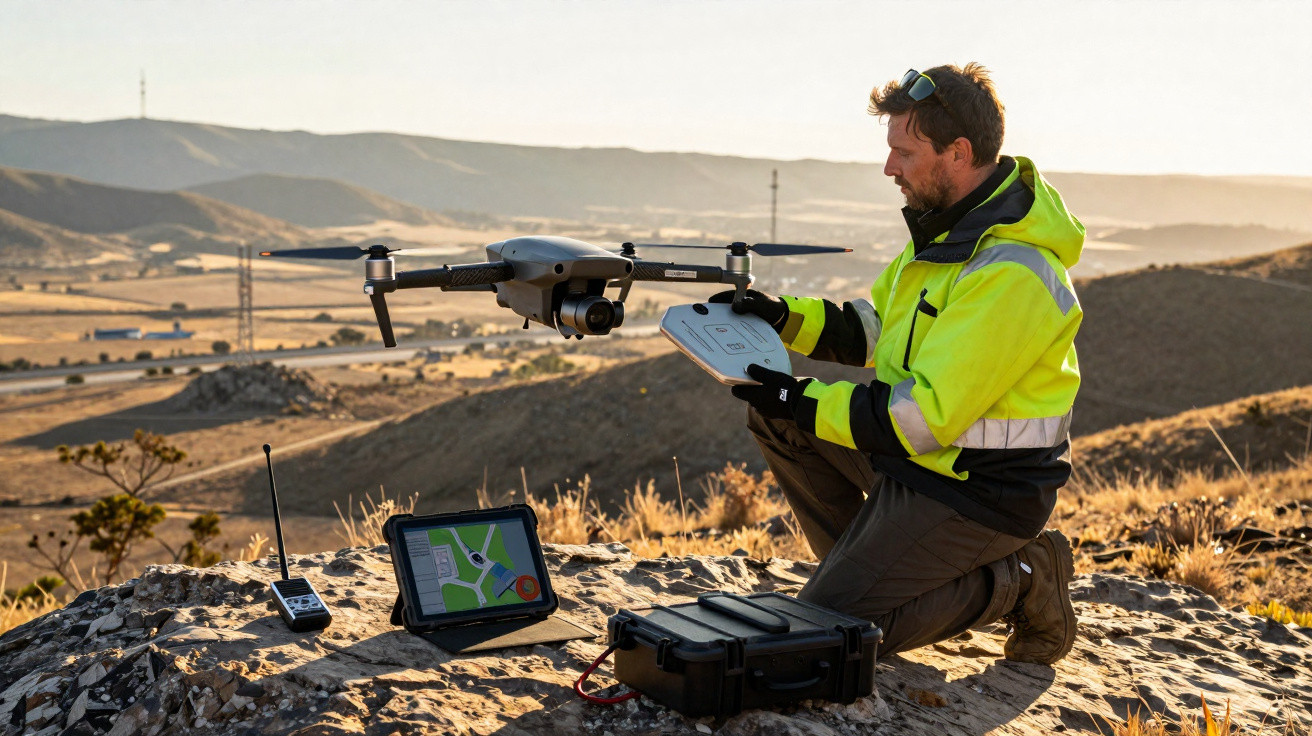
The helicopters are supplemented by a growing number of drones. Flying much lower, they are small, quiet and difficult to spot. They are used chiefly at motorway junctions, on urban motorways and on busy rural roads.
Although the aircraft can measure speeds only up to around 80 km/h and have limited flight times, their close-range optics are exceptionally sharp. They can identify drivers holding a mobile phone, not wearing a seat belt or carrying out prohibited manoeuvres.
"Part of the drone fleet is officially authorised to trigger fines directly from the air – without a check shortly after the exit."
Many motorists notice none of this. They pass an inconspicuous location, travel slightly above the limit and, weeks later, receive the penalty notice through the letterbox – often backed by aerial images.
Why Spain is tightening enforcement
Easter is one of Spain's most accident-prone periods of the year. Millions of people travel at the same time, and motorways become seemingly endless queues. Serious crashes repeatedly occur because drivers are fatigued, feel under time pressure or simply lose concentration on long, straight roads.
Authorities respond with a dense enforcement network that is stepped up days before the actual holiday weekend. The aim is not primarily to issue fines on a mass scale, but to create a clear deterrent: drivers who know they may be monitored virtually anywhere are more likely to reduce their speed.
| Measure | Deployment area | Objective |
|---|---|---|
| Laser speed cameras | Motorways, dual carriageways and rural roads | Detect speeding offences at an early stage |
| Helicopters | Long motorway sections | Identify speeding drivers and dangerous manoeuvres |
| Drones | Junctions and areas near cities | Document detailed offences, such as using a phone while driving |
What this means for holidaymakers from German-speaking countries
Anyone driving to Spain should prepare for this new reality. Relying solely on warning apps or advice from online forums can prove expensive. Depending on the speeding offence, fines can quickly reach three-figure sums, and considerably more for particularly high speeds.
The basic rules remain straightforward:
- Observe speed limits consistently
- Adjust driving to queues, wet conditions and heavy traffic
- Plan regular breaks on longer journeys
- Do not assume the road is clear simply because no camera column is visible
On long journeys from France through Spain towards the coast, the temptation to "make up a bit of time" is particularly strong. That impatience is exactly what the new system is designed to address.
How laser technology outsmarts speeding drivers
Many people still know older radar devices that depended heavily on the vehicle's position. Modern laser equipment works differently: it emits narrow beams of light and calculates speed from the travel time of the reflected signal. Because the system measures several times a second, it creates a kind of speed profile for the vehicle.
As a result, just a few seconds are enough to document an offence in a way that can stand up in court. Braking sharply shortly before a suspected speed camera achieves nothing if the vehicle was already travelling well above the limit and the measurement began at a greater distance.
Greater safety or simply more penalties?
Many drivers will question whether this type of surveillance remains proportionate. Critics speak of a "radar hunt", while supporters point to the high number of accidents on holiday weekends and along long-distance holiday routes.
The fact is that the heavier the traffic, the more serious the consequences when individual drivers travel substantially above the limit. Even an extra 10 or 20 km/h noticeably increases braking distance. During emergency braking in queues, this can determine whether an incident results only in vehicle damage or people are injured.
For travellers heading to Spain, the conclusion is simple: drive with foresight, take limits seriously and do not let a relaxed holiday mood encourage speeding. The new technology takes care of the rest – usually invisibly, but with great consistency.















Comments
No comments yet. Be the first to comment!
Leave a Comment