
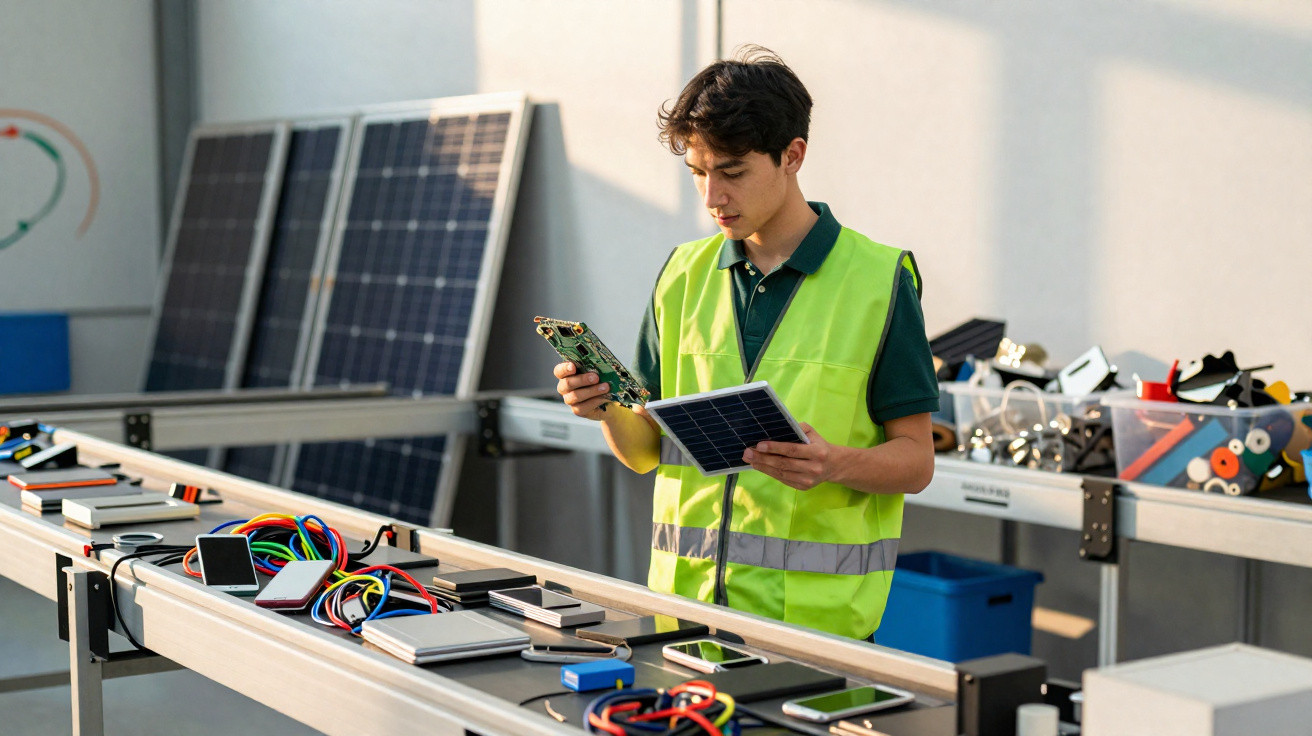
Sustainable management is moving forward at pace as clean technologies spread across modern Europe. Proper disposal of technology equipment is setting important new operational records, supporting crucial environmental targets for global protection and directly strengthening industrial reuse initiatives.
How did Recyclia achieve new records in 2025?
The Spanish organisation posted historic figures for the collection of electronic materials discarded by the public. The results underline an ongoing commitment to day-to-day operational efficiency, steadily and deliberately extending institutional environmental targets across several regions of the Iberian country.
Overall throughput showed strong momentum, rising by 28% in the most recent period. This marked advance reinforces the organisation’s leading position in the recycling sector, turning long-standing environmental challenges into tangible opportunities for the sustainable market.
Below are the main results and milestones reached by the institution during this landmark year:
- Volume managed: The organisation moved beyond the historic threshold of 98,000 tonnes of treated waste.
- Photovoltaic panels: Collections of this type of solar-capture equipment rose sharply.
- Electric mobility: The take-back of electric-vehicle batteries expanded very significantly nationwide.
- Electronic devices: The flow of everyday devices collected increased considerably across the country.
- Circular economy: Correct routing of these materials boosted the industrial reuse of valuable raw materials within the local economy.
What is the importance of RAEE recycling?
Proper handling makes it possible to reuse valuable metal components safely, substantially reducing the destructive extraction of scarce mineral resources from nature. Correct routing of waste electrical and electronic equipment (RAEE) also shields ecosystems from contamination by harmful chemical substances.
This structured process strengthens urban sustainability by preventing the uncontrolled build-up of technology waste in unsuitable landfill sites. It also drives essential public awareness around responsible consumption and environmental protection in today’s corporate landscape.
How do the organisation’s specialist foundations work?
The operating model is built around dedicated divisions focused on different technology market niches across the country. Each foundation works with a level of autonomy to optimise collection, sorting, and recycling for specific components, in line with current regulations.
| Operating models | Integrated foundations |
|---|---|
| Ecoasimelec, Ecofimática and Ecopilas join forces under central coordination to ensure maximum environmental efficiency when processing discarded items. This strategic alignment enables substantial investment in sorting infrastructure and large-scale public awareness campaigns throughout Spain. |
Multi-sector cooperation ensures annual collection targets are met precisely by the responsible technical teams. This shared effort supports ongoing technological innovation, embedding safe and efficient practices for the benefit of the global community.
The core roles of each of these workstreams are set out below:
- Ecoasimelec: Focused on managing large electrical and electronic equipment used in industry or the home.
- Ecofimática: Specialised in the safe collection of waste from obsolete office and IT equipment.
- Ecopilas: Dedicated exclusively to collecting and recycling used batteries and a range of portable accumulators.
Why do photovoltaic panels require special attention?
The global energy transition has significantly accelerated the installation of solar energy capture systems across rural and urban properties. Over time, this infrastructure begins to reach the end of its fully effective service life.
Planned collection of these structures prevents the uncontrolled accumulation of complex materials that could severely degrade the local environment. Recovering these industrial components also supports a steady supply of purified glass and silicon for new technology manufacturing.
The main benefits of treating these solar structures correctly include:
- Recovery of inputs: Efficient extraction of high-value raw materials such as silicon and high-purity silver.
- Reduced impact: A sharp decrease in the volume of bulky waste incorrectly sent to landfill.
- Boost to innovation: Development of new specialist metallurgical techniques to separate complex layers.
What are the next steps for the circular economy?
Sustainable progress depends on the development of strict public policies aimed at correct disposal of automotive components. Robust enforcement helps reduce the impact of where used batteries end up, ensuring valuable materials return safely to the industrial production cycle.
Embedding efficient environmental practices will positively reshape global electronic supply chains in the years ahead. This ongoing corporate commitment supports a balanced future for the next generations, reinforcing the essential harmony between continuous technological innovation and environmental protection.
Official source: Information obtained directly from Recyclia.





Comments
No comments yet. Be the first to comment!
Leave a Comment