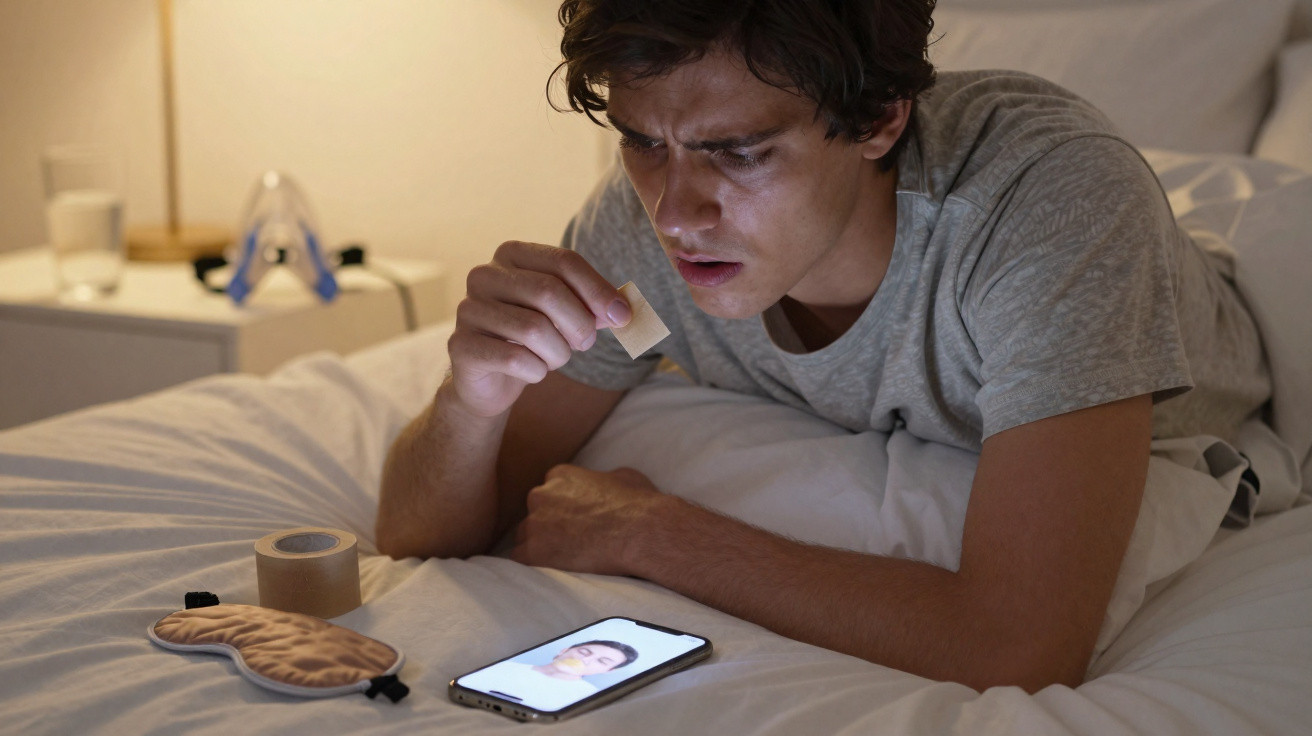
Millions of users on TikTok, Instagram and similar platforms are currently posting videos about an alleged miracle solution for better sleep: taping the mouth shut at night. Although it looks straightforward in clips and is presented as a clever wellness hack, sleep specialists are shaking their heads at the trend – and in some cases are genuinely concerned.
What lies behind the “Mouth Taping” trend
With so-called Mouth Taping, people place a plaster horizontally across their lips before going to bed, intending to force themselves to breathe through their nose while asleep. Influencers claim it can deliver a range of benefits: fresher breath, fewer cavities, improved sleep and even anti-ageing effects.
The theory is that breathing through the mouth dries out the mucous membranes. This may encourage bad breath and inflammation, and can make sleep more restless. Breathing exclusively through the nose is said to filter and humidify air more effectively, supposedly benefiting both the body and skin.
What supporters of the trend claim
- less bad breath because the mouth becomes less dry
- calmer, deeper sleep as a result of nasal breathing
- a lower risk of gum problems
- a supposedly “rejuvenated” complexion through improved oxygen supply
These claims appeal to many people, particularly because the trick is inexpensive, quick and easy to copy. The problem is that almost none of it has been scientifically proven so far.
Mouth Taping is marketed on social media as a health revolution, but it is largely based on personal accounts rather than robust evidence.
Why sleep specialists issue a clear warning about Mouth Taping
Sleep experts view the trend with considerable scepticism. One particularly outspoken critic is US sleep physician Raj Dasgupta, Professor of Clinical Medicine at the Keck School of Medicine at the University of Southern California. He explicitly advises people with sleep problems not to experiment with adhesive tape over their mouths without first seeking medical assessment.
His principal concern is that anyone with undiagnosed obstructive sleep apnoea could put themselves in serious danger by sealing their mouth. With this condition, the airways narrow repeatedly during sleep, breathing temporarily stops, oxygen levels fall and the cardiovascular system remains under continual strain.
Specific risks linked to the trend
- Worsened breathing with sleep apnoea: If the mouth is blocked, the body cannot switch to mouth breathing in an emergency. This can intensify breathing pauses.
- Risk of suffocation when the nose is blocked: When nasal passages are swollen, for example because of allergies or a cold, there is no “emergency exit” through the mouth.
- Skin irritation and allergies: Adhesive can irritate the sensitive skin around the lips and cheeks, causing redness, blisters or contact allergies.
- Anxiety and panic: Some people experience panic while asleep or on waking when they notice that their mouth has been taped shut.
Anyone who artificially restricts their breathing during sleep is directly interfering with one of the body’s most sensitive protective mechanisms.
New study: some benefit, but clear deterioration for others
A recent study published in the National Library of Medicine database adds further nuance to the debate. Researchers examined 66 people diagnosed with obstructive sleep apnoea. Baseline data were insufficient for 12 participants, leaving 54 cases for the final analysis.
Participants slept with monitoring equipment while periods with their mouths open and closed alternated. This allowed the researchers to compare how airflow in the airways behaved in each situation.
Key findings from the research
- Participants: Adults with already diagnosed sleep apnoea
- Method: Breathing was measured while participants alternated between sleeping with and without their mouths closed
- Overall findings:
- People who already breathed mainly through their nose and had anatomically unobstructed airways sometimes showed slightly more stable breathing.
- Participants with narrowing in the throat area (velopharyngeal obstructions) breathed markedly worse with their mouths closed.
- Responses varied enormously, depending on the anatomy of the upper airways.
Above all, the study demonstrates that a blanket recommendation either for or against Mouth Taping does not work. The anatomy of the nose, palate and throat is hugely important, and only a specialist can assess it reliably.
What appears to “work wonderfully” for one influencer can be extremely dangerous for someone else with different anatomy.
When extra caution is needed
Several groups of people may face particular risks from this viral sleep hack. Anyone who recognises themselves in one of the following points should avoid the tape and seek medical advice instead.
- known or suspected sleep apnoea (loud snoring, breathing pauses, extreme daytime sleepiness)
- a chronically blocked nose, for instance because of allergies, polyps or a deviated nasal septum
- asthma or other respiratory illnesses
- cardiovascular disease, where fluctuations in oxygen levels may be problematic
- frequent nightmares, panic attacks or a strong feeling of confinement in enclosed situations
Anyone who remains interested in trying it despite these warnings should at least arrange an appointment with a sleep medicine clinic or an ear, nose and throat specialist. They can establish whether there is anatomical narrowing or sleep apnoea.
Safer alternatives for better sleep
Many people reach for tape simply because they want to feel more rested. Fortunately, there are numerous much safer approaches that have stronger scientific support.
Established strategies instead of adhesive strips
- Improve sleep hygiene: Keep consistent sleeping hours, make the bedroom dark and avoid bright mobile phone light in bed.
- Reduce alcohol: Alcohol makes snoring worse and promotes pauses in breathing.
- Avoid sleeping on your back: Sleeping on your side can reduce snoring and milder breathing disturbances.
- Lose weight: Even losing a few kilograms can significantly reduce strain on the airways.
- Have nasal problems treated: Chronic congestion belongs with a doctor, not beneath adhesive tape.
Anyone who regularly wakes up feeling exhausted should address these factors first, before experimenting with tape or other extreme ideas.
Why social media distorts health advice
One reason Mouth Taping has spread so rapidly is that complex issues cannot be presented with sufficient nuance in short clips. A before-and-after video creates an immediate emotional response, but it does not offer a realistic picture of risks, underlying conditions and exceptions.
Some influencers also profit from the trend directly or indirectly. They promote specialist plasters, sleep masks or entire coaching programmes focused on “optimised breathing”. Critical voices pointing to side effects receive less reach and disappear in the algorithm.
Health trends go viral because they sound simple. The human body is anything but simple.
What terms such as sleep apnoea and nasal breathing actually mean
Many videos talk about “better breathing”, but barely explain what is happening in the body. A brief look at two key terms can help people assess their own situation more realistically.
Sleep apnoea explained briefly
In obstructive sleep apnoea, the throat repeatedly collapses during sleep. The tongue moves backwards, tissue relaxes and the airways become partly or completely blocked. Those affected snore loudly, sometimes gasp for air, and wake early with a dry mouth and headaches. Over the long term, the risk of high blood pressure, heart attack and stroke increases.
The role of nasal breathing
Nasal breathing does have clear benefits: air is warmed, humidified and roughly filtered before it reaches the lungs. This reduces the burden on the bronchial tubes and lungs. However, people who struggle to breathe through their nose because of their anatomy cannot simply force these benefits by using a plaster. In such cases, medical diagnostics are needed, such as an examination of the nose with a scope or a sleep laboratory assessment.
A conclusion without a conclusion: when the trend can go wrong
Mouth Taping may be harmless in the short term for a small number of people with healthy airways and a clear nose. At the same time, current research shows that others experience a marked deterioration in their breathing during sleep. Without an examination, it remains entirely unclear which group a person belongs to.
So, anyone considering copying TikTok clips should ask themselves one simple question: would I be willing to use a medicine with completely unclear benefits and unknown side effects every evening – simply because an influencer enthuses about it? When it comes to adhesive tape over the mouth, the answer is ultimately the same.
















Comments
No comments yet. Be the first to comment!
Leave a Comment