
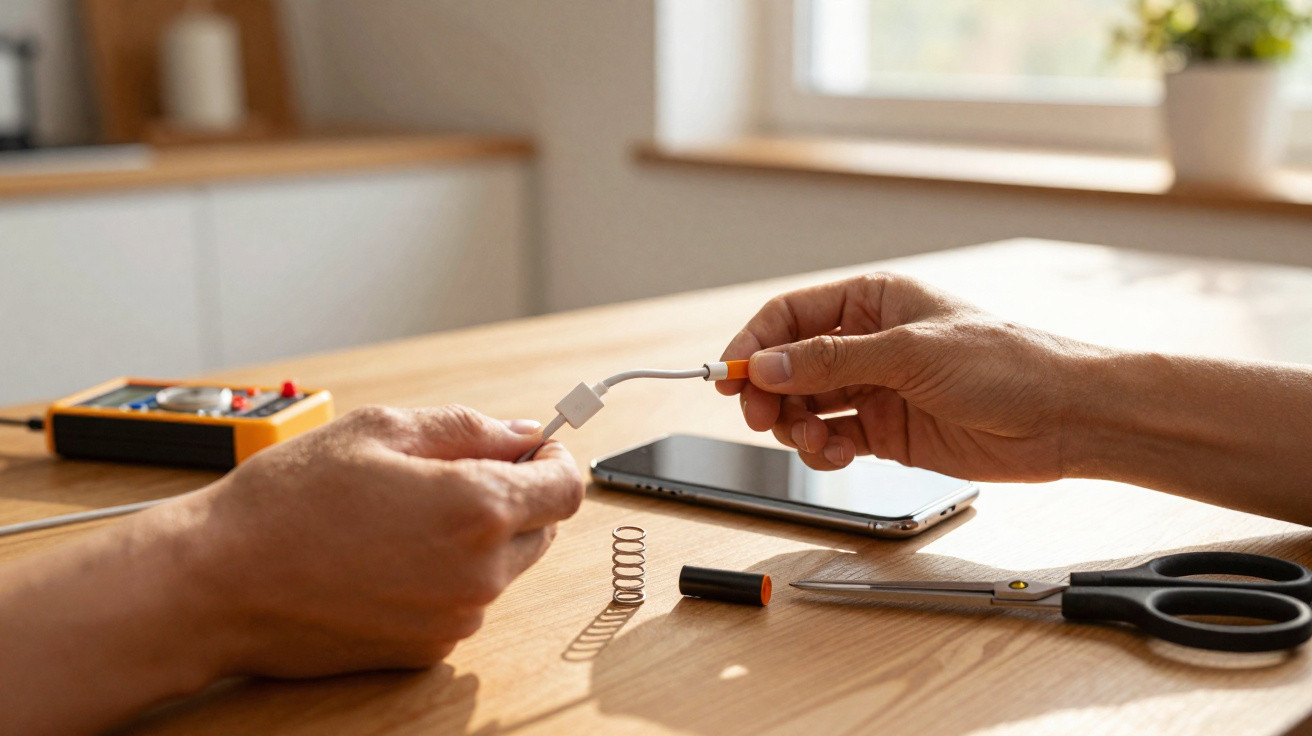
Mobile phone charging cables tend to wear out right by the connector, where the lead is bent and flexed most during everyday use. Often the plastic sheath splits, the inner wires become exposed and the accessory ends up going straight in the bin. With a few basic precautions and simple materials, however, you can significantly extend the life of this type of cable-keeping charging working safely and cutting down on electronic waste.
How can you restore a damaged phone cable with simple materials?
If the damage is limited to the outer covering and the internal wires have not been fully severed, you can still rebuild the cable’s protection at home. The key aim is to create proper insulation and solid support around the vulnerable section, helping to prevent overheating and short circuits.
One widely used approach relies on cotton thread and fast-drying glue. Start by wrapping the cracked or slightly torn area with a band of electrical insulating tape. Next, wind the thread tightly around the taped section in firm turns. Finally, add a few drops of glue to form a hard outer shell, which helps stop the cable jacket from splitting further.
How do you finish off the repaired charging cable?
Once everything has dried completely, it is worth doing a small finishing step to improve handling and help the repair last longer. Carefully trim any excess thread, then wipe the outside with a cloth lightly dampened with isopropyl alcohol.
This cleans away glue residue, oils from your hands and built-up grime, giving the repaired charger a more consistent appearance. During the first few uses, keep an eye out for rough patches, fresh cracks or any sign of unusual heating.
How can you reinforce a damaged phone cable with a spring and heat-shrink tube?
Another handy method for repairing-or preventing-damage combines a metal spring, hot glue and heat-shrink tube. The goal is to create a flexible but tough support that spreads bending forces more evenly around the connector.
The method starts with a small spring, commonly taken from ballpoint pens, opened slightly so the cable can pass through. To keep the process organised and reduce mistakes, follow this basic sequence:
- Screw the spring onto the section near the connector, covering the most critical point.
- Apply a thin layer of hot glue over the spring, filling any gaps.
- Slide a piece of heat-shrink tube over the reinforced section.
- Warm it carefully (for example, with a lighter held at a distance) until the tube shrinks tightly into place.
This protective “cocoon” helps reduce the damage caused by tugs and sudden movements right where the wire most often breaks. Many people use the same fix even on brand-new cables as preventive reinforcement to extend the accessory’s lifespan.
What safety and prevention steps should you take with a damaged charging cable?
When dealing with any damaged charging cable, always unplug it fully from both the mains and the device before you touch it. If there is a burning smell, sparks, heavily blackened areas or excessive heat, the safest option is to dispose of the cable at an electronic waste collection point rather than attempting a repair.
If you do choose to fix it, use electrical-grade insulating tape, apply only a small amount of glue so it does not reach the connectors, and wait for full drying before testing it with a power source that has short-circuit protection. For prevention, avoid tight bends, do not pull your phone by the cable, use simple organisers, and do not leave the device hanging supported only by the lead-small habits that make a real difference day to day and can postpone the need to buy a new charger.




Comments
No comments yet. Be the first to comment!
Leave a Comment