
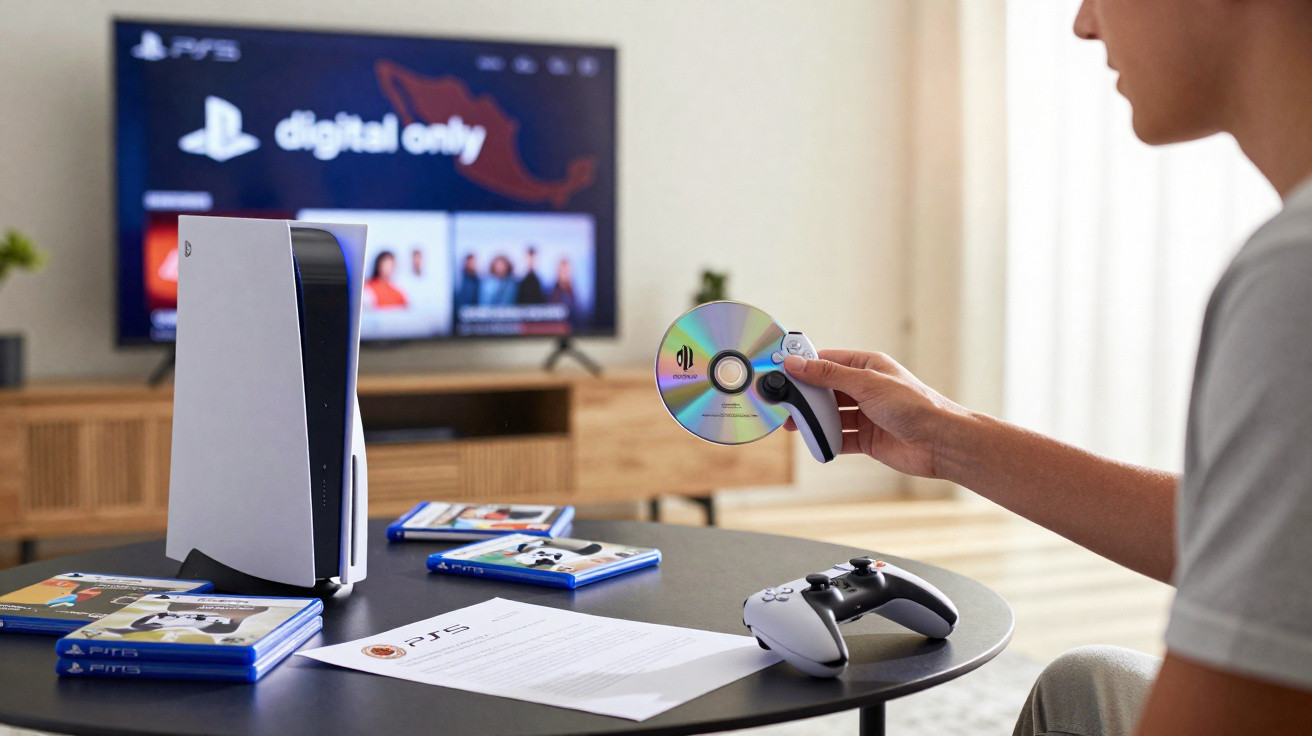
Sony has announced the end of physical PS5 games, a move that has angered players. In Mexico, parliamentarians are preparing to file a complaint over alleged anti-competitive practices.
Sony appears unwilling to back down in the face of player backlash, but will it yield to the law? On 1 July, the Japanese company announced that it would completely end physical game production from January 2028. The abrupt decision has enraged players and also raised questions about its commercial practices.
Mexico challenges Sony over physical PS5 games
The issue now extends beyond gaming and has become a fully fledged political matter. According to Level Up, two Mexican parliamentarians, MP Iraís Reyes and Senator Luis Donaldo Colosio, have said they will lodge a complaint with Mexico's Federal Court to investigate what they consider an anti-competitive practice.
Luis Donaldo Colosio is particularly concerned about the consequences of such a decision, which could lead to the disappearance of physical retailers, still widely present in the country:
“Retailers such as Liverpool, Sanborns and GamePlanet (editor's note: local chains) would no longer be competing to sell new video games, while the huge second-hand and game-trading markets would also disappear. Consumers would stop truly owning their video games. With digital distribution, you no longer buy a game in the traditional sense; you buy a licence, meaning access to the content depends entirely on the terms set by the company.”
Can a government force Sony to change course?
Luis Donaldo Colosio highlights two major issues. The death of the disc would mean the end of the second-hand market and, consequently, specialist shops. It would also allow Sony to take complete control of its pricing. With a single digital storefront, prices would be set by the manufacturer alone. Bargains? Gone. Players would have to pay full price to play.
PSN access and an international response
In addition, ending discs would disadvantage many markets that simply do not have access to PSN. This applies to numerous countries in Africa, Asia and the Middle East, as well as certain European territories, including Andorra and Albania.
It would be surprising if the complaint filed in Mexico were to make Sony reverse its decision, but it could spark a wider international movement. While Europe has acknowledged its lack of power on the matter, some local politicians have taken up the issue, particularly in France. This includes La France Insoumise candidate Jean-Luc Mélenchon, who wants to open the case if elected. In the Netherlands, a consumer association has announced that it will take Sony to court.
However, no government has yet imposed any binding measure on the Japanese giant. Will Sony give in to the backlash?






Comments
No comments yet. Be the first to comment!
Leave a Comment