
Standfirst – Laptops are becoming slimmer, more dependent on AI and, oddly, noisier.
One company aims to quieten them using something much more unusual than a fan.
Rather than forcing extra air through larger blowers, a young firm based between Newark and Madrid intends to cool future machines using a layer of ionised gas just a few hairs thick.
From noisy fans to near-silent plasma wind
Anyone who has used a high-performance laptop will recognise the point at which it begins to sound like a travel hairdryer. Its fans accelerate, hot air pours from the vents, and performance can fall as the system throttles to prevent overheating.
That sound points to a wider issue. As AI tasks expand, processors consume more power, even as laptop chassis continue to become smaller. Air channels are reduced to narrow gaps, dust accumulates, bearings deteriorate and fans can fail well before the rest of the hardware reaches the end of its life.
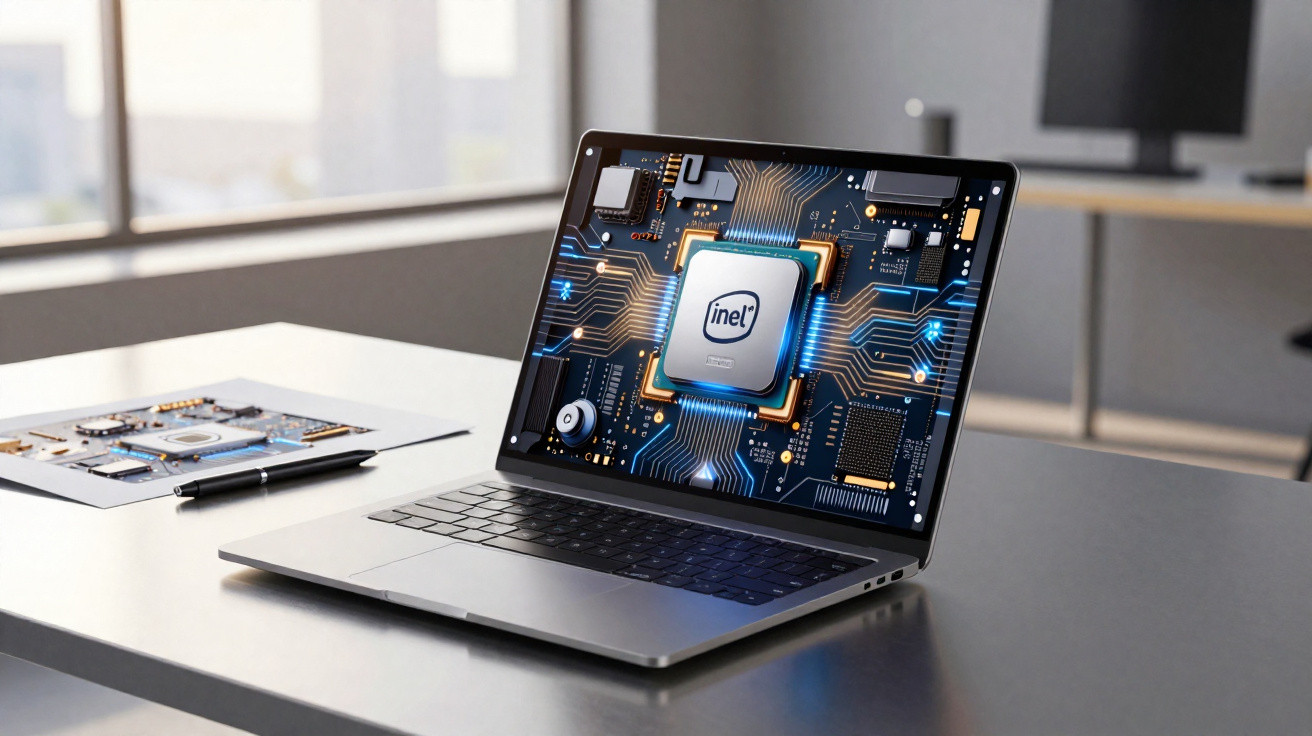
YPlasma, a start-up working between Newark in the US and Madrid in Spain, intends to end that cycle by eliminating the fan altogether. Its prototype laptop, revealed ahead of CES 2026 in Las Vegas, uses dielectric barrier discharge, or DBD, to create airflow without blades or other moving components.
The device uses “cold plasma” to generate an ionic airflow at around 17 dBA, roughly the sound level of rustling leaves on a quiet evening.
Rather than rotating a rotor, the technology directs air through electric fields. The intended result is cooler chips, lower noise and longer-lasting hardware, as there are virtually no mechanical parts to wear down.
How a 200-micron film cools a hot processor
A laboratory actuator made small enough for a laptop
At the heart of YPlasma’s method is a flat “plasma actuator” that resembles an adhesive label more than a conventional cooling solution. At roughly 200 microns thick, the film is about five times thinner than a human hair. Engineers attach it to a heat spreader or an internal chassis panel, where hot air is most likely to become trapped.
This ultra-thin structure contains two electrodes separated by a dielectric layer. When a high-voltage alternating signal is applied, a fine layer of air on its surface becomes plasma. Charged particles accelerate across that surface, pulling neutral air molecules with them and producing a directed flow called ionic wind.
That airflow disrupts the warm layer of air that sticks to metal components and normally acts as insulation. By agitating this boundary layer, the film improves heat transfer between the hot surface and surrounding air, much as a fan would, without requiring anything to spin.
- No rotors, bearings or shafts
- Airflow produced directly by electric fields
- Cooling output adjusted through voltage and frequency
- A form factor slim enough for ultrabooks and tablets
The same actuator can also heat, not just cool, when the polarity and control strategy change, giving designers a dual-purpose thermal tool.
Why DBD does not mean ozone in your living room
Airflow generated by plasma is not an entirely new concept. Earlier “ionic breeze” products used corona discharge around metal needles. Although they moved air, they often created ozone, an irritant gas that regulators and consumers found unsuitable for indoor settings. Their pointed metal tips also degraded under strong electric fields, reducing their useful lifespan.
DBD systems operate another way. At least one electrode is separated from the plasma region by a dielectric layer. This barrier stops the discharge developing into a spark or arc, keeping the plasma “cold” and comparatively mild. According to the company, this approach limits ozone generation to levels within typical indoor safety limits.
Durability is another important consideration. Since the electrodes are protected behind the dielectric layer, they do not deteriorate in the same manner as exposed metal needles. YPlasma says its actuator should survive for the life of the laptop, without replacement filters or fan bearings that can fail.
DBD cooling means: no fan intake, less dust clogging, almost zero maintenance and fewer mechanical points of failure.
Beyond the CES 2026 showpiece laptop
Why this technology is appearing now rather than ten years ago
DBD actuators have been used in aerospace laboratories for years. NASA and various research teams have employed them in wind tunnels to modify airflow over wings and turbine blades. They could postpone stall, lower drag or reduce flap noise, but the equipment remained large, energy-intensive and costly.
The arrival of AI-intensive chips alongside increasingly thin enclosures has created a new reason to miniaturise the technology. YPlasma’s work is less about uncovering a new physical principle than packaging it differently: kilogram-scale laboratory equipment has been converted into a flexible film more like a smartphone sticker.
The company also links its proposition closely to the AI boom. Modern CPUs and GPUs can raise their thermal output substantially when running large language models or local image-generation tasks. In premium ultrabooks, traditional fan-based cooling is already approaching its acoustic and mechanical limits.
YPlasma frames its actuator as “a space-grade cooler for your laptop” in an era where AI loads can turn thin machines into pocket radiators.
Target markets: from gaming machines to electric vehicles
Although the prototype laptop will be the centrepiece of YPlasma’s CES 2026 appearance, the company is clearly looking beyond notebooks. The same slim, flexible film can be applied to unusually shaped surfaces where a fan simply cannot be accommodated.
Possible applications include:
- Gaming laptops and handheld consoles, where fans already struggle to keep chips within their performance envelope.
- Compact servers and edge AI boxes installed in cupboards or telecommunications cabinets with restricted airflow.
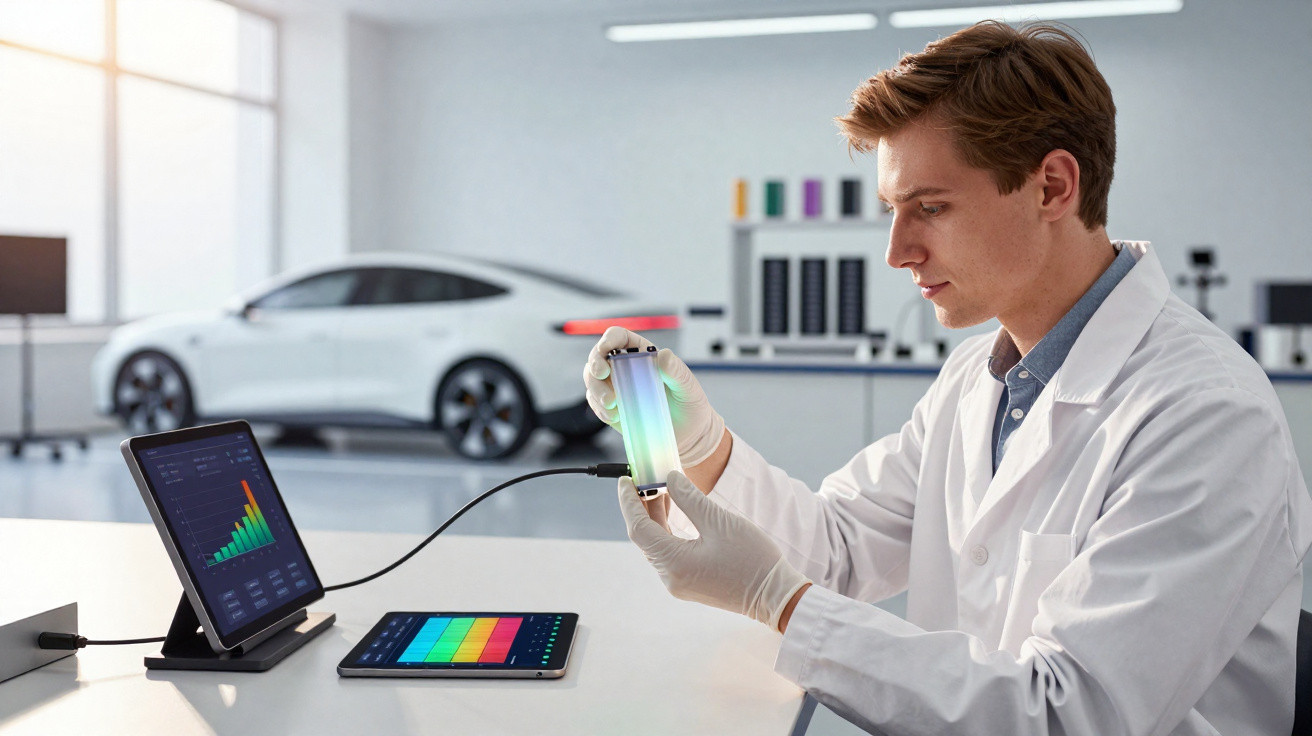
- Electric vehicles, where battery packs, inverters and cabin electronics occupy limited thermal space.
- Drones and small satellites, which cannot devote much volume or power to moving parts but must withstand severe temperature changes.
- Industrial sensors used in pipelines or remote infrastructure, where maintenance visits are extremely expensive.
In cars and aircraft, DBD actuators may offer benefits beyond cooling. Altering airflow across a vehicle body or wing surface can reduce aerodynamic drag. Even modest reductions in drag can translate into significant energy savings over thousands of operating hours, making the prospect attractive to airlines and fleet operators.
A quick look at what DBD brings to laptops
| Aspect | Traditional fan cooling | DBD plasma cooling |
|---|---|---|
| Moving parts | Rotor, bearings, motor | No moving mechanical parts |
| Noise level | Clearly audible under load | Near-silent, around 17 dBA |
| Dust accumulation | High, needs cleaning | Lower, no intake fan |
| Form factor | Requires fan cavity and vents | Fits as a thin film on surfaces |
| Maintenance | Risk of fan failure or noise increase | Designed for lifetime operation |
What this could change for future devices
Design freedom and new thermal strategies
Should the technology enter mass production, it could give laptop designers new choices. Airflow could be directed along the full length of a chassis rather than concentrated around one fan. Actuators could also be placed directly beside the hottest chiplets or memory stacks, instead of depending on a central blower and heatpipes.
Slimmer devices may be able to retain performance for longer, as the system would no longer compromise acoustics whenever a chip experiences a thermal spike. A laptop that appears fanless could still shift a considerable amount of air, only in a flatter and quieter manner.
There is a sustainability benefit too. Fewer mechanical faults could mean fewer devices discarded because a fan has seized. Reduced dust intake may also slow performance decline over several years. Manufacturers could potentially cut the number of vents and openings, improving resistance to liquid spills and simplifying the creation of rugged devices.
Challenges and open questions
The concept still presents practical uncertainties. Users will want to understand how efficiently DBD performs against a conventional fan using the same amount of power. Engineers will need to demonstrate that its electric fields do not disrupt radios, sensors or adjacent chips on densely packed circuit boards.
Regulators could also examine long-term ozone and nitrogen oxide production in enclosed environments, even if emissions remain low. In addition, producing high-voltage thin-film devices at laptop scale will require dependable quality control to prevent faults that might suddenly stop cooling.
There is a user-experience issue as well. People expect to hear fans when a computer is working hard. Initially, a silent laptop running demanding tasks could feel unsettling. Manufacturers may need fresh visual signals or software indicators to show that cooling is functioning correctly, despite no rotor spinning up.
For the moment, the CES 2026 prototype is a public trial: can a plasma-cooled laptop persuade consumers and major OEMs that the era of whirring fans has reached its limit, and that future airflow may come from an almost invisible film instead of an unmistakably audible fan?














Comments
No comments yet. Be the first to comment!
Leave a Comment