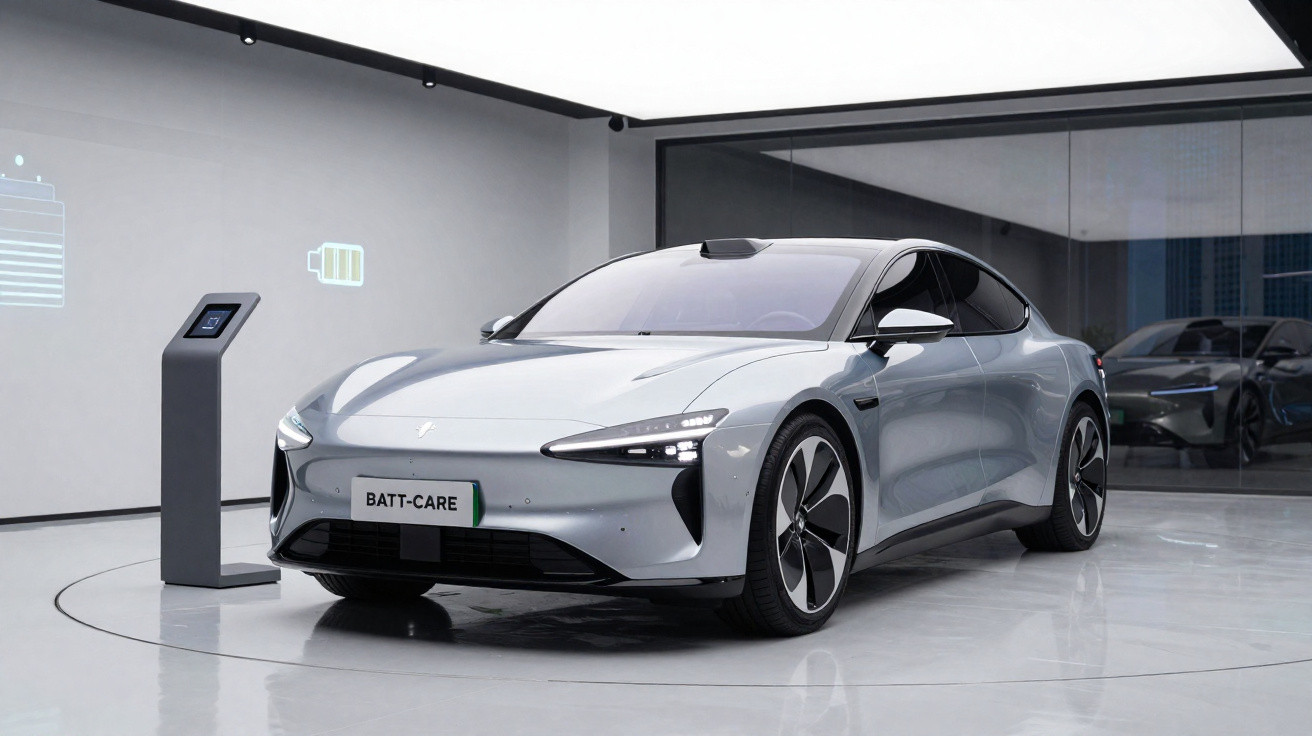
Two motorists, each rushing and convinced they had done nothing wrong. One had left his SUV straddling the white line, its front pressed against a concrete wall and its rear exposed to full sun. The other drove around, muttered an insult, then chose a space beneath a tree at the other end, grumbling about “idiots who don’t know how to park”.
To most people, it was simply an everyday dispute over parking etiquette. Beneath the bonnet, however, both vehicles faced a less obvious issue: rising heat, ageing cells and minute chemical reactions continuing unchecked. Where you park is not only a matter of convenience or courtesy. It can gradually alter your battery’s lifespan.
Some drivers make the same unseen error every day.
How the way you park slowly kills your battery
Walk along almost any residential street late in the evening and the pattern becomes clear. Cars are squeezed close to walls, pushed into hedges or left with their bumpers nearly touching warm brickwork. Often, drivers park this way because it is routine or because space is limited. They turn the car off, connect a charging lead or leave the cabin lights on briefly, then head indoors.
Meanwhile, the battery remains in a hot enclosed area or continues to suffer a steady electrical draw. Across months and years, these minor pressures accumulate. The vehicle starts as normal-until one cold morning, when it does not start at all.
An EV owner on a quiet Birmingham suburban street discovered this first-hand. He habitually left his electric hatchback with its rear towards a south-facing brick wall. In heatwaves, the wall acted like a radiating panel, reflecting heat towards the battery pack every afternoon. By charging overnight in this warm corner, he believed he was looking after the car.
After three summers, its range had fallen by almost 20 %. A warranty inspection found no clear fault. Instead, it identified accumulated thermal stress caused by frequent exposure to high temperatures while the vehicle was parked and charging. A single parking routine, repeated hundreds of times, had gradually reduced battery health.
Studies from battery laboratories and EV manufacturers reach a similar conclusion. Elevated temperatures accelerate chemical activity in both 12 V and high-voltage batteries. Deep discharge during parking, continual small drains from electronics and heat pockets around the vehicle all raise internal resistance and contribute to wear. Parking nose-to-wall in a sun-heated space, or leaving a car for weeks with little charge remaining, encourages these processes.
Drivers of petrol and diesel cars can fall into the same pattern. Short journeys, headlights left switched on and front-first parking beneath a metal carport that heats the bonnet all take their toll. On paper, the battery may appear healthy. In practice, it is being slowly overheated where the car stands.
Parking habits that protect – or punish – your battery
One of the most damaging habits for battery health is leaving a car in direct sunlight for extended periods, particularly with the front facing the sun. In many vehicles, the battery is located behind the grille and above heat-retaining concrete. Add charging or powered accessories-a dashcam, phone charger or an alarm repeatedly searching for a signal-and several sources of stress are combined.
A modest adjustment can make a difference. Whenever possible, favour shade over a shorter walk. Choose a spot under a tree, on the shaded side of a building or somewhere with good ventilation. On exceptionally hot days, EV owners should avoid leaving the car connected at 100 % in full sun. These quiet parking periods have far more influence on future range than the occasional motorway rapid charge.
Another overlooked factor is the electrical state in which you leave the vehicle. On tight urban streets, drivers often stop close to the kerb, switch off the engine but leave the ignition in accessory mode. The music continues, the fan remains on and the phone keeps charging. Ten minutes becomes 30 minutes, followed by a remembered interior light. It may look harmless, yet the battery is being gradually drained.
On a winter morning, that partially depleted battery receives a double blow. Cold thickens the oil, slows chemical reactions and makes the starter motor demand a substantial burst of power. This is when a battery that was “weak, but still starting” can suddenly fail. The situation differs for EVs but remains connected: leaving a car for weeks partly charged in an exposed freezing location speeds up degradation in certain cell chemistries. The place where it is parked becomes part of the cause.
The underlying principle is straightforward. Batteries are like people: they dislike extremes and prolonged, unnoticed strain. Heat, deep discharge and continuous load while parked alter the cells’ internal structure. Small deposits form on electrodes, separators deteriorate and capacity steadily declines. Your parking choices determine how often the battery is subjected to these unfavourable conditions.
Parking nose-out in shade with a comfortable state of charge provides a more forgiving setting. Leaving the vehicle pressed against a hot wall, beneath a glass-roofed carport or in an airport long-stay car park at 5 % charge has the reverse effect. There is no spectacle, smoke or warning light-only a battery reaching the end of its life sooner than necessary.
Small parking tweaks that add years to your battery
One of the simplest changes is to think “cool and breathing” when choosing a parking space. Where there is an option, select somewhere with airflow around the front of the vehicle. Keep some distance from walls, fences and hedges that hold in heat, particularly if the battery is positioned at the front. If possible, park so that the least surface area is exposed to direct afternoon sunlight.
For EVs, try to get home with around 30–60 % charge and leave the car at that level if it will be parked for many hours. Charge nearer to departure rather than keeping it at 100 % overnight in a poorly ventilated garage. Your battery ages fastest when it’s both hot and full. A small routine change-charging early in the morning instead of immediately after a hot journey-can make a subtle difference over thousands of days.
There is also the practical reality: nobody has the time or mental energy to act like a laboratory engineer every time they park. On a wet evening, most people simply want to fit into the first available space and get indoors. Let us be honest: nobody really does this every day. Still, a handful of easy habits, followed reasonably often, can be enough.
Avoid leaving a vehicle with an almost empty battery for a long period. For petrol or diesel cars, that means not abandoning one for weeks after several short journeys with light electrical drain. For EVs, avoid leaving them at 5–10 % in an outdoor airport car park during high summer or deep winter. Most of us have experienced the sinking feeling when a car barely starts. The story often begins quietly where it was parked.
“Battery health isn’t lost in one dramatic moment,” explains an independent EV technician from Manchester. “It’s chipped away by tiny habits – where you park, how hot the car sits, how charged it is when it rests. Most drivers only notice when it’s already too late.”
To make that practical, here is a quick checklist to remember without becoming fixated on it:
- Prioritise shade or airflow over the space closest to the entrance.
- Do not press the front of the car against hot walls or park it in narrow, enclosed corners.
- For EVs, aim to let the car sit at around 30–60 % during long parking periods.
- For every type of car, avoid leaving accessories running in “ACC” mode for long periods while parked.
- Before travelling away for a long time, leave the car with a healthy charge somewhere that will not unnecessarily bake or freeze it.
Why this quiet habit might matter more than you think
Parking may seem insignificant beside buying a car or paying insurance, but a vehicle spends 90 % of its life stationary rather than moving. Those quiet hours on driveways, pavements and beneath metal roofs determine a substantial part of how long a battery remains capable. Small parking decisions build up, like unread messages, until they eventually demand attention.
Once you notice the issue, examples appear everywhere. There is the neighbour whose EV remains fully charged in direct sunlight all summer. The commuter who parks front-first against a south-facing brick wall, leaving the bonnet too hot to touch after work. Or the small-business van kept beneath a transparent plastic canopy, with batteries failing every two winters. None is “doing anything wrong” in any dramatic way. They are simply repeating a subtle source of stress each day.
This is where the issue becomes more interesting. It is not only about avoiding the cost of a replacement battery or getting a few additional miles of range. It concerns how we treat the machines on which we now depend almost as much as our phones. Do we run them until they fail and protest, or adopt the small routines that allow them to age more gracefully?
Adjusting the way you park does not call for a new device or costly charger. It involves checking the sun, considering the heat and giving the front of the vehicle some room for air to circulate. It means planning charging around your daily routine rather than impatience. It means recognising that the hours a car spends stationary matter, rather than treating them as wasted time.
Perhaps that is the real change with modern vehicles and batteries. The drama is no longer necessarily on the motorway, with steam rising on the hard shoulder. It lies in the quiet, routine choice of where and how you leave the car at day’s end-and what that decision gradually does to the heart of its power.
| Key point | Details | Why it matters to readers |
|---|---|---|
| Avoid parking nose-first against hot walls or fences | Parking with the front close against brick or metal can trap hot air from the engine bay or surrounding environment near the battery. On sunny days, walls send additional heat back towards the vehicle, particularly during late afternoon. | This produces a higher average battery temperature, accelerating ageing and potentially taking years off battery life, especially where a car is parked this way every working day. |
| Choose shade and airflow over the closest space | Spaces beneath trees, on the north side of buildings or in open, breezy areas keep the cabin and battery cooler. Even a reduction of a few degrees, repeated daily, lowers thermal stress. | Choosing the slightly more distant shaded space may mean fewer summer breakdowns, improved EV range and a battery that retains charge more reliably in winter. |
| Don’t leave EVs parked full or nearly empty for long periods | Modern EVs perform best when left at roughly 30–60 % charge. Parking for days at 100 % in heat, or below 10 % in any weather, puts strain on cells and hastens capacity loss. | Keeping an EV in a middle “resting zone” while it is parked for days helps retain range, postpones costly degradation and makes software range estimates more accurate. |
















Comments
No comments yet. Be the first to comment!
Leave a Comment