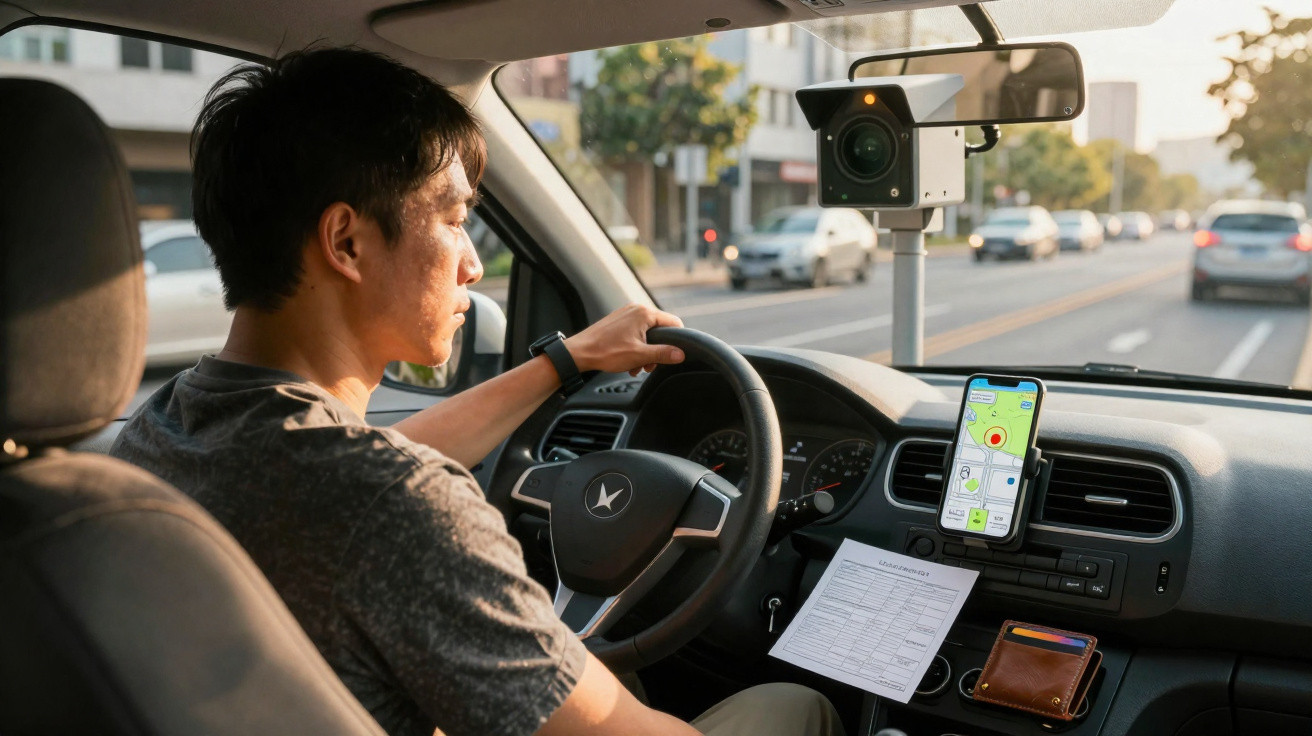
It begins with a brief flash that barely registers. It is a grey morning on the ring road, the wipers are squeaking and the children are bickering in the back. You look at the speedometer: the needle sits just above the limit, as it does for many motorists when traffic is moving freely. A week later, an envelope lands on the doormat. It is not a warning but a fine, with no officer and no discussion-only an amount to pay and a reference to the new 2025 speed camera tolerances.
You run through the journey again in your mind, caught between guilt and frustration. You were not speeding wildly; you were simply driving as everyone around you seemed to be.
Somewhere between a “safety measure” and a revenue tool, the boundary has been quietly shifted.
From safety net to money trap: what changed in 2025
Speed cameras once seemed like a last line of defence. They were there to catch the clearly reckless: the night-time racer blasting through a 30 zone at 55, or the motorway tailgater travelling at 100 in the rain. Most people knew the approximate tolerance-the much-discussed “10% plus 2 mph” allowance-and based their driving on that informal cushion.
That cushion became smaller in 2025, and it happened with little fanfare. Margins have narrowed, automated trigger points have been recalibrated, and motorists are discovering that 33 in a 30 no longer brings a dismissive response and a stern letter. It now brings a bill.
In early January, a 43-year-old electrician from Birmingham received three separate tickets on the same suburban dual carriageway within one week. He was using the same van on the same commute, travelling at a steady 36 mph on a road that had previously been a 40 zone. The limit had been cut to 30, while the reduced tolerance meant the cameras activated on almost every pass.
His experience spread through Facebook groups and then WhatsApp chats, first sounding like an urban myth before proving to be real. The figures suggest the same pattern: councils in trial areas where tolerances were discreetly reduced in late 2024 have reported double-digit rises in camera revenue. From the passenger seat, it is difficult to see the safer roads.
The uncomfortable reality is that road safety did not suddenly become a new science in 2025. The technology changed; physics did not. Modern digital cameras can record speeds to within a fraction of a mile per hour. That accuracy created scope for a policy change carrying a polished safety message alongside a highly profitable consequence.
Every slight excess and every short drift above the limit can now be turned into revenue on a large scale. When enforcement becomes entirely automated and merciless, it no longer feels like a warning mechanism and begins to resemble a stealth tax. The message is not “slow down or you’ll hurt someone”, it’s “slow down or pay up”.
How to live with the new tolerances without losing your licence (or your mind)
The first way to protect yourself is unglamorous and decidedly low-tech: change how you interpret your own speedometer. If you have been used to travelling “a bit over” the limit, as countless drivers do while following the traffic flow, that habit now has a financial cost. Instead of sitting on the threshold, target 2–3 mph below the signed limit. In a 30 road, keep yourself at 27–28 rather than 32.
Initially, it can feel painfully slow. Your mind will insist, “Everyone’s overtaking me.” Give it a week. Your idea of what feels like a normal speed adjusts much faster than expected, particularly in built-up areas.
One genuinely useful practical approach is to choose one everyday route and be exceptionally exact on it for a month. It may be the school run or your journey to work. On that route alone, regard the limit as an absolute ceiling: no margin and no “just keeping up with traffic”.
On a 50 road, drive at 49. On a 60, limit yourself to 57–58. You will begin noticing things that previously escaped you: the concealed camera beyond a road sign, the average-speed section you once crossed on autopilot, or the deceptive downhill stretch that adds 4 mph without you realising. The map has not changed, but daily driving has.
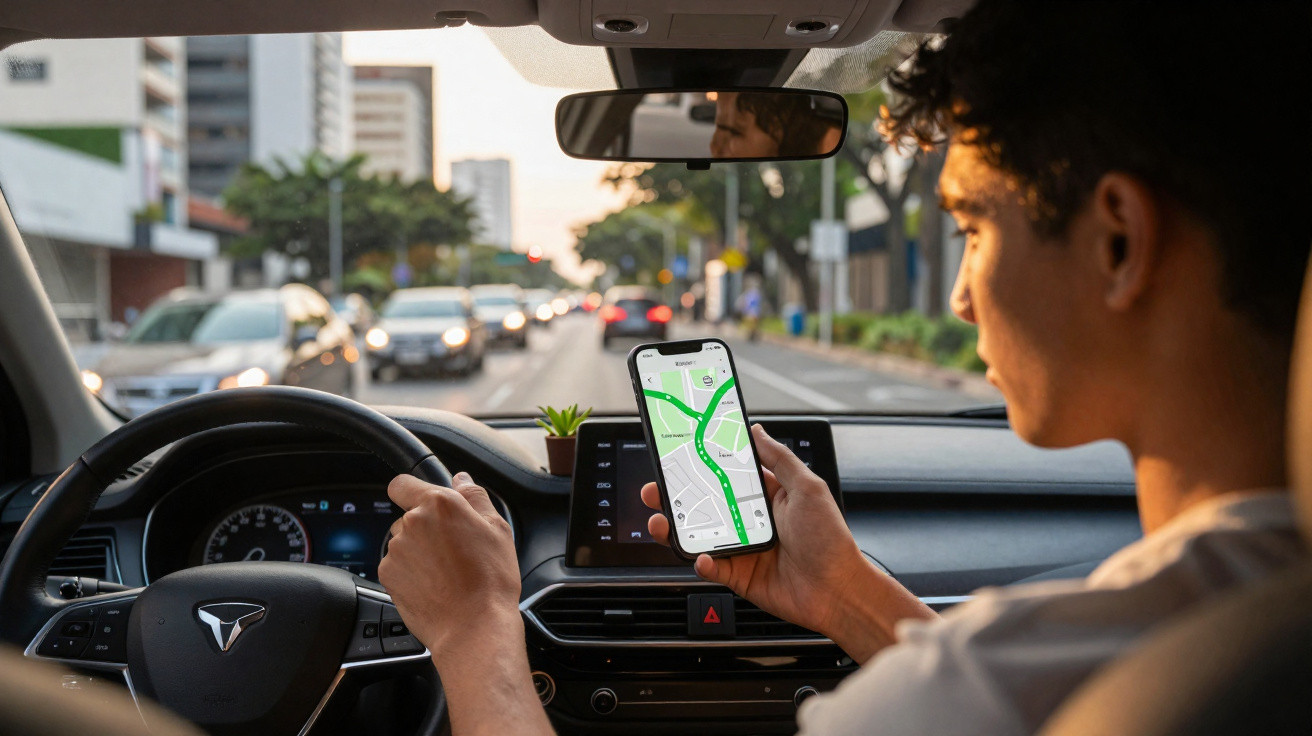
Technology also has a role in this new environment. Most newer cars provide a digital speed display that is more accurate than the traditional dial. Many sat-nav applications now announce the road limit and alert you when you exceed it. That can be irritating, and at times it certainly is, but it is less irritating than receiving three fines in a month.
Let’s be honest: nobody manages this perfectly every day. You will forget, lose focus or become distracted by a crying baby or a Teams call. That is precisely the space on which the new tolerances thrive.
Why this feels like tax first, safety second
The way the 2025 changes were introduced is revealing. There was no national television campaign declaring, “We’re cutting tolerances to save lives.” No prime minister stood in front of collision statistics and pledged to halve fatalities. Instead, the change emerged through discreet revisions to enforcement rules, software adjustments and obscure wording in local authority papers.
When governments truly believe in a safety intervention, they promote it as they did seatbelt laws. When they deliver it quietly through back channels, motorists understandably suspect a different motive: revenue.
On a cold Leeds evening, a driving instructor with 20 years’ experience watched her pupil fail a test after briefly reaching 31 downhill in a newly reduced 20 zone. There were no children nearby, no traffic and no apparent real-world danger. There was, however, a camera ahead. Technically, the rule had been broken, but she left the car with an uneasy feeling that something was not right.
In formal terms, the new tolerances can treat 23 in a 20 in much the same emotional way that 42 in a 30 was once treated-as an obvious offence. On the road, however, those motorists occupy entirely different realities. One may be a parent distracted for a moment; the other may be truly reckless. The camera makes no distinction.
The policy argument is appealing: “If everyone sticks exactly to the limit, roads become safer.” On a spreadsheet, it is difficult to challenge. In real life, though, people are not robots. Speed changes with gradients, weather and gaps in traffic. A rigid, narrow tolerance converts ordinary micro-variations into chargeable offences.
This is where the word “tax” begins to feel appropriate. The behaviour being pursued is not necessarily dramatic danger, but normal human fallibility. When that fallibility consistently produces millions each year, describing it as a hidden tax on drivers no longer sounds exaggerated. It sounds straightforward.
Staying sane, staying mobile, and quietly pushing back
One specific means of protecting yourself is to create a personal “red zone map”. Spend 20 minutes one evening tracing the routes you regularly drive over a month-work, the supermarket, school and sport. Then use Google Maps Street View or your sat-nav to identify every section with known cameras, particularly new 20 and 30 zones.
The following week, try reducing your speed by 3–4 mph below the limit only at those points. Do not do it everywhere or all the time; do it where you know the technology is waiting. It is a small, focused change that can protect your licence more effectively than constantly watching the speedometer.
Your mindset is another safeguard. Rather than telling yourself, “I’ll just go with the flow”, decide, “I’ll be the slightly slow one, and that’s fine”. There is a quiet confidence in refusing to be pressured by the impatience of the driver behind. Yes, someone may tailgate you. Yes, another motorist may rush past at 38 in a 30.
On a difficult day, it can seem unfair that you are carrying the burden while others take their chances. On a better day, you remember who pays when you misjudge the new margins: not the stranger behind you, but your own wallet, your licence points and your insurance premium.
Motorists are also finding understated ways to challenge the suggestion that every additional mile per hour is a mortal sin. Online forums exchange screenshots of roads where limits were lowered with no obvious safety justification, followed by sharp rises in camera activations. Local groups are writing to councillors and requesting collision data from before and after the limit changes.
“If this is about safety, show us the numbers. If it’s about money, be honest and call it what it is.”
There are several practical steps you can take yourself:
- Check whether your local authority publishes revenue and collision statistics for each camera location.
- Ask your MP why tolerances are being tightened without an open public debate.
- Join, or establish, a local campaign calling for evidence-based limits rather than blanket restrictions.
The bigger question hiding behind a tiny margin
Everyone understands that speed can kill. A telephone call at 2 am, a knock at the door or a news alert about a drunk driver travelling too fast on a wet road-nobody wants to be part of that story. Yet something subtle changes when a motorist doing 24 in a quiet 20 at 11 pm is treated almost like a boy racer charging through a school zone.
One distinction makes this easier to understand: “dangerous by nature” versus “dangerous by policy”. Travelling at 70 in dense fog is dangerous by nature. Travelling at 33 on a wide, empty 30 road at midnight is dangerous by policy. For most people, only one of these feels morally wrong.
At an emotional level, that is what irritates people about the 2025 speed camera tolerances. They do not only address risk; they turn tiny mistakes, which ordinary motorists see as part of everyday driving, into income. On a spreadsheet, those errors become a dependable revenue stream. At your breakfast table, they leave a bitter feeling when you open the post.
Politically, it is easier to extract money from motorists than to raise income tax or reform fuel duty. Cameras do not vote. Drivers do, but their anger is dispersed because fines arrive as separate incidents rather than one large, unmistakable demand.
At a human level, this is not a story of “boy racers versus the rest”. It concerns whether roads are policed as shared places requiring care or as low-friction cash machines carrying a safety label. We can agree that slowing vehicles near schools saves lives while still criticising a system that quietly tightens tolerances until ordinary motorists feel pursued rather than protected.
On a calm drive home, as your speed rises and falls between 28 and 31, you may find yourself asking: do they genuinely want safer roads, or simply more people crossing an invisible but profitable line? That answer will not appear in a slogan. It will lie in the data, and in how loudly people are prepared to discuss it.
| Key point | Detail | Why it matters to the reader |
|---|---|---|
| New 2025 thresholds | Reduced tolerances mean cameras trigger for minimal speed excesses | Understand why fines are arriving even when driving appears “normal” |
| Real impact | Higher local revenue, with little clear evidence of a major safety improvement | Form a view on whether the measure amounts to a “hidden tax” |
| Protective strategies | Driving 2–3 mph below the limit, creating a personal camera-zone map and using digital tools | Reduce fines and protect your licence and budget without giving up driving |









Comments
MichaelKed
После подписания договора фирма-изготовитель приступает к созданию мебели https://mebel-er.ru/partners
Создание мебели из массива дерева предполагает четкое соблюдение технологического процесса сушки и первичной обработки древесины https://mebel-er.ru/portfolios/myagkaya-mebel
Опытные профессионалы используют оптимальные защитные составы, не вредящие природному цвету и фактуре дерева https://mebel-er.ru/partners
Даже недорогая древесина смотрится презентабельно и статусно, если правильно ее обработать https://mebel-er.ru/contacts
Дизайн-проекты такой мебели ограничены только воображением малыша https://mebel-er.ru/partners
Можно заказать декоративные элементы, отражающие увлечения ребенка https://mebel-er.ru/terms-of-use
Например, кровать в виде машины, стеллаж с декоративными якорями https://mebel-er.ru/portfolios/kuxni
При выборе мебели для детской комнаты важно правильно подобрать материал https://mebel-er.ru/portfolios/mebel-dlya-spalni
Элитные салоны-магазины (например, Zinwood, Джокондо Арте и Diso-Mebel) предоставляют потенциальным клиентам подробные образцы для выбора будущей мебели https://mebel-er.ru/portfolios/raznoe
Консультанты готовы сориентировать покупателей по материалам, особенностям их обработки и срокам изготовления мебели https://mebel-er.ru/privacy-policy
Приобретая мебель на заказ, покупатель не ограничен в выборе материалов и стилей https://mebel-er.ru/portfolios/dusevye-i-vannye-komnaty
Среди крупных салонов, предоставляющих услуги дизайнера, стоит отметить Estetica, Устье и Mario Design https://mebel-er.ru/terms-of-use
Leave a Comment