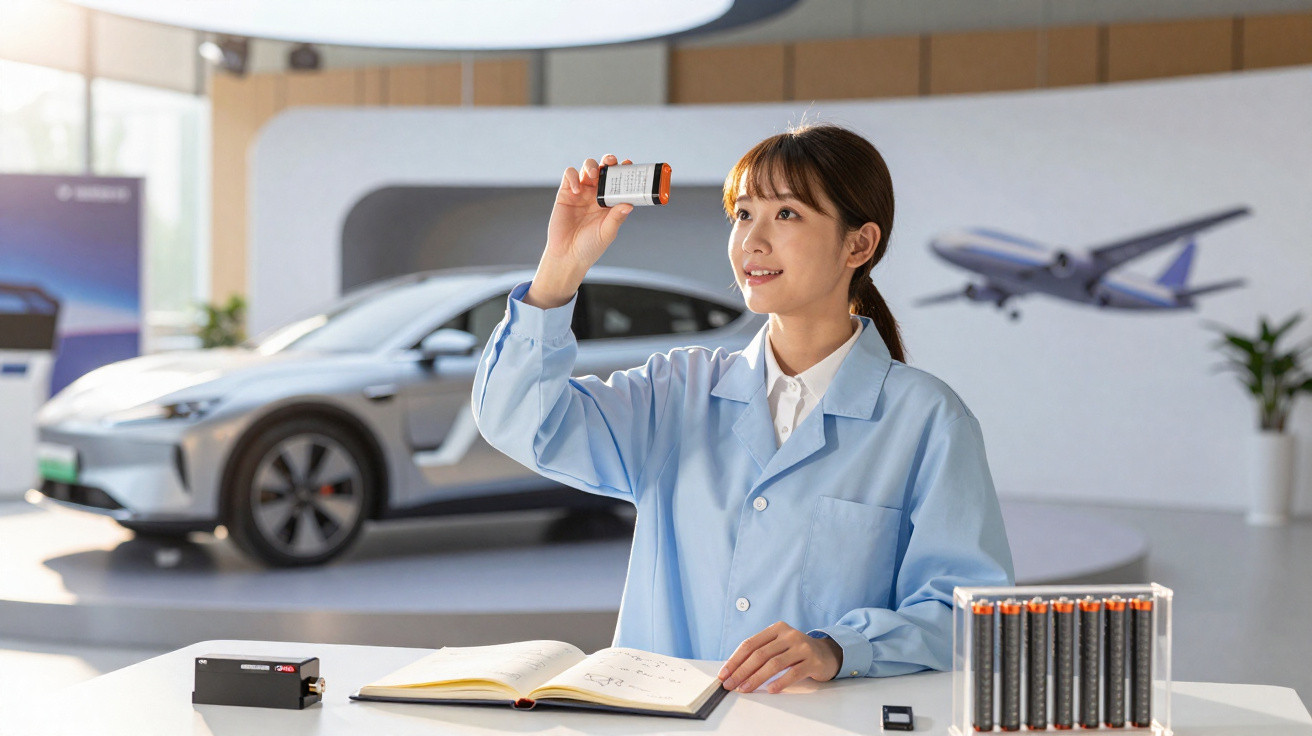
CATL - the Chinese giant that accounts for more than 75% of global battery production for the automotive sector - has unveiled a new “super battery” at the Shanghai Motor Show.
This new technology promises to double battery energy density, potentially enabling the use of electric motors in sectors such as aviation. In cars, it could either cut the weight of this component by 50% or double driving range.
Record energy density
One of the principal criticisms levelled at electric vehicles concerns battery energy density. Because that density remains low, very large battery packs are required to store the equivalent amount of energy contained in a conventional fuel tank.
However, this increasingly appears to be a problem of the past. CATL claims an energy density of up to 500 Wh/kg.
By comparison, this represents an energy density up to 1.5 times higher than that of Tesla’s new 4680 batteries, for instance, which are estimated to offer around 296 Wh/kg.
The chemical revolution continues
Battery technology shows no sign of slowing down - and it will not do so. Alongside solid-state batteries, which are expected to reach the market before the end of the decade, this new chemical solution must also be considered.
CATL achieves these figures through a new condensed electrolyte technology that imitates biological systems found in nature, known as biomimetics. The technology forms a network-like structure that adapts automatically, improving its ability to conduct energy.
These new “super batteries” also use high-energy-density cathodes and anodes, which will improve the component’s performance during both charging and discharging. CATL also says that these materials will help make the batteries safe and stable.
“The launch of this cutting-edge technology breaks through the limits that have long constrained the development of the battery sector and will open up a new electrification landscape centred on a high level of safety and lightness,” the company wrote in a statement.
The sky is the limit for CATL
With this new technology, CATL intends to expand beyond the automotive industry, where it currently holds more than 75% of the market. Aviation could be its next target.
CATL is actively working on the development of electric passenger aircraft capable of meeting civil aviation safety standards.
“The launch of batteries with greater energy condensation will usher in an era of universal electrification across sea, land and air transport, create more possibilities for industrial development and help achieve global carbon-neutrality targets earlier than expected,” the brand said in a statement.
According to CATL, this “super battery” could reach the market as early as this year. Its route into the aviation sector may still be some way off, but in the automotive industry it could immediately halve the weight and size of this component.















Comments
No comments yet. Be the first to comment!
Leave a Comment