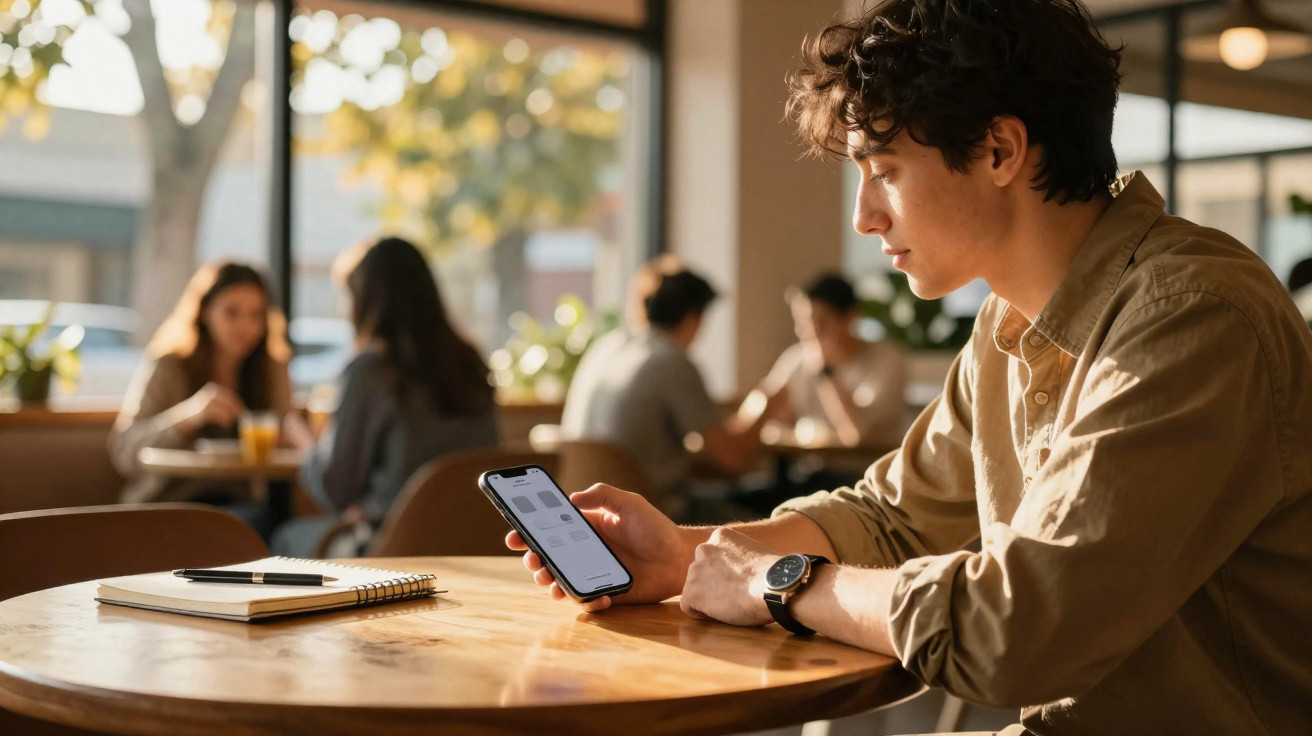
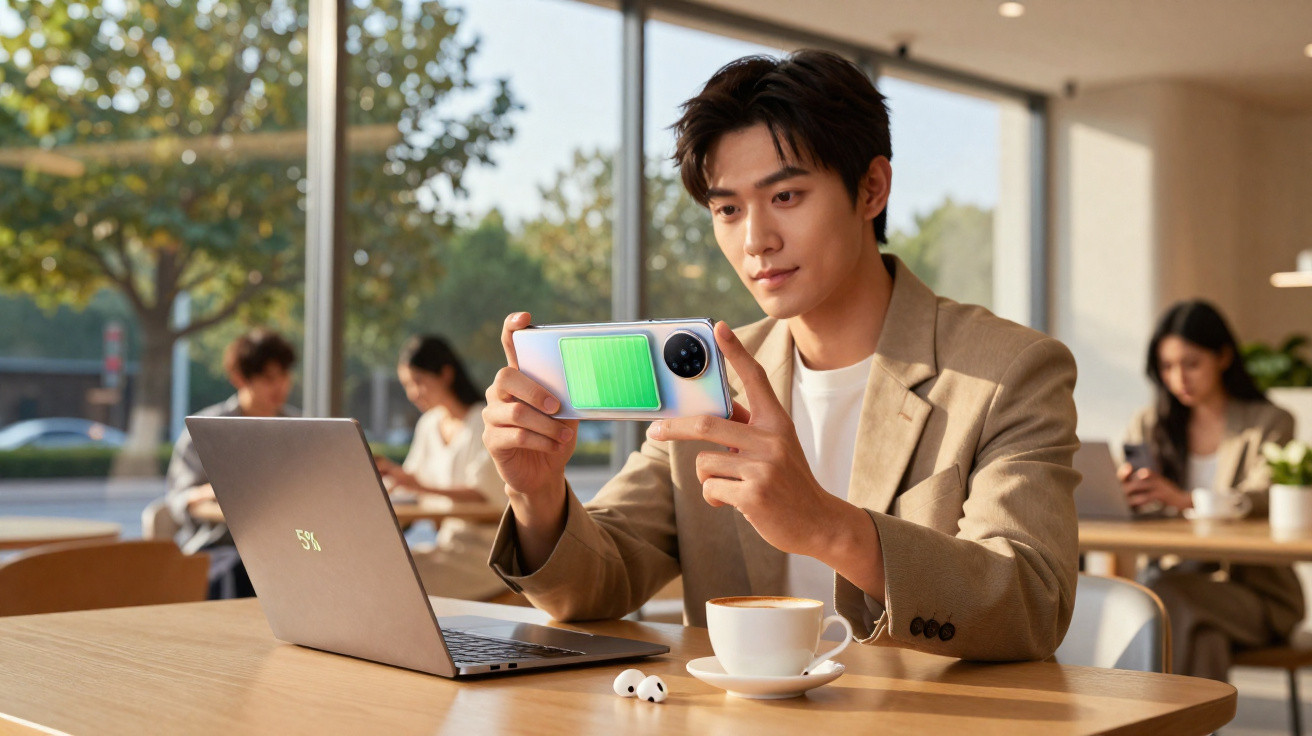
The display briefly lights up: a new notification. You instinctively reach for your phone, even though you only meant to check the time. Five minutes later, you have watched three Reels, opened two chats and once again forgotten what time it is. A friend sitting beside you in the café stops halfway through a sentence because your attention has drifted. That tiny motion, that flick towards the smartphone, is changing millions of conversations - and we often notice only once the silence arrives. Sometimes the phone feels closer than the person sitting opposite.
Why we keep reaching for our phones - without even noticing
Everyone knows the moment: at the supermarket, on the Tube or in the lift. As soon as there are two seconds with nothing to do, the hand slips into a pocket. The phone is no longer simply a device; it has become almost a reflex. A small flash of light to ward off boredom, uncertainty or quiet thoughts. Many people say they use their smartphone “only when they need to” - yet still unlock the screen every few minutes. Let us be honest: nobody actually keeps count in day-to-day life.
Neuropsychologists now refer to a “dopamine loop”. A quick glance, a notification, a like, a new video - each provides a tiny reward signal in the brain. In 2023, a University of Bonn study found an average of around 80 smartphone checks a day; for some people, the figure was well over 120. A Berlin IT consultant told me that he leaves his phone on the coffee table while watching a series, only to check it “quickly” despite already looking at a screen. By the end, he could not say what the episode was about or why he had opened Instagram in the first place.
Viewed logically, this behaviour is not a personal failure but a system built around incentives. Every app competes for attention; every red badge and vibrating icon makes the same promise: “Something important might happen here in a moment.” Our brains are drawn to uncertainty and respond especially strongly when the next reward is unknown. That is precisely what many platforms are designed to exploit. The endless feed, the pull-to-refresh gesture and the Stories along the top are not simply attractive by chance: they are deliberately constructed like a slot machine in your pocket.
How to break the phone-checking habit - without moving abroad
One straightforward exercise can make a surprisingly big difference: set “screen zones” in everyday life. For instance: sofa, yes; bed, no. Dining table, no. Train, yes. It sounds simple, yet can feel almost radical at first. When the phone is deliberately kept for particular places, your body learns a different pattern. You sit down at the table and no longer automatically reach into your pocket. Rather than relying on bans, it helps to create a friendly framework: I can scroll here, but not there. Suddenly, empty space returns - space where thoughts can emerge without an algorithm having pre-sorted them for you.
Too many people fail because their resolutions are too ambitious. “From tomorrow, I will use it for only 30 minutes a day,” they say, then feel frustrated by day three. A smaller step, one that may even seem laughable, tends to work better: start with just 30 phone-free minutes in one stretch each day. It could be the first 30 minutes of the morning, before you look at the display for the first time. Feeling restless initially is normal. You will want to see whether anything has happened. Usually, nothing has. That experience is exactly what strips the constant urge of its power: “I have to reply immediately” gradually becomes “I can answer later”.
“The phone is not the problem. The problem is that we give it the first and last thought of the day.”
- Halve push notifications: Mute every app that does not report a genuine emergency. The phone suddenly sounds less often - and you realise how much of it was merely manufactured urgency.
- Put your phone in another room at night: An alarm clock can be analogue. A distance of only a few metres changes the quality of your evenings more than any “digital detox” slogan promises.
- Tidy up the home screen: Keep only genuinely essential apps on the first page, with social media apps one level further in. An impulsive tap becomes a deliberate choice.
- Create a “queue ritual”: Instead of scrolling, take one deep breath, observe your surroundings for a moment and finish a thought. It may sound old-fashioned, but it feels surprisingly freeing.
What remains when the phone display stays dark
When people check their phones less frequently, two things tend to surface first: restlessness and emptiness. The restlessness comes because the body is waiting for the familiar hit. The emptiness appears because time suddenly exists without being filled. At precisely this point, many people make a choice: return to the app or stay curious. Those who remain curious discover after a few days that conversations become deeper, and that a walk is no longer just photo material for a Story but can once again be experienced simply as a walk.
You begin noticing small things again: the checkout assistant’s face, a neighbour in the stairwell, the wind at the bus stop. It may sound sentimental, but it is quite matter-of-fact: attention is limited. Every minute spent in a feed is missing somewhere in real life. And sometimes, when you lie in bed at night without scrolling, an almost unfamiliar quiet appears in your mind. At first, your own thoughts seem loud; then they become clearer. FOMO - the fear of missing out - slowly turns into JOMO: the quiet pleasure of not needing to be everywhere.
Perhaps the real question is not why we check our phones too often. It may be this: what are we running from when we do it? Boredom, uncomfortable feelings, decisions we keep postponing? We live at a time when we can cover over every second with sound, images or messages. The bravest step can seem almost old-fashioned: leave the phone alone for a moment and sit with a situation without an escape route on the display. Anyone who practises this, bit by bit, is not reclaiming some romantic offline life, but something highly practical: their own pace. And perhaps the ability to be truly present with another person again, without letting their gaze drop every three minutes.
| Key point | Detail | Value for the reader |
|---|---|---|
| Smartphone checking as a reflex | Automatically reaching for it during brief idle moments | Recognises their own patterns and realises: “I am not alone in this” |
| Dopamine loop and app design | Reward signals, infinite feeds, red icons | Understands that this is not only about willpower, but also about mechanisms |
| Practical counter-strategies | Zone rule, fewer push notifications, phone-free periods | Can make immediate changes in daily life and noticeably reduce reaching for their phone |








Comments
No comments yet. Be the first to comment!
Leave a Comment