
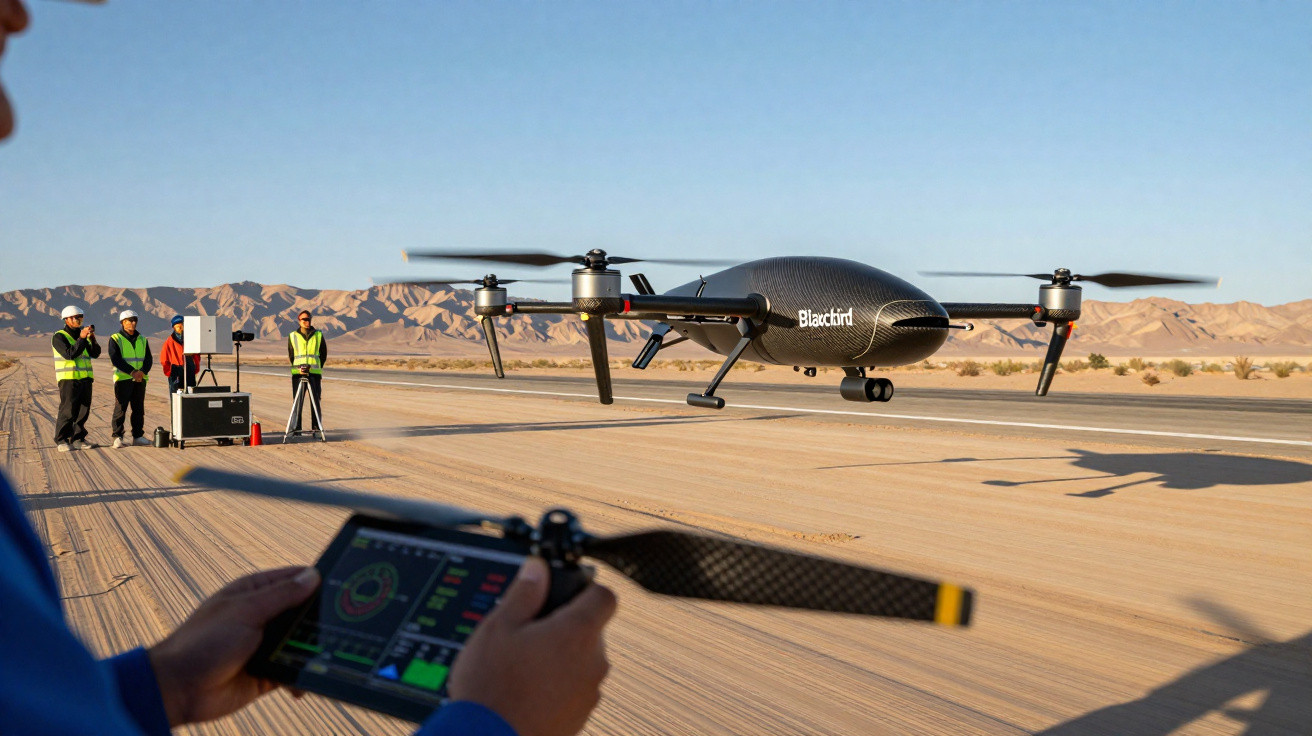
The world of high-speed drones has moved into a new technological tier, driven by home-built projects that push physical limits. Amateur engineers are now getting unmanned aircraft to rival the performance of commercial jets in demanding extreme acceleration tests.
How did carbon fibre propellers transform performance?
Swapping out conventional parts for advanced materials has enabled the airframe to withstand previously unseen levels of mechanical stress in flight. These new hand-built components were created specifically to prioritise speed gains on straight-line test runs.
What sets the build apart is the unconventional profile and the aggressive blade pitch, allowing the propellers to slice through the air efficiently. This deliberate design improves aerodynamic flow and reduces energy losses at the tips of the main propulsive component.
The key gains reported from using this approach include:
- Extreme pitch: The steep angle moves more air with each effective rotation.
- Serrated edge: The leading edge helps prevent sideways airflow from spilling and dispersing.
- Moulded fibre: The stiffness of the composite limits structural deformation at high RPM.
- Pure efficiency: Better airflow direction reduces overall aerodynamic drag.
- Direct fit: Full compatibility with the original shafts, without complex modifications.
Why did the Blackbird drone barely survive?
Chasing world records pushes equipment so hard that catastrophic failures are a routine part of development. On the first experimental flights, the team experienced a complete loss of control due to severe signal interference.
The prototype ultimately crashed into dense vegetation after exceeding the operator’s safe range limits. Recovering the wreckage was only possible thanks to help from the landowner where the speed testing took place.
What are the dangers of the Doppler effect at high speed?
When an electric vehicle pushes beyond extreme thresholds, the radio waves it emits undergo physical distortion, much like the changing pitch of a racing car as it passes. This rapid compression of frequencies makes stable communication between transmitter and receiver difficult.
Technical Alert
Transmission overload
As the aircraft closes in aggressively, the video signal spikes to unusually high intensity within seconds.
Digital FPV goggles can freeze because they cannot process the abrupt transition between the compressed and stretched waveforms.
Experienced pilots also note that antenna geometry can contribute to blind spots around the battery area. When these issues stack up, they can cause a total collapse of real-time flight monitoring.
Engineers traced critical faults to:
- Poor alignment of integrated receiver antennas.
- Excessive voltage fluctuation under heavy demand.
- Overheating of energy cells during acceleration.
How was the 730 km/h mark achieved?
On the second day of testing with the last available prototype, the specialists adjusted settings to reduce the earlier risks. Despite strong headwinds, the aircraft held a steady line and cut through the air with extreme precision.
The electrical current demanded at peak acceleration climbed to alarming levels, pushing the speed controllers to their limits. The heat load was so severe it melted the protective insulation layers on the batteries.
The run required precautions such as:
- Continuous monitoring of lithium cell temperature.
- Fine tuning of throttle activation timing.
- Shortening exposure time at maximum load.
What does this achievement mean for aerospace engineering?
This unprecedented result shows that pairing alternative designs with lightweight materials can open the door to new development of advanced supersonic rotors. Real-world validation of these serrated propellers indicates that theoretical concepts can resolve complex drag bottlenecks.
The team now plans to submit the collected data for official certification with international automotive and aeronautical record bodies. The outcome is also encouraging more independent creators to invest in scientific experimentation at home.
Official source: Information gathered directly from Drone Pro Hub / YouTube.






Comments
No comments yet. Be the first to comment!
Leave a Comment