
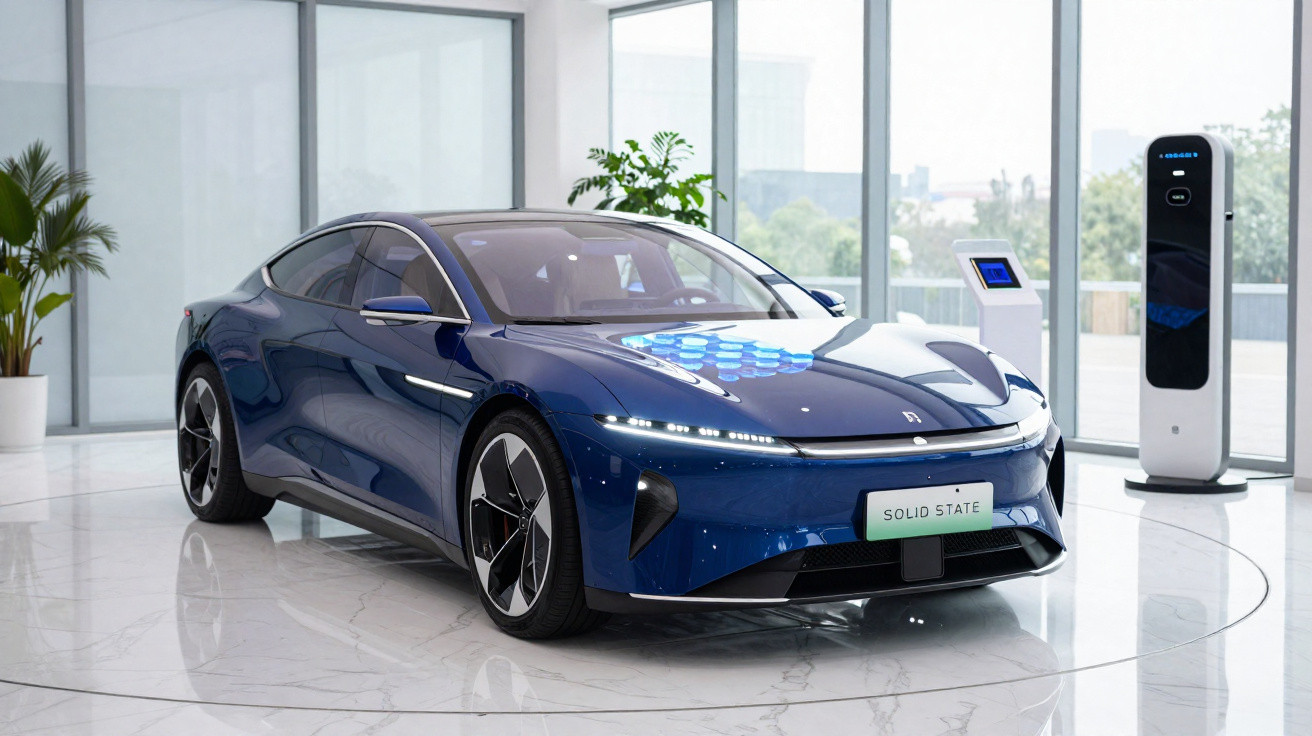
Changan Automobile says the long-awaited solid-state batteries could arrive sooner than expected. The company has stated it intends to fit what is often described as the “holy grail” of batteries to cars and robots in the third quarter of this year, with series production planned for 2027. Changan itself shared the update via the interactive platform of the Shenzhen Stock Exchange.
Changan Golden Bell solid-state batteries: what has been announced
There are still limited specifics about the Golden Bell batteries - the name used by Changan’s subsidiary responsible for this technology - but the firm has indicated an energy density of 400 Wh/kg and up to 1500 km of range (CLTC cycle) on a single charge.
That figure is far above the 250 Wh/kg typically associated with NMC (nickel, manganese and cobalt) lithium-ion batteries, and represents a major step up from the 175 Wh/kg claimed for the latest sodium-ion batteries that Changan has also begun installing in vehicles.
Changan unveiled the technology at the end of 2023 and says it delivers 70% greater safety than conventional batteries, supported by an Artificial Intelligence (AI)-based diagnostic system.
What are solid-state batteries?
Solid-state batteries, like lithium-ion batteries, use an anode, a cathode and an electrolyte. The key distinction is that, in solid-state batteries, the electrolyte is solid, whereas in conventional batteries it is a liquid or a polymer gel.
Why a solid electrolyte matters
Switching to a solid electrolyte makes it possible to store more energy within the same physical space, which increases energy density. It also removes the risk of liquid leakage, making the battery safer and lowering the likelihood of a fire following an accident.
Another advantage is longer service life: greater chemical stability means these batteries are less prone to wear caused by repeated charging and discharging. Finally, they can support faster, more efficient charging thanks to improved thermal management.
Remaining hurdles: cost and mass production
Even with these benefits, there are still obstacles to overcome, particularly large-scale manufacturing and pricing, which remains very high: around 3-6 times more expensive than NMC.





Comments
No comments yet. Be the first to comment!
Leave a Comment