
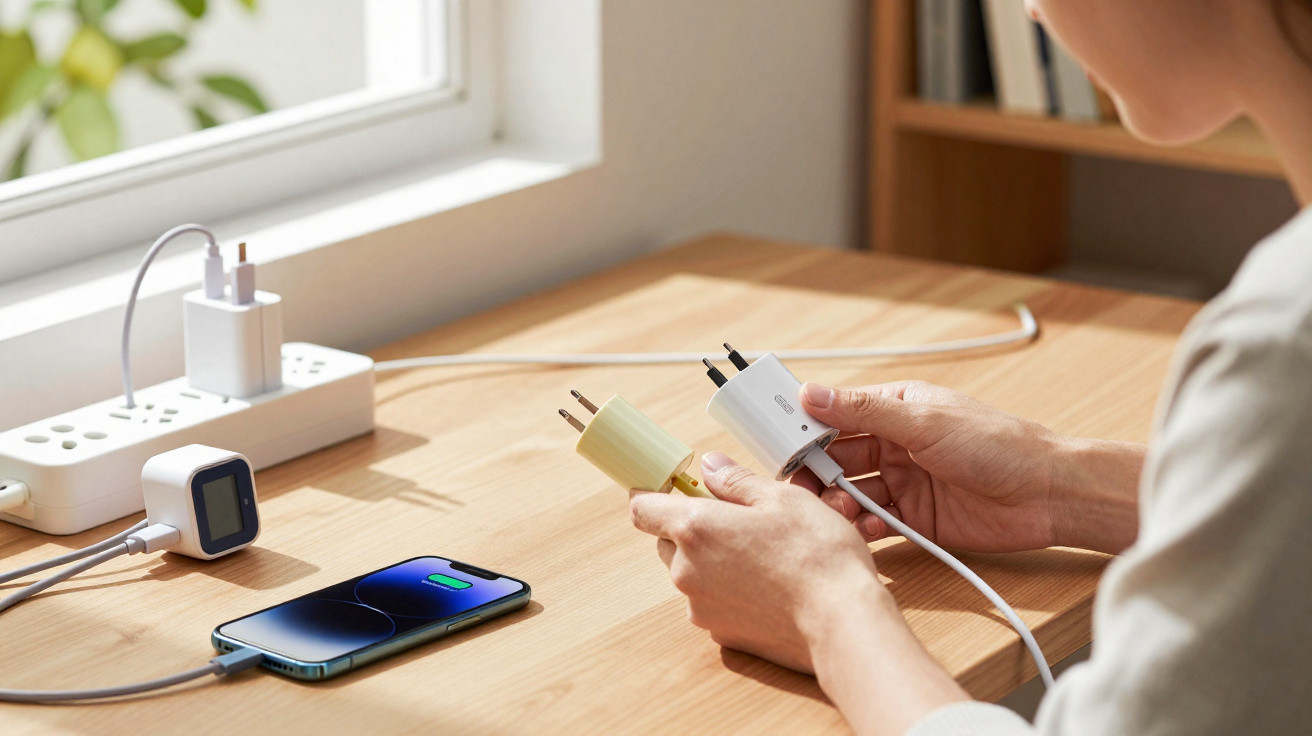
Choosing a good charger is no longer just about convenience. It now touches on safety, performance, and the lifespan of your electronics-especially because this accessory often stays plugged in for long periods, sometimes in makeshift sockets or older extension leads. That makes it even more important to pay attention to how power is delivered to the device.
Why does charger quality affect safety and performance?
A well-designed charger regulates the mains voltage and current more effectively, keeping the energy flow steady and reducing the likelihood of spikes. In contrast, cheap, uncertified models typically include fewer safeguards against overheating, overloading, and short circuits, which can harm both the battery and the device’s internal electronics.
When a charger is poorly matched to the device, it ends up operating constantly “at the limit”. That means higher-than-ideal heat, which speeds up wear on connectors and cables and can even impact the internal circuit board. For this reason, manufacturers advise using original or certified chargers that can supply the correct wattage with safety headroom and built-in protection.
Which technologies help reduce charger heat?
In more advanced chargers, GaN (gallium nitride) circuitry enables designs that are smaller and more efficient, wasting less energy as heat. Materials such as aluminium in the casing can act like a “heat sink”, helping to disperse temperature and reducing the risk of warping, melting, or concentrated hot spots.
Some manufacturers also use conductive adhesives and thermal compounds to secure and cool heat-sensitive components, improving stability and reducing internal vibration. In addition, certain models track temperature in real time and automatically adjust output power to keep charging within a safe range.
How can you prevent a charger overheating in daily use?
Even with a high-quality charger, day-to-day habits have a direct effect on temperature. A few small precautions can limit heat build-up, protecting the charger itself, the connected device, and the socket it is plugged into.
Simple routines that help keep a charger within a safe thermal range-and extend its working life-include:
- Keep the charger in a well-ventilated spot, avoiding beds, sofas, and other soft surfaces.
- Do not cover the accessory with clothing, paper, or other objects while it is in use.
- Replace worn, bent, or split-sheath cables immediately.
- Avoid use in damp areas or where water could splash, and keep metal objects away.
- Stop using it and seek a technical assessment if the charger becomes uncomfortably hot to the touch.
How do you choose a good charger in practice and avoid hassle?
To pick a dependable charger, check the wattage recommended for your device, choose models with clearly displayed certifications, and prioritise reputable brands. Solid build quality, snug connectors, and a casing designed to shed heat all suggest more careful engineering and stricter safety testing.
If you travel frequently or charge multiple devices, multi-port chargers or GaN models can be particularly useful, as they are often smaller and more efficient. By pairing a well-engineered charger with sensible everyday use, you reduce the risk of electrical faults, protect your devices’ batteries, and extend the lifespan of both the charger and the devices that rely on it.





Comments
No comments yet. Be the first to comment!
Leave a Comment