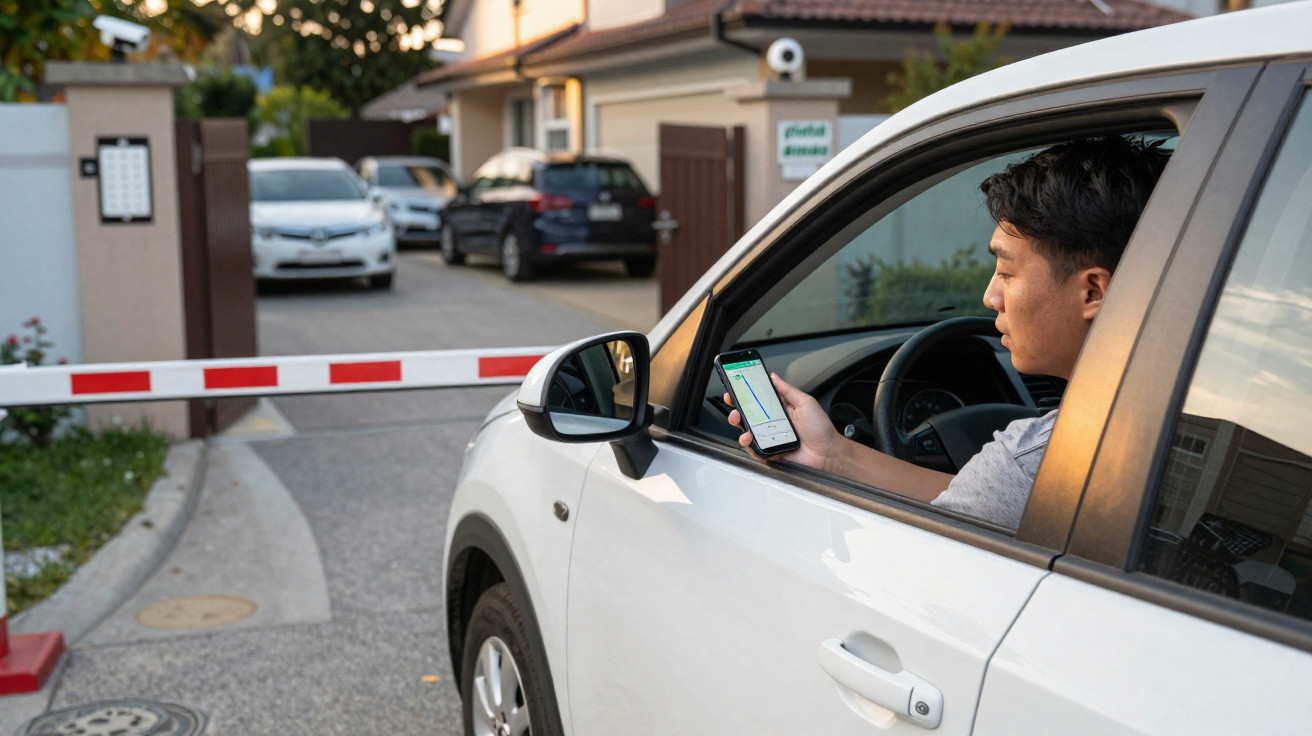
“Turn right,” came the voice, with the calm, level reassurance of something that has never made a mistake. His headlights passed over tidy suburban homes, trimmed hedges and polished front doors. The carriageway became narrower. Streetlights grew sparse. Yet the dashboard map continued to display an unmistakable, solid line: this was the route.
Then the surface beneath the tyres changed. The road markings vanished. Rather than a junction, he saw two stone pillars and what looked very much like a private drive. The satnav persisted. “Continue for 100 yards.” He edged onwards as gravel crackled under the tyres. Behind the car, a low metal bollard gave a hum and silently lifted from the ground, cutting off the way back. The dashboard display locked up, as though the technology itself could not process what had happened. No further direction followed.
When the map believes your car belongs there… but it does not
There is a particular sort of alarm when the route you are following turns out not to be a route at all. That crisp grey line on the display has become a private driveway, complete with automatic bollards that appear decidedly serious. You are not merely off course: you are stuck on somebody else’s land in the fading light, unable to drive either forwards or backwards.
At first, you will probably refuse to believe it. Surely the satnav cannot be mistaken. You enlarge the map, move it around and search for a concealed turn you may have overlooked. Your little vehicle icon sits smugly on a line that looks every bit like a public road. Outside the car, however, reality says otherwise. Security lights come on. A curtain shifts. Somewhere, a camera wakes with a click. From inside your own vehicle, you suddenly feel like an intruder.
This is far from an isolated software error. Throughout the UK and much further afield, navigation apps regularly present private roads, gated developments and service lanes as proper through-routes. A narrow section of driveway becomes a convenient shortcut, while a maintenance track is treated as a main road. The software combines outdated local-authority mapping, incomplete satellite imagery and user data that may be years old. When a developer subsequently installs gates, bollards or ANPR cameras, the online map may not be updated. The line remains, and drivers keep following it into uncomfortable situations.
Why smart technology can act like a clueless tourist
The man in this story - call him Alex - was heading to a late meeting on the far side of town. The ring road was clogged with rush-hour traffic, so his satnav did what it was built to do and sought a quicker option. A narrow grey route appeared, cutting eight minutes from the trip. “Turn right,” instructed the voice, taking him away from the congestion and into a peaceful estate of new-build homes that looked unnervingly alike.
Alex paused at the stone pillars. Crossing them felt wrong, rather like walking through a stranger’s front gate without an invitation. Still, the map showed a clear route through, complete with a road name. In the darkness, he could not see any “Private” sign. He therefore inched ahead. When the rear wheels passed over a subtle metal strip, the bollard behind rose with a quiet whirr, trapping him inside. Another bollard remained fixed in front of him. He was parked in what was plainly a controlled private drive, and apparently the only person whose car had entered this very costly-looking trap.
When this happens, every possible response carries a risk. Should you reverse and damage the vehicle? Wait in the hope that somebody lowers the bollards remotely? Use the intercom and confess to an unseen person that you obediently followed the satnav somewhere you were not supposed to enter? The concern is not limited to embarrassment. Automatic bollards can harm a car if they rise underneath it or suddenly descend. Certain locations impose charges for trespass. Worse still is the unsettling sense that the technology brought you there and then deserted you. The same device capable of directing you across a continent has failed at a 50-metre driveway.
The situation behind that polished screen is far more untidy than its interface implies. Many navigation systems use OpenStreetMap or local-authority base mapping, where private access is inconsistently identified. A developer may initially create an estate with public entry, only to fit security bollards later. GPS traces from delivery drivers, taxi drivers and earlier satnav casualties tell the algorithm, “Cars go here.” The software consequently continues to direct vehicles through it. Bollards, cameras and quietly irritated residents are absent from that digital version of events. In code, a driveway with a retractable post is no different from a peaceful shortcut - until you find yourself caught between both barriers.
How to keep your satnav from leading you into trouble
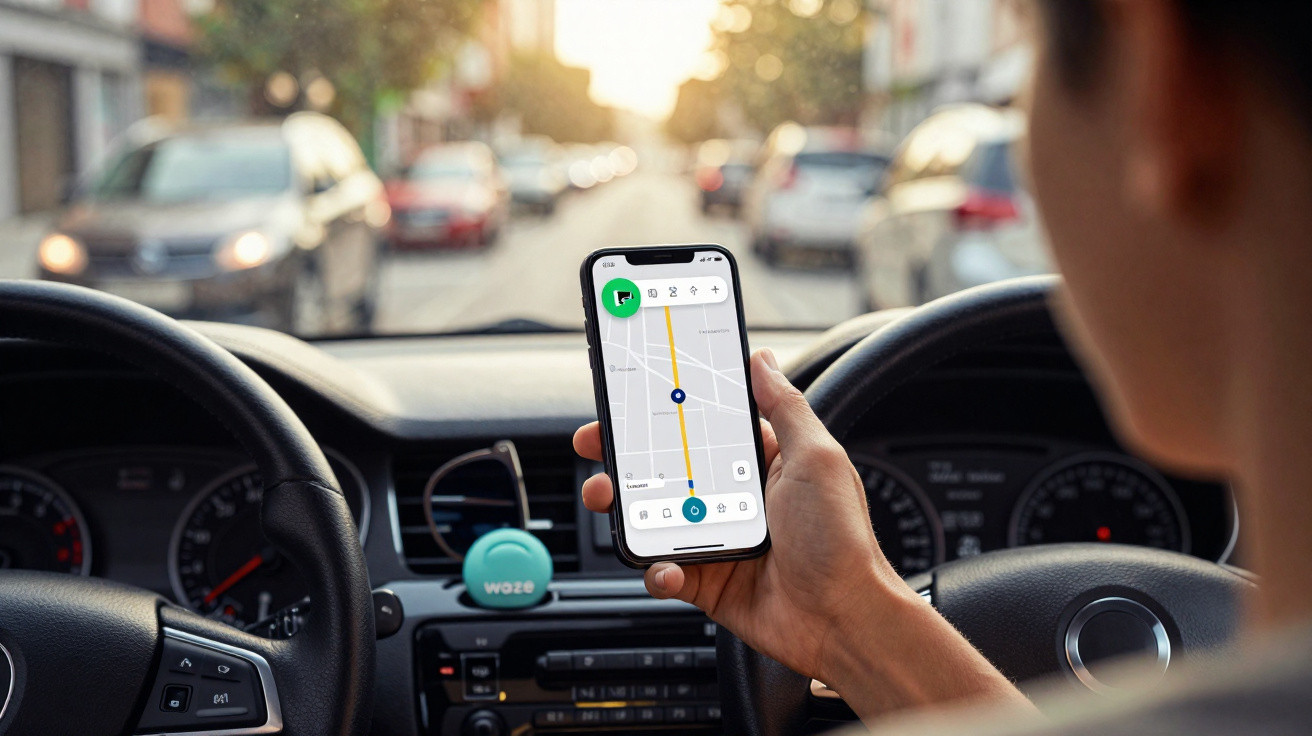
One straightforward habit can greatly reduce the chance of ending up nose-to-bollard on private property: raise your eyes from the display ten seconds sooner than normal. That is all it takes. Rather than waiting until the instruction says “turn right now”, look ahead when it announces “in 200 yards, turn right”. Does the apparent junction look like a genuine road? Is there a street-name sign, centre markings or other traffic using it? Or is it simply an unexplained opening between hedges, leading towards a gate and improbably immaculate paving?
If a turn does not feel right, rely on that instinct rather than the pixelated assurance on the dashboard. Ignore the instruction and continue until the satnav recalculates. It may protest briefly, but it will find another route. Map view can also help. Take a moment to zoom out: does the road visibly connect to a wider network, or is it a tiny branch that finishes at a single cul-de-sac? Repeating that two-second check over a lifetime behind the wheel could save you from locked bollards, tense intercom exchanges and the peculiar humiliation of telling a stranger, “my satnav told me to”.
Let us be honest: almost nobody does that every day. Most of us enter the destination, press “Start” and let the app take over our thinking. We may be exhausted, running late, managing children in the rear seats or dealing with notifications vibrating nearby. Those are precisely the conditions in which errors occur. Navigation apps cannot always identify height limits, private gates or time-restricted access, and they frequently use data from before those obstacles existed. Add rain, darkness or an unfamiliar town, and the illuminated arrow becomes extremely persuasive. Following it feels easier than acknowledging that you are not completely certain where you are.
We therefore fall into the behaviours apps promote: selecting the “fastest route” every time, even if it cuts through estates never intended for passing traffic. We cross business parks after dark because the blue line recommends it. We overlook small notices such as “restricted access” or “private road – local traffic only” because the voice still says, “Turn right.” The answer is not to become an anti-technology driver consumed by suspicion, but to restore a small measure of human judgement. Notice the signs software cannot interpret: newly laid tarmac without markings, decorative entrance walls or CCTV notices quietly suggesting, this is not your shortcut.
“The map is not the territory,” wrote philosopher Alfred Korzybski long before satnavs existed. He could have been talking about that awkward moment when your car nose-to-tail with a bollard proves the point better than any lecture.
- Look ahead early: When you hear the “in 200 yards” warning, check whether it resembles a proper junction rather than a private entrance.
- Notice understated warnings: Smart brick pillars, bollards and “No through road” signs often spell trouble for satnav shortcuts.
- Choose sensible routes: At night and in poor weather, major roads are preferable to clever shortcuts through unfamiliar estates.
What this minor incident reveals about us and our technology
On a still evening, caught between two automatic bollards while a satnav has gone unexpectedly quiet, the connection between people and technology is laid bare. This is neither a serious collision nor a futuristic thriller. You are simply a little trapped, a little embarrassed and acutely conscious that you surrendered your judgement to a machine that cannot understand how trespassing feels. On the map, your vehicle is a dot; in the real world, it is a tonne of metal standing somewhere it should not be.
We tend to assume that more data should result in fewer errors. Yet many modern human mistakes come from excessive faith in seamless, apparently perfect design. The satnav has no knowledge of the retired couple who campaigned for the bollards, or the residents’ WhatsApp group coming alive whenever another baffled motorist appears on the drive. Technology reduces those stories to shapes: a line here and a polygon there. Nevertheless, we follow them because watching a moving arrow seems safer than accepting that we may need to find our way again through sight, sound and instinct.
On another night, you may be the person behind the curtain, observing headlights inch along your private road and hearing the faint whirr as the bollards lock into place. You know exactly what has occurred because you have seen it before, and you have probably done something similar yourself in another town: on a motorway slip road, down a farm lane or along a partly completed bypass. At a small but deeply human level, this is now our relationship with smart technology: a dance of trust and doubt, faith and quiet resistance. It is a story worth telling and sharing - and perhaps, the next time the satnav says “turn right”, briefly questioning.
| Key point | Detail | Why it matters to the reader |
|---|---|---|
| Satnavs misread private roads | Outdated or incomplete mapping can transform driveways and gated estates into “official” routes. | It explains why your device can occasionally direct you into awkward or hazardous places. |
| Early visual checks matter | Looking up at the “in 200 yards” warning helps you notice bollards, pillars and private entrances. | It provides an easy habit for avoiding accidental trespass or becoming trapped. |
| Trust technology, but not blindly | Combining satnav directions with common sense and road signs lowers stress. | It makes journeys calmer, safer and slightly less dependent on software errors. |
















Comments
No comments yet. Be the first to comment!
Leave a Comment