
Exercise Viking Strike and the Near Surface Infantry Battalion
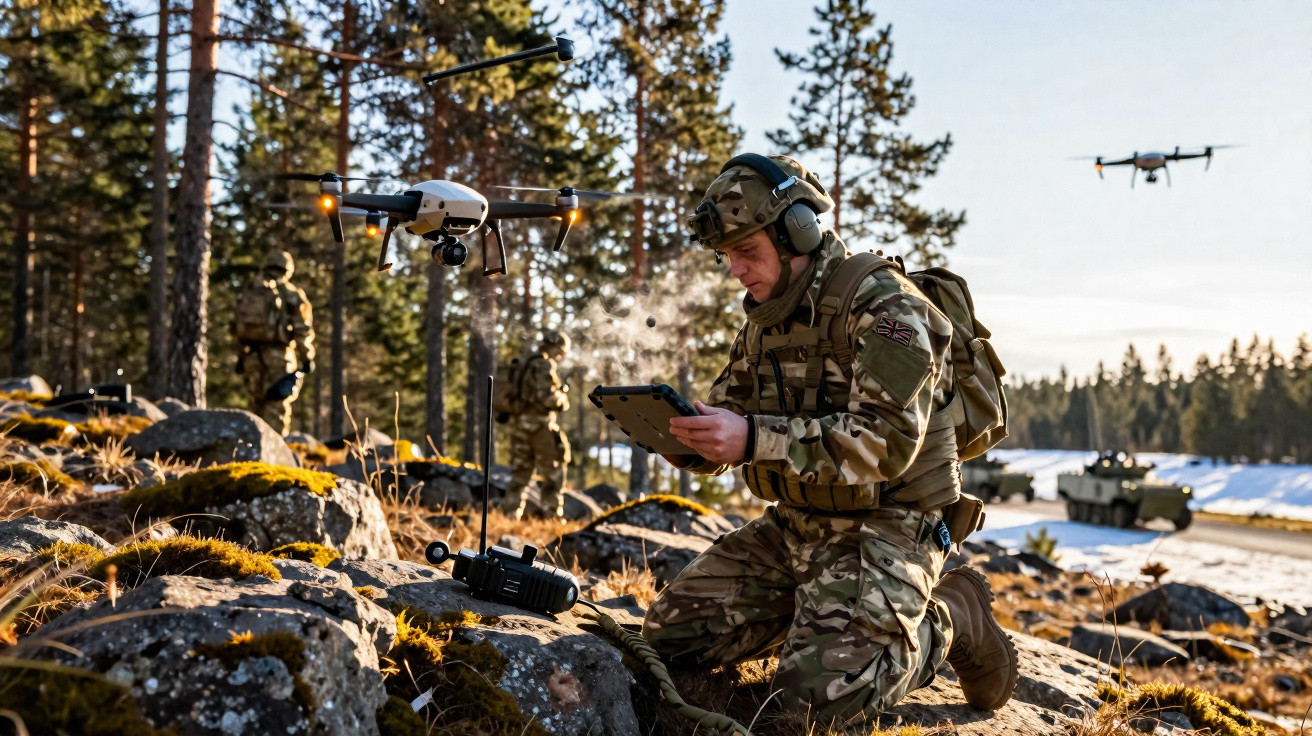
The British Army is speeding up the modernisation of its infantry by pushing unmanned systems and electronic warfare capabilities right down into frontline formations-a direction underlined recently during Exercise Viking Strike. Run at Otterburn and in Kielder Forest, the activity focused on the 1st Battalion, Royal Anglian Regiment (1 R ANGLIAN). It is among the first units chosen to transition into a Near Surface Infantry Battalion, a new type of formation built around broad battlefield use of autonomous and remotely operated systems.
Unmanned systems embedded in rifle platoons
Under the new structure, each rifle platoon in the battalion now has soldiers trained to operate small unmanned aerial systems, expanding reconnaissance and target-finding at tactical level. In addition, the battalion has stood up a specialist company equipped with loitering munitions, giving infantry units an in-house long-range precision strike option.
A key aim of the exercise was to bring reconnaissance drones, loitering munitions and electronic warfare tools together within a single way of operating-mirroring the British Army’s assessment that unmanned systems will become ever more central to future combat.
Lieutenant Colonel Nick McGinley explained that the training sought to strengthen the battalion’s ability to locate and engage targets in terrain comparable to Finland, while using remote and autonomous systems to secure an advantage. Major Paul Machniki said the updated approach has sharply reduced the gap between spotting a target with drones and hitting it, while giving commanders a much fuller picture of what is happening across the tactical area.
Platforms trialled: Ghost X, ATAK and Gereon UGVs
Exercise Viking Strike also served to showcase the systems selected to support the battalion’s upgrade. British troops used Anduril’s Ghost X unmanned aerial system, which pairs electro-optical and infrared sensors to collect intelligence along the front line and share live information via the Android Tactical Assault Kit (ATAK), the British Army’s digital battlefield management system.
The training likewise featured Gereon unmanned ground vehicles produced by Germany’s ARX. These are intended to take on high-risk missions in contested areas, reducing soldiers’ exposure to enemy fire.
Finland contingency and NATO’s north-eastern flank
The focus on Finnish-style terrain was deliberate. Based on current operational planning, the 1st Battalion, Royal Anglian Regiment is expected to deploy alongside Finland’s Kainuu Brigade if a major conflict erupts on NATO’s north-eastern flank. That role would place British troops along Finland’s 1,340-kilometre border with Russia, aligning with the United Kingdom’s wider effort to reinforce its military footprint across the Arctic as regional security conditions continue to worsen.





Comments
No comments yet. Be the first to comment!
Leave a Comment