
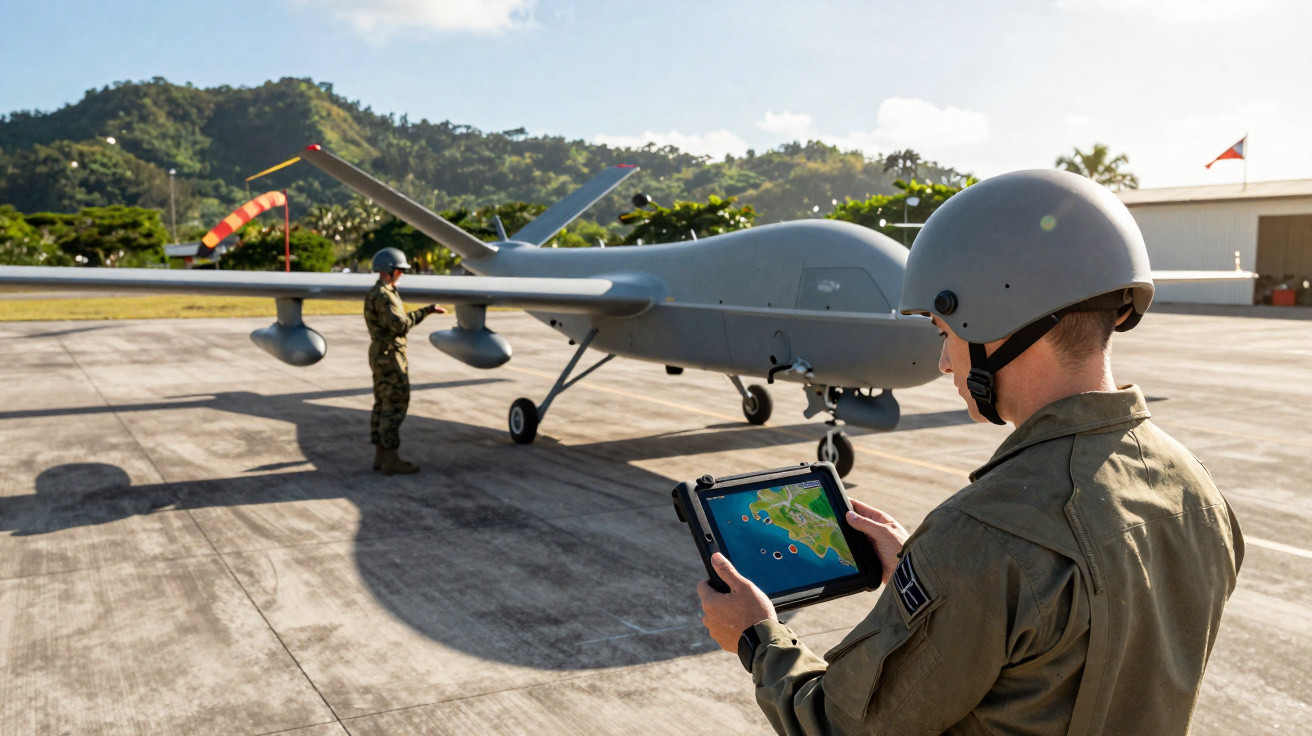
The US Marine Corps has temporarily deployed an MQ-9A Reaper attack-and-reconnaissance drone detachment to the Philippines to support surveillance missions over the South China Sea. A spokesperson for Marine Corps Forces Pacific said the move is intended to bolster Philippine maritime security amid steadily rising tensions with China.
The aircraft come from Marine Unmanned Aerial Vehicle Squadron 1 (VMU-1), based in Arizona, and have been sent to support “Philippine regional maritime security”. The USMC spokesperson added that the deployment also strengthens shared maritime domain awareness across the US–Philippines alliance.
“La instalación temporal de MQ-9A no armados en Filipinas demuestra el compromiso mutuo para mejorar la seguridad marítima colectiva y respalda nuestro objetivo común de un Indo-Pacífico libre y abierto”, the Marine Corps Forces Pacific spokesperson said.
Operations are being flown from Basa Air Base, one of nine sites covered by the 2014 Enhanced Defense Cooperation Agreement, which permits rotational troop deployments and the construction of US infrastructure on Philippine territory. The presence of US drones at Basa was already confirmed in June 2024 by the I Marine Expeditionary Force, following a request from the Philippine government.
So far, Marine Corps Forces Pacific has not reported how many MQ-9A Reaper drones have been deployed.
Rising tensions and the need for surveillance
The arrival of the unmanned aircraft follows a succession of incidents involving Philippine and Chinese forces in 2023 and 2024. One of the most serious took place on 17 June 2024 at Second Thomas Shoal, when a Philippine Navy SEAL had a finger amputated after a collision with a China Coast Guard vessel.
According to the Philippine Coast Guard, China Coast Guard ships, warships and maritime militia craft frequently operate inside the country’s exclusive economic zone in the western sector.
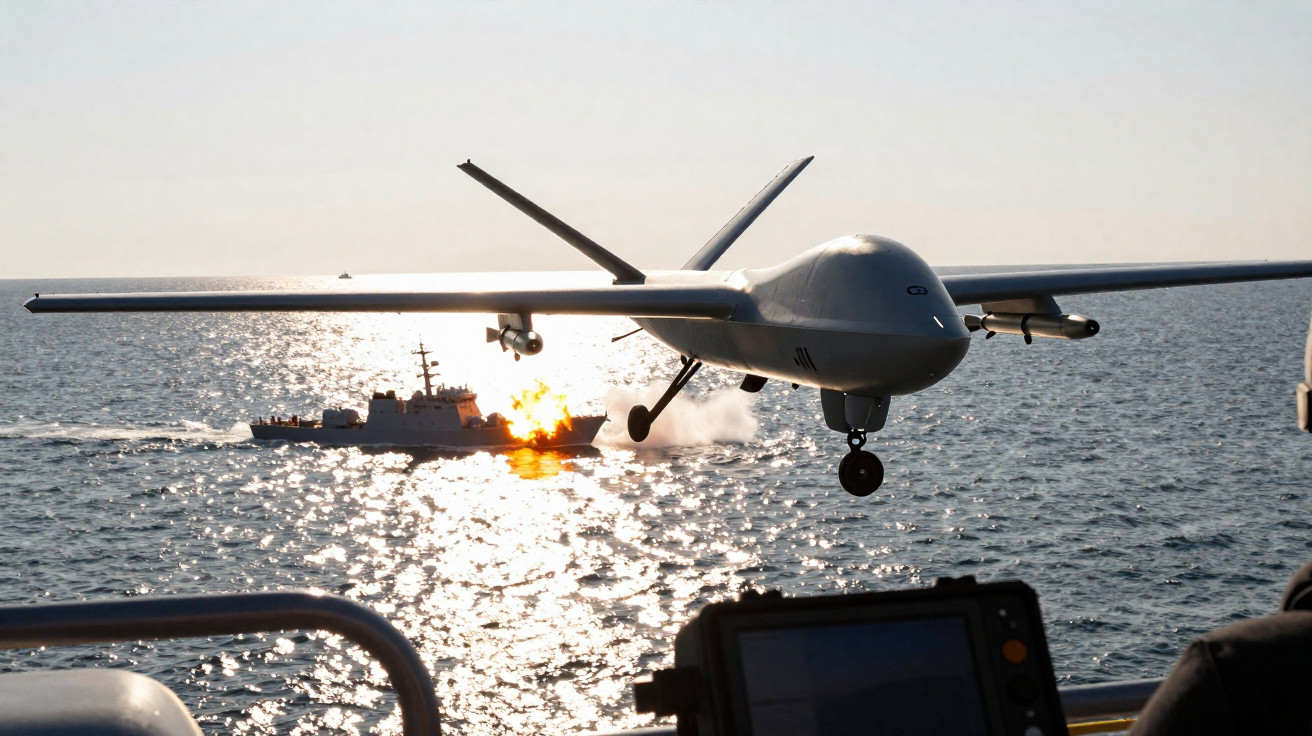
Manned and unmanned air platforms have become critical for tracking such encounters in real time. Footage gathered by drones and aircraft has helped record water-cannon attacks and harassment manoeuvres-material Manila has used to publicise and challenge Beijing’s actions.
The Philippines already operates ScanEagle drones supplied by the United States, as well as Israeli-made Hermes 900 and 450 models, deployed in particular to Palawan province.
MQ-9A capabilities and programme background
The USMC is continuing to grow its MQ-9A Reaper inventory. In June 2025, the service took delivery of its final extended-range MQ-9A Reaper Block 5, built by General Atomics Aeronautical Systems (GA-ASI), completing three years of procurement for the Marine Air-Ground Task Force Unmanned Expeditionary (MUX) programme. The extended-range variant can remain airborne for up to 34 hours using external fuel tanks and also includes advanced radar systems, video sensors and triple-redundant avionics.
As of now, at least 18 MQ-9A drones are in service with the USMC, with two more in the delivery pipeline, according to the Naval Air Systems Command (NAVAIR).
Reaper deployments have also widened elsewhere across key Indo-Pacific locations. In September 2025, the US Air Force activated the 431st Expeditionary Reconnaissance Squadron at Kunsan Air Base in South Korea, marking the establishment of the country’s first MQ-9 Reaper squadron.
“El despliegue del MQ-9 aporta una potente capacidad a la región. Estamos aquí para apoyar la misión, profundizar la cooperación y demostrar nuestro compromiso compartido con el mantenimiento de la seguridad y la estabilidad en el Indopacífico”, said Lieutenant Colonel Douglas J. Slater, commander of the 431st ERS.
Military cooperation and new bilateral initiatives
The United States and the Philippines have stepped up defence cooperation in response to Chinese pressure in the South China Sea. International Crisis Group adviser Georgi Engelbrecht noted that integrating unmanned aircraft across the two forces shows bilateral cooperation “está en buen camino”, and he highlighted the growing importance of UAV systems in the Indo-Pacific theatre.
In October, the two countries’ defence secretaries announced the creation of Task Force Philippines, a 60-person coordination group led by a one-star US officer. The structure is intended to tighten cooperation and deter coercive acts.
Washington has also pledged US$500 million in military assistance to modernise the Armed Forces of the Philippines, including investment in strategic naval bases oriented towards the South China Sea.





Comments
No comments yet. Be the first to comment!
Leave a Comment