
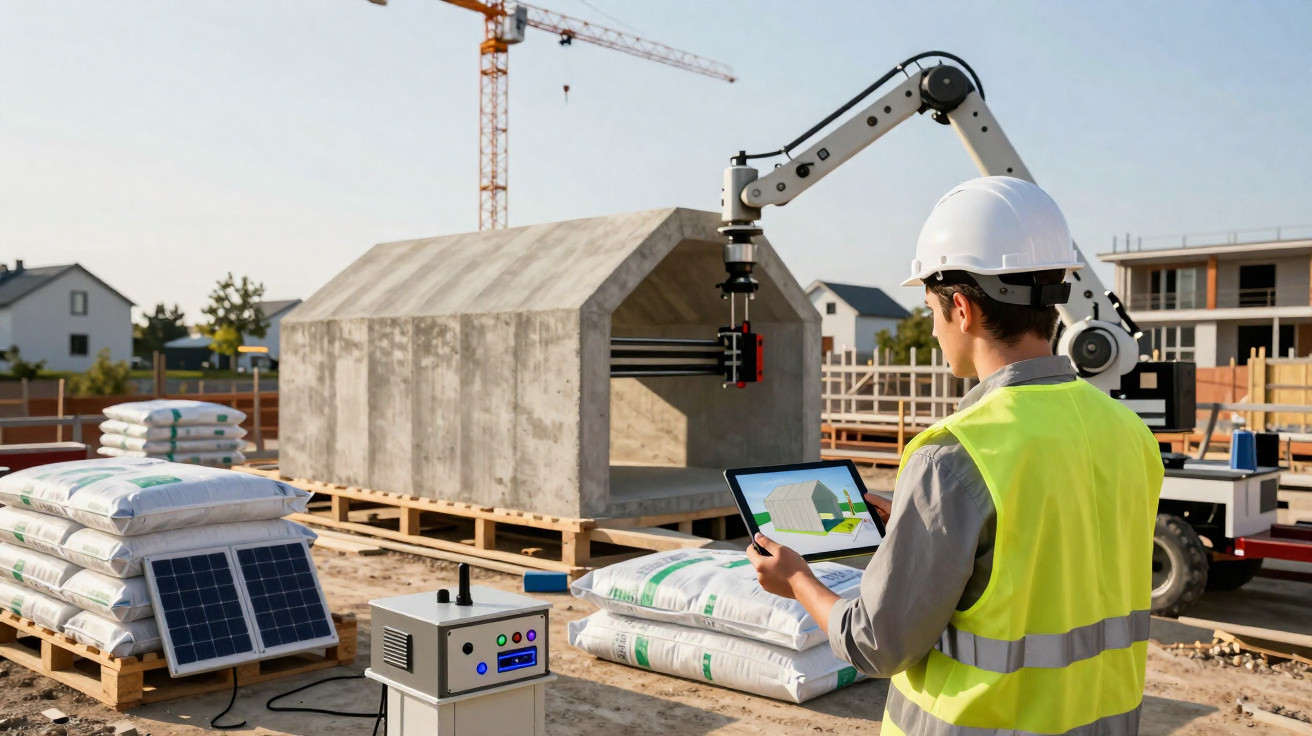
The global construction sector is undergoing a revolution driven by digital automation. In Bezannes, the handover of a residential building shows how modern engineering can break through complex operational bottlenecks, using scarce resources more intelligently and shortening build schedules in ways that genuinely surprise.
How did the ViliaSprint² project revolutionise the speed of construction?
This innovative housing scheme set striking benchmarks by producing all external walls and internal partitions in record time. That exceptional result was made possible by deploying automated equipment directly on the French building site.
The pace delivered by the automated system even outperformed the engineers’ original estimates, reinforcing just how efficient the approach can be. With tighter logistical planning and a precisely aligned fit between the prefabricated slabs, the team drastically reduced the number of times the main technology had to be repositioned.
The practical foundations behind this surprising speed include:
- Shorter timeframe: the actual printing took thirty-four effective days, compared with an initial projection of fifty.
- Advanced machinery: use of the COBOD BOD2 robotic gantry supplied directly by the experienced PERI 3D Construction.
- Continental-scale footprint: an 800 m² habitable structure spread across three independent, functional storeys.
- End-to-end cycle: the full building was completed in twelve months of work, excluding the initial infrastructure.
- Optimised logistics: integrated planning halved the need to reposition the robot across the floor plan.
Which sustainable materials were incorporated into the ViliaSprint² infrastructure?
The residential development’s environmental performance rests on the careful choice of innovative components with a low pollution footprint. The cementitious input used comes from a well-regarded ecological range designed to cut harmful emissions released into the atmosphere.
In addition, the special liquid mix was strengthened with advanced synthetic macrofibres to increase overall mechanical stability. Natural, bio-based elements-including mineral insulation and resin-bonded timber panels-complete the bioclimatic architecture envisioned by the design team.
How does automation affect working conditions on building sites?
Replacing rudimentary methods with fully computer-driven processes noticeably improves day-to-day life for operational staff. Digitised execution removes damaging overexertion and reduces risks of serious injuries and major workplace accidents during routine tasks.
Technological innovation
Skills development
Workers increasingly run operations via advanced digital tablets, staying in fully ergonomic and safer positions.
This shift upskills the local workforce for the future construction market, adding deep expertise in digitised engineering.
Beyond the obvious individual physical benefits, this operational reorganisation also streamlines the overall number of workers needed on site. Smarter deployment lifts overall corporate productivity, turning exhausting roles into highly valued digital careers.
On-site ergonomic and practical gains included:
- Complete removal of manual handling for heavy formwork.
- Use of fixed perimeter scaffolding to provide collective protection.
- Less extreme physical fatigue compared with a traditional site.
What environmental gains does this printing method deliver?
Effective use of three-dimensional machinery significantly reduces the local ecological impacts typically associated with conventional construction sites. Millimetre-level precision in placing structural concrete prevents large-scale material waste, helping conserve available natural resources.
Another important advantage is the sharp reduction in heavy transport traffic around the site. Because raw materials are mixed on location, there is less air and noise pollution, helping preserve neighbours’ peace and quiet.
The key on-site sustainability indicators included:
- A fifty per cent reduction in total waste rubble sent for disposal.
- A ten per cent saving in raw material thanks to the curved design.
- Full compliance with strict long-term residential decarbonisation targets.
What does the future look like for industrialising this technology?
The commercial consolidation of this construction model points to promising prospects for large-scale housing supply. Ongoing research into advanced chemical additives-aimed at developing a highly resistant graphene concrete-seeks to further improve the efficiency and structural performance of future shared housing.
The next strategic step is to build robust developments of forty homes, combining individual houses with multi-family buildings. Developers intend to multiply printing speed and substantially reduce today’s financial costs, enabling direct competition with conventional masonry.
Official source: Information gathered directly from Plurial Novilia.






Comments
No comments yet. Be the first to comment!
Leave a Comment