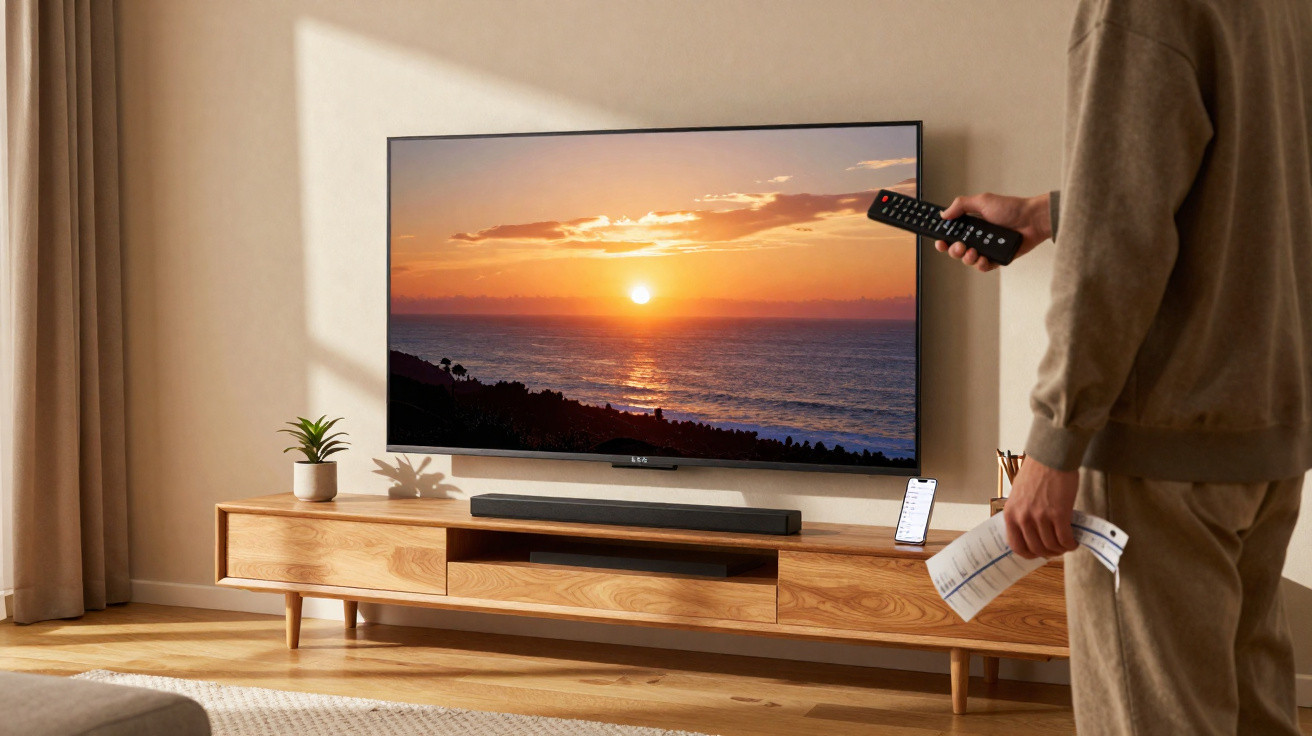
The LG G5 does not even resemble a television when you first encounter it in a dark lounge.
Instead, it appears as a vast black rectangle mounted on the wall, nearly blending into the paintwork. Someone then starts a 4K film trailer and the display comes alive: pitch-black shadows, neon glints and skin tones that look almost too lifelike. Before they realise it, a few people have leaned closer.
Then comes the familiar moment: someone asks, “So… how much was it?” The room falls silent for a beat. This is a premium OLED television, carrying a price that will make most households wonder whether it can possibly be justified. The LG G5 is clearly intended to be the television you aspire to own rather than one picked up in a sale. The more direct question is this.
Is it genuinely worth the money?
LG G5 design, picture quality and that immediate impact
The LG G5 is the sort of television that alters the look of a room before you switch it on. Its panel is slim, its bezels are almost invisible, and its wall-mounted form gives it the appearance of a framed digital artwork rather than a bulky piece of consumer electronics. What stands out is not only the picture, but also the lack of physical bulk.
Once illuminated, contrast delivers the first real blow. Black areas fall away into total darkness, bright details burst forward like small flashes of sunshine, and the OLED screen creates an almost three-dimensional effect that LED televisions still find difficult to equal. It can make streamed programmes appear either unexpectedly luxurious or suddenly rather poor, depending on the quality of the source.
I spent an evening comparing a budget LCD television with the LG G5 using the same Netflix account. On the less expensive set, a dark sequence from “The Batman” appeared dull and murky, with faces scarcely distinguishable from the background. On the G5, separate raindrops shone beneath street lamps, while details in Batman’s suit emerged without losing shadow detail.
What stayed with me most was the response from everyone in the room. There was no big presentation or technical breakdown, just a subdued “woah” followed by the stillness people have when they are subconsciously comparing what they see with what they normally watch. It is an instinctive, almost childlike reaction.
On the technical side, the G5 supports that response with high HDR peak brightness, the deep blacks associated with OLED and highly accurate colour straight from the box. Its new processor works hard on upscaling, improving lower-resolution material without pushing the image into an exaggerated “soap opera” look.
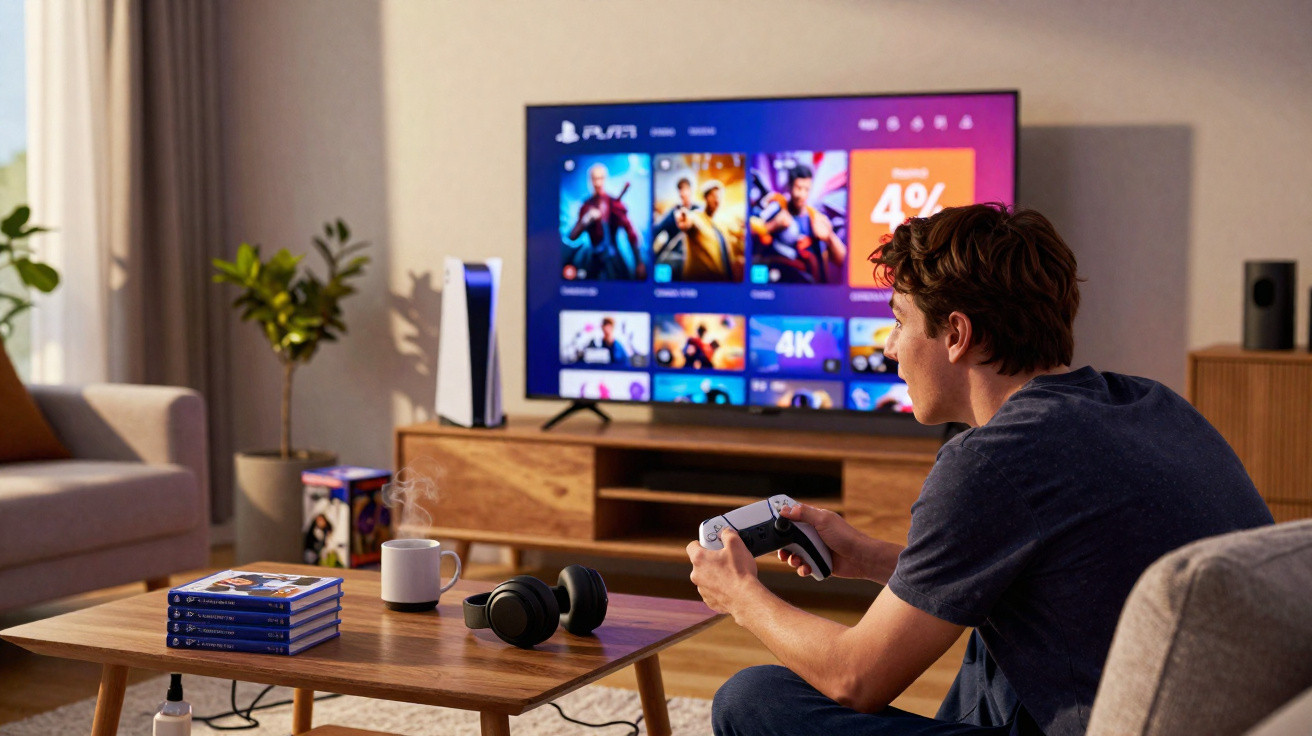
Input lag is sufficiently low for serious console play, while HDMI 2.1 connections support high-frame-rate modes. It is ready for a PS5, Xbox Series X and fast-moving PC games without requiring endless adjustments. In price terms, however, the G5 competes with LG’s own premium G-series models and major Samsung and Sony alternatives. Its value therefore depends on what you watch and on what you want to feel each evening when you press the power button.
Using the G5 every day: pleasure or costly excess?
If you have never owned a premium OLED, the G5 may change your habits more than anticipated. You might find yourself lowering the lights simply to watch an ordinary YouTube video. Television that once played in the background becomes an occasion again, even when it is only a cookery programme or a football replay. This is where the set quietly earns its place on the wall.
The webOS interface feels more fluid than on earlier LG generations, with reduced stuttering and more responsive navigation. Netflix, Disney+ and Prime Video operate like integrated apps rather than added extras. LG’s Magic Remote is still included; some people enjoy it and others see it as a gimmick, yet it makes moving through lengthy menus remarkably fast.
On one busy weekday evening, I watched a family put the G5 through the sort of use it would receive in a real home. One child launched Fortnite, another watched a 4K HDR wildlife documentary, and the parents moved between a news app and a streaming series. Nobody mentioned nits or colour gamut. They instead remarked on how straightforward it was to move from one activity to another, and that the game “looked smoother” than it did on their previous television.
Sports viewers focused on motion performance. During a quick football match, the ball remained defined and players did not dissolve into smears. Even without exploring every advanced setting, the default motion handling was not distracting. That is something felt on a Sunday afternoon, rather than merely measured in a laboratory.
There is also a quieter point: LG has evidently considered long-term ownership. Concerns about OLED burn-in are now less severe because of pixel shifting and screen-protection functions. You still should not leave a static news ticker displayed all day, but with mixed viewing the G5 strongly favours real-world safety. That matters when the investment could otherwise buy a respectable used car.
Deciding whether the LG G5 is right for you
The clearest way to assess the G5 is to split the choice into three questions. First, how much of your spare time is spent watching films, series or playing games? If the television is your central entertainment hub, its cost begins to spread across hundreds of hours, with each session feeling somewhat more special.
Second, what are you replacing? Moving from a five-year-old budget LCD will make the improvement seem dramatic. Colour, contrast and motion can change the way you watch. If you already have a recent premium OLED, though, the G5 represents refinement rather than a revolution.
Third, are you particularly sensitive to picture quality, or do features matter more to you? Some viewers truly do not mind whether black levels are perfect or merely good enough, provided the television includes every app they need. Others instantly spot banding, blooming and motion artefacts, and cannot ignore them afterwards. For the latter group, the G5 offers a visual ease that cheaper sets struggle to achieve, especially in a dark room.
Practical checks, real budgets and in-store comparisons
Before reaching for your card to buy the G5, use one straightforward approach. Visit a retailer where the G5 is positioned alongside cheaper OLED and LED models. Ask staff to switch off demo or vivid modes and set every television to a comparable standard or cinema profile. Then step back and watch the same scene on each screen for five minutes.
Avoid looking only at the brightest parts of the image. Pay attention to dark clothing, faces, on-screen text and slow camera movements. If your gaze repeatedly returns to the G5 without any effort, the upgrade probably matters to you. If it is difficult to spot much difference from a cheaper OLED, your bank balance may benefit from that realisation.
Be realistic about your budget as well. A wall of illuminated screens can make it easy to overspend. Set a maximum figure at home and remember it. When the G5 stretches your finances enough to create resentment, its magic soon fades.
Let us be honest: nobody truly spends every evening calibrating every picture mode perfectly. That is why a television such as the G5 needs to look excellent immediately in its film or cinema setting. You can make adjustments later, but the starting experience ought to feel premium already.
Another common mistake is concentrating solely on the television and overlooking everything around it. A high-end OLED such as the G5 can mercilessly reveal poor streaming quality, unreliable Wi-Fi and unsuitable lighting. If your broadband cannot maintain a stable 4K stream, you are paying for a Ferrari-like screen while driving in first gear.
Consider the room itself, too. Large windows and continual daylight can wash out some of OLED’s magic in darker scenes. That does not remove the G5’s value, but it changes the balance. You may place more importance on reflection handling and brightness settings than expected.
“A premium TV isn’t just about specs, it’s about how often it quietly turns an ordinary evening into something you remember.”
Sound is another consideration. The G5’s built-in audio is adequate for everyday viewing, providing respectable clarity and a few virtual-surround effects, but it cannot replace a dedicated soundbar or speaker system. Regard it as good enough by itself and very capable when combined with external audio.
To make comparisons and promotion-hunting easier, it is useful to keep a brief checklist in mind.
- Does the picture still impress you with genuine content, rather than only bright demo footage?
- Does the price difference from a cheaper OLED make sense for the way you will actually use it?
- Can your budget cover the television and a future soundbar, if required?
- Do your wall, furniture and room lighting suit the G5’s slim, gallery-style appearance?
- Will you still be happy with this purchase in three years, rather than only for the first three days?
What the LG G5 delivers beyond specifications and headlines
For most people, spending this much on a television is not a rational spreadsheet calculation. It is an emotional investment in how evenings, weekends and shared moments at home should feel. This is where the LG G5 plays its strongest card quietly. It does more than display content; it changes the atmosphere of the room.
On a Sunday afternoon with friends, a 4K football match on the G5 can feel closer to being at the stadium than you would expect from “just a TV”. On a solitary weekday evening with a dark thriller, OLED black levels draw you into the narrative in a way inexpensive backlights simply cannot. During gaming, low latency and crisp HDR turn cutscenes into miniature films.
The limitation is that not everyone requires this degree of immersion every day. If television in your home mainly provides background noise while you look at your phone, the G5 will be excessive spending. If you arrange film nights, discuss colour grading or simply enjoy the “wow” feeling whenever the screen comes alive, its price starts to appear less unreasonable and more like a long-term indulgence.
The LG G5 occupies a subtle point where luxury meets everyday living. It is not a logical purchase for everyone, and that is perfectly acceptable. The question is not “is it the best TV on earth?” but whether it substantially improves the way you spend your evenings. That is worth discussing with the people who will actually be sitting on the sofa with you.
| Key point | Detail | Why it matters to the reader |
|---|---|---|
| Premium OLED picture | Deep blacks, high HDR brightness, accurate colours | Understand what the step up in quality looks like in practical terms |
| Everyday use | Smooth interface, well suited to films, sport and gaming | Picture what life with the G5 in the lounge would be like |
| Price-to-value balance | An expensive television, but worthwhile when used and appreciated frequently | Help decide whether the investment makes sense for the budget |














Comments
No comments yet. Be the first to comment!
Leave a Comment