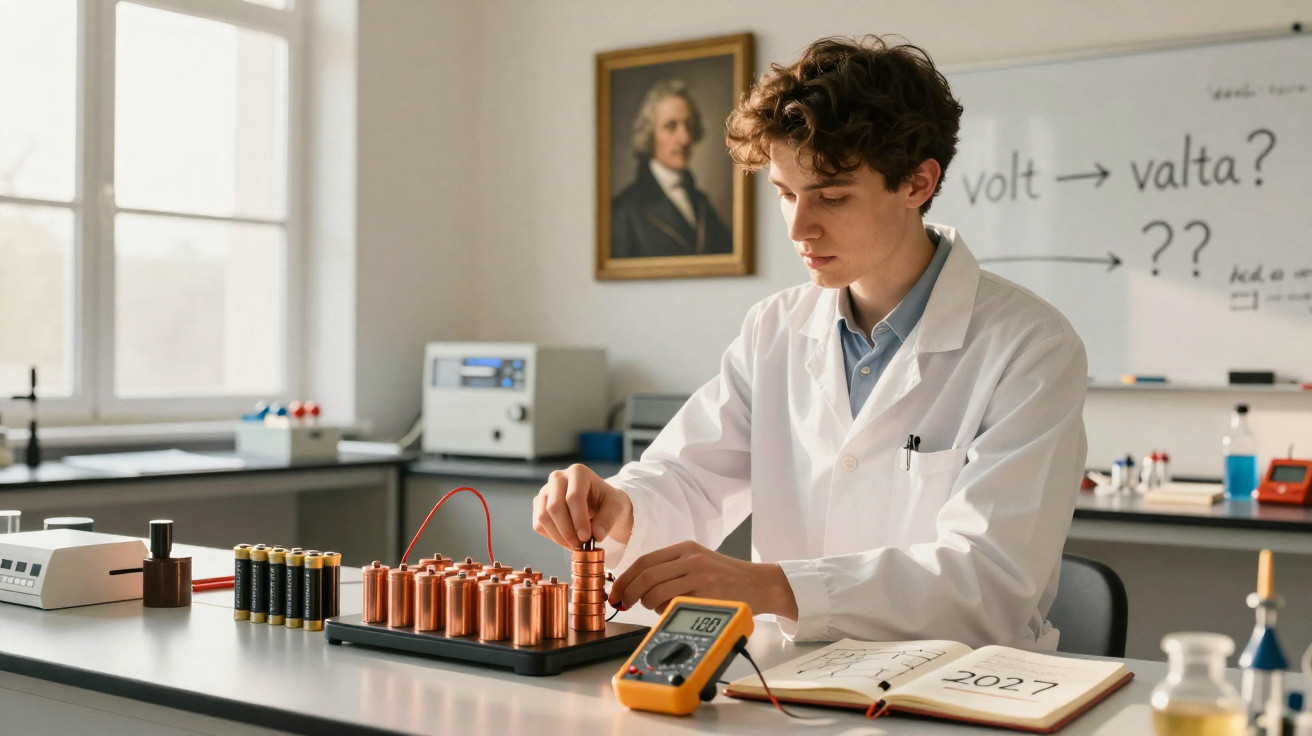
The history of science holds fascinating surprises about the names of measurement units used every day. A fresh international debate could significantly change how electrical voltage is referred to, reviving the genuine historical origins of a term so central to global technology.
What is the new proposal to change the name of the volt?
The Italian Government has submitted a formal request to alter the official name of the volt to volta. The proposal aims to pay fitting tribute to physicist Alessandro Volta, as 2027 will mark 200 years since his death in an important bicentenary commemoration.
Italy’s suggestion was officially submitted and recorded during discussions held by the international committee. Supporters of the change maintain that the scientist’s original name should be retained in full, restoring the historical identity of the figure who revolutionised the science of modern energy.
The debate covers several key aspects of the methodological review of units:
- Italian proposal: A direct change from the term volt to the original word volta.
- CCEM committee: Formal recording of the scientific agenda during the global organisation’s meeting.
- ⏳ Year 2027: The bicentenary marking 200 years since the celebrated inventor’s death.
- International System: A technical amendment that would affect contemporary global physics manuals.
- Historical record: Preservation of the true identity of the creator of the first electric battery.
How did the international committee respond to the idea?
The Consultative Committee for Electricity and Magnetism entered the request into its official meeting records. This technical body plays a vital role in assessing revisions to the International System, ensuring that any naming change undergoes exceptionally rigorous evaluation by highly qualified scientists.
The initial response suggests that the amendment will require broad diplomatic agreement among the organisation’s member countries. International specialists are considering its practical consequences for education and industry, ensuring that the linguistic transition does not create conceptual confusion in the technical understanding of the global community.
What role do the bodies play in this decision?
Several senior bodies are coordinating the progress of this European request. The International Bureau of Weights and Measures provides the framework for the discussions and records the opinions issued by the official commissions directly responsible for leading this major metrological reform.
Structural decision
International alignment
Final decisions depend on collective approval from the global weights and measures bodies.
Every technical modification requires scrutiny by the General Conference to ensure uniformity.
The final decision must receive approval from the General Conference on Weights and Measures before it can take effect. This highest-level body brings together global representatives to vote on major changes to the system, ensuring that measurement standards remain unified and functional for every partner nation.
The foundations of the decision-making process involve the following strategic bodies:
- BIPM as the administrative and records centre.
- CCEM as the technical assessor of electrical proposals.
- CGPM as the system’s final decision-making authority on measurement matters.
Why is this change considered historic for the volt?
Changing a technical term that has been firmly established for centuries would be a rare and far-reaching event in metrology. Most modern units were heavily simplified in the past, making a return to the original name an unprecedented act of cultural recovery in the history of global science.
Volta is immensely important to the development of electronic devices and generators. The initiative promoted by authorities such as Alessio Butti brings the Italian pioneer’s legacy back into focus, recognising the classical knowledge that drove the metrological progress of contemporary society.
The importance of this historical restoration rests on decisive factors:
- A direct tribute to the inventor of the voltaic pile.
- Correction of a long-standing linguistic simplification.
- Celebration of a fundamental scientific milestone in 2027.
What are the next steps for the proposal?
Technical committees will continue examining the project’s operational feasibility over the coming months. As solutions for a potential energy revolution progress around the world, metrological authorities are seeking to formalise the agreement needed to endorse the naming change within the international convention on weights and measures.
The final ruling is expected only at the next general deliberative meeting of the highest body. Until then, in-depth scientific discussions will continue within specialist commissions, ensuring that the transition is carried out in an organised way and fully integrated into the day-to-day work of the global technology industry.
Official source: Information obtained directly from BIPM.
















Comments
No comments yet. Be the first to comment!
Leave a Comment