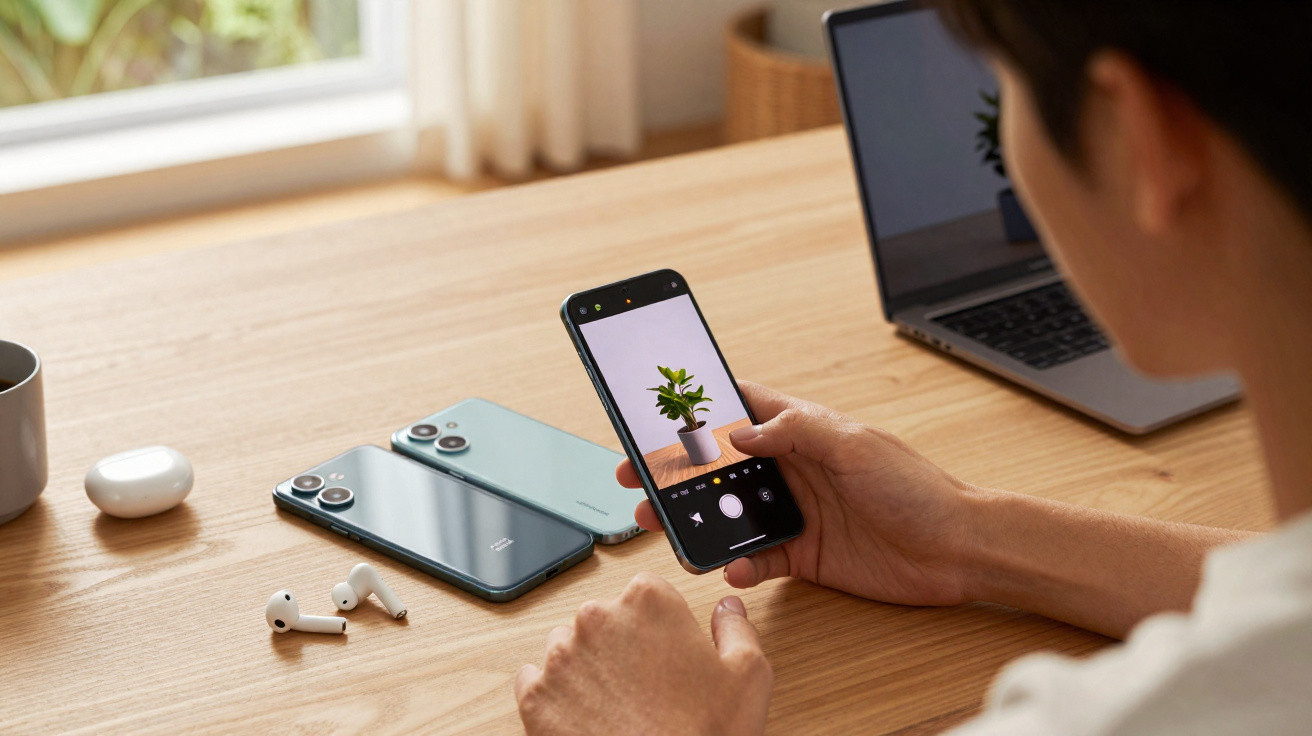
Google has unveiled its new Pixel smartphones. Designed to set the standard for the Android world, these devices place agentic AI at the centre of the experience. Here is everything you need to know.
Google’s Pixel 11 range is now official. The Mountain View company has finally introduced its latest premium smartphones, which matter in the Android landscape because they are the first to receive the new version of the operating system. They also usher in Gemini Intelligence, which could transform the everyday experience for many users.
As usual, Google has launched several smartphones aimed at different needs. They all share one thing: a clear focus on the premium market. Here is what the range offers.
How many Pixel 11 models has Google announced?
Google has introduced four Pixel 11 handsets:
- Pixel 11
- Pixel 11 Pro
- Pixel 11 Pro XL
- Pixel 11 Pro Fold
The Pixel 11 Pro and Pixel 11 Pro XL are essentially the same phone, offered in two different sizes.
Which Pixel 11 is best for each use?
Google has positioned every Pixel 11 model around a particular type of user. The standard Pixel 11 is for anyone looking for an excellent premium smartphone with strong performance and a “pure” Android experience. It is a particularly well-rounded device in terms of power, battery life and photography.
Based on the Pixel 11, the Pixel 11 Pro improves several technical areas. Its camera system is therefore better, with a more capable ultra-wide sensor and a more advanced telephoto lens offering up to x120 digital Pro Zoom, compared with x30 Super Zoom on the Pixel 11 and Pixel 11 Pro Fold. Google intends its Pixel 11 Pro to serve as a benchmark for smartphone photography.
The Pixel 11 Pro XL retains the main specifications of the Pixel 11 Pro - the same chip, camera system, RAM and storage options - but adds a larger display, increasing the diagonal from roughly 6.3 to 6.7 inches, along with a larger 5,115 mAh battery rather than 4,850 mAh. It also supports faster wired charging: up to 75% in 30 minutes with a 45 W charger, versus 55% on the Pro with a 30 W charger. This makes it more comfortable for watching content and slightly more enduring in daily use.
Finally, the Pixel 11 Pro Fold is a foldable smartphone. It is primarily built for people who consume plenty of content, whether gaming or video. Its large 8-inch internal screen is also very useful for work. However, it does not match the Pixel 11 Pro’s photographic quality, as it broadly inherits the standard Pixel 11 camera system. That is slightly disappointing for the most expensive handset in the line-up.
What are the Pixel 11 prices?
Despite the RAM crisis, the Pixel 11 range costs no more than it did in 2025, a decision we welcome. However, 128 GB versions have been removed, with 256 GB becoming the entry-level storage capacity, which naturally raises the starting price:
- Pixel 11: from €999
- Pixel 11 Pro: from €1,199
- Pixel 11 Pro XL: from €1,399
- Pixel 11 Pro Fold: from €1,999
Buying a Pixel 11 Pro, Pro XL or Pro Fold also includes six months of Google AI Pro at no extra cost, with a real value of €131.94. This provides higher Gemini usage limits, 5 TB of cloud storage and Google Health Premium.
What technical upgrades do the Pixel 11 models bring?
Google has taken a notably restrained approach to the Pixel 11’s hardware evolution. Admittedly, the current climate is not especially favourable to a revolution. They nevertheless feature the new Tensor G6 processor, Google’s in-house SoC. Compared with the Tensor G5, Google promises up to 20% better power efficiency, 25% faster web browsing and 15% quicker app loading. The Pixel 11 Pro, Pro XL and Pro Fold also receive up to 50% more computing power.
The TPU dedicated to photography is also 50% more powerful, enabling faster processing for computational photography tasks. This is not a minor detail, given the increasingly important role of AI in Android through Gemini Intelligence.
On security, the new Titan M3 chip includes post-quantum cryptography, while every model now comes with an integrated Google VPN at no additional cost. Another welcome point is that all Pixel 11 devices receive seven years of OS, security and Pixel Drop updates.
Here are the Pixel 11 technical specifications:
| Specification | Pixel 11 | Pixel 11 Pro | Pixel 11 Pro XL | Pixel 11 Pro Fold |
|---|---|---|---|---|
| Display | 6.3-inch OLED 2,856 x 1,280 pixels 120 Hz Corning Gorilla Glass Victus 2 3,600 nits |
6.3-inch OLED 2,856 x 1,280 pixels 120 Hz Corning Gorilla Glass Victus 2 3,600 nits |
6.8-inch OLED 2,992 x 1,344 pixels 120 Hz Corning Gorilla Glass Victus 2 3,600 nits |
External: 6.4-inch OLED 2,364 x 1,080 pixels 120 Hz Corning Gorilla Glass Victus 2 3,600 nits Internal: 8-inch OLED 2,160 x 2,076 pixels 2,000 nits |
| Processor | Google Tensor G6 | Google Tensor G6 | Google Tensor G6 | Google Tensor G6 |
| RAM | 12 GB | 12/16 GB | 12/16 GB | 16 GB |
| Storage | 256/512 GB | 256/512 GB/1 TB | 256/512 GB/1 TB | 256/512 GB/1 TB |
| OS | Android 17 | Android 17 | Android 17 | Android 17 |
| Camera sensors | 48-megapixel wide sensor 13-megapixel ultra-wide sensor 10.8-megapixel x5 zoom telephoto sensor |
50-megapixel wide sensor 48-megapixel ultra-wide sensor 48-megapixel x5 zoom telephoto sensor |
+ 50-megapixel wide sensor + 12-megapixel ultra-wide sensor |
48-megapixel wide sensor 13-megapixel ultra-wide sensor 10.8-megapixel x5 zoom telephoto sensor |
| Selfie sensor | 42 megapixels | 42 megapixels | 42 megapixels | 42 megapixels |
| Battery | 4,985 mAh, 30 W fast charging | 4,850 mAh, 30 W fast charging | 5,115 mAh, 45 W fast charging | 5,000 mAh, 30 W fast charging |
| IP rating | IP 68 | IP 68 | IP 68 | IP 68 |
| Colours | Frost, Hibiscus, Pistachio, Obsidian | Canyon, Fog, Olive, Obsidian | Canyon, Fog, Olive, Obsidian | Olive, Obsidian |
What camera setup do the Pixel 11 phones use?
As every year, Google makes a meaningful distinction between the standard Pixel 11 and the Pro models when it comes to photography.
The Pixel 11 has a 48-megapixel main sensor (ƒ/1.70), a 13-megapixel ultra-wide sensor (ƒ/2.2, 120° field of view) and a 10.8-megapixel x5 telephoto lens (ƒ/3.1), delivering digital Super Zoom up to x30. At the front, it has a 10.5-megapixel selfie camera.
The Pixel 11 Pro and Pro XL take a clear step up: a 50-megapixel main sensor (ƒ/1.68, with a larger 1/1.3-inch physical sensor), a 48-megapixel ultra-wide sensor with autofocus (ƒ/1.7, with a wider 123° field of view), and above all a 48-megapixel x5 telephoto lens (ƒ/2.8). This combination enables digital Pro Zoom up to x120. They also receive a far higher-resolution 42-megapixel selfie sensor and are the only models in the range able to record in 8K at 24/30 FPS, thanks to Video Boost.
The Pixel 11 Pro Fold is closer to the Pixel 11 than to the Pro models: it uses the same 48-megapixel main sensor at ƒ/1.70, a slightly less advanced 10.5-megapixel ultra-wide sensor at ƒ/2.2 with a 127° field of view, and the same 10.8-megapixel x5 telephoto lens, with Super Zoom capped at x30. Its real point of difference is its foldable format, which unlocks new photographic uses such as Dual Screen Preview, allowing the subject to see themselves posing on the external screen, or taking selfies with the rear camera system, which is generally of higher quality than a conventional front-facing camera.
Across the line-up, Google’s in-house software features are present: Magic Capture, Photo Styles, Night Sight - including an instant version exclusive to Pro models - Astrophotography, and Real Tone for faithful rendering of every skin tone.
What is the new LED on the rear of the Pixel 11?
There are no major design changes either. Naturally, Google has made a few refinements to the dimensions, shapes - very slightly - and the matte rear panel, but this year’s major new feature is HiLight.
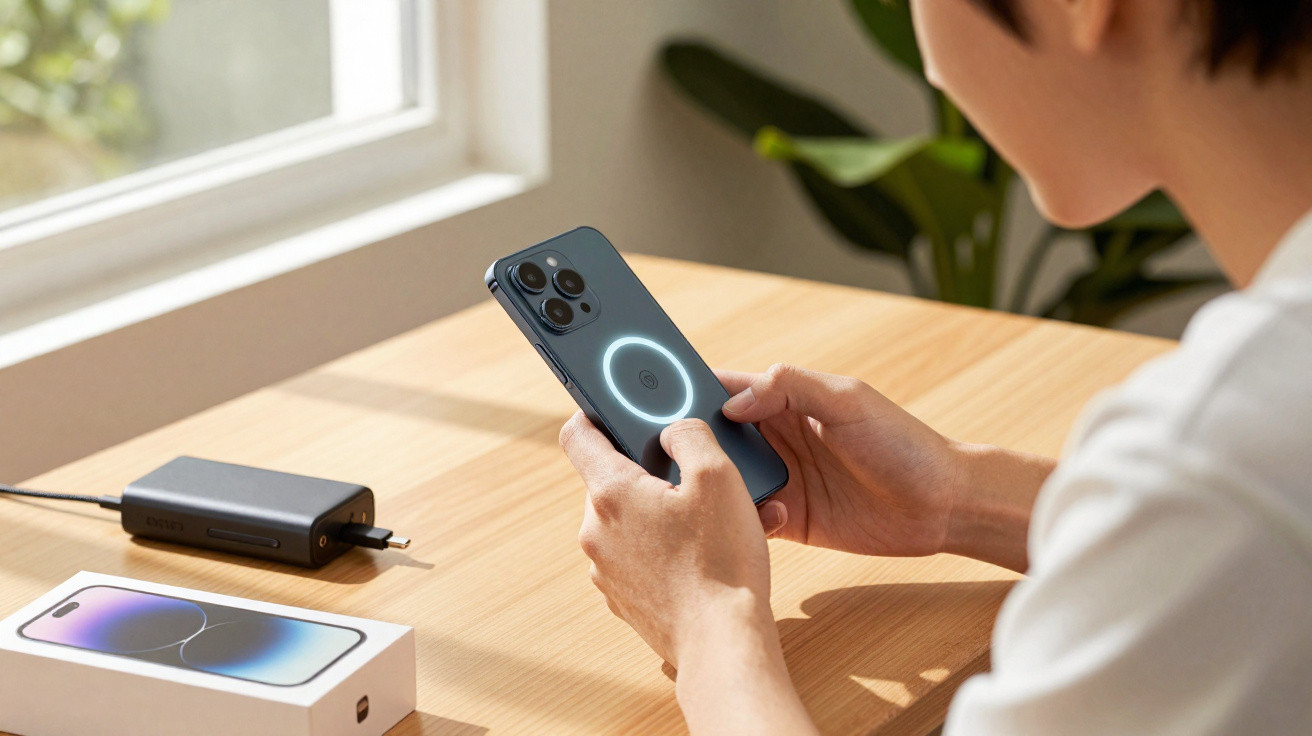
HiLight is a collection of LEDs positioned around the flash within the camera module. They illuminate on the rear of the smartphone to provide information without requiring you to turn it over or look at the display. In practical terms, it has two purposes: using a personalised colour to notify you of incoming calls from favourite contacts - integrated into Google’s Phone app and WhatsApp - and flashing subtly when Gemini is listening, thinking or replying. Is your mum calling? You will know if you have assigned her a particular colour. It is a small design idea reminiscent of Nothing’s phones, except it is limited to the Pixel 11 Pro, Pro XL and Pro Fold: the standard Pixel 11 does not get it.
What software features arrive on the Pixel 11?
The Pixel 11 phones are intended to be the flagship devices for Android 17, so they include every addition in this 2026 version. There are plenty of them, including the ability to turn compatible apps - browser, calendar, Gemini and more - into floating bubbles on the Pixel 11 Pro Fold, with up to five displayed at once. Creator mode adds a teleprompter and optimised voice enhancement to simplify editing, making it ideal for content creators. New voice input features automatically remove filler words such as “um” and format your speech into clear, polished text.
However, the core of Pixel and Android 17 is Gemini Intelligence. This AI operates in the background using what is displayed on screen. It can compose, rewrite and refine messages while adapting to your writing style; translate videos, podcasts and voice messages live across several languages; and translate sign language into text directly in Gboard to make communication easier for deaf and hard-of-hearing users.
There is also Circle to Search, which lets you identify an object, translate text or find answers about what is around you straight from the camera module, without switching apps. The potential uses are numerous. This extensive underlying work could represent a genuine shift in how these Pixel 11 devices are used.
Summary of the differences from the Pixel 10
Google has remained restrained in its messaging, but there are genuine differences compared with the Pixel 10 range. They include:
- Chip: up to 20% better power efficiency, 25% faster web browsing and 15% quicker app loading than the Tensor G5 in the Pixel 10 range. The Pro, Pro XL and Pro Fold also offer up to 50% more computing power.
- Display: the Pixel 11 Pro is 9% brighter and twice as scratch-resistant as the Pixel 10 Pro; the Pro Fold gains 20% brightness on both its internal and external displays compared with the Pixel 10 Pro Fold.
- Photography: on the Pro/Pro XL, the main sensor moves to 50 megapixels with a new 1/1.3-inch sensor, while the telephoto lens absorbs 32% more light than that of the Pixel 10 Pro. On the Pixel 11, the main sensor gains 56% more light sensitivity than the Pixel 10. On the Pro Fold, the main lens captures 56% more light than on the Pixel 10 Pro Fold. Instant Night Sight on the Pro/Pro XL is also up to 4.5 times faster than on the Pixel 10, 9 and 8.
- Wireless charging (Pixelsnap): faster throughout the range than on equivalent Pixel 10 models - up to +29% on the Pixel 11 Pro, +25% on the Pixel 11, +20% on the Pro Fold and +17% on the Pro XL.
- Design and durability: the Pixel 11 Pro Fold is around 1 mm thinner, nearly 10% lighter and up to 3 times more durable than the Pixel 10 Pro Fold.
- Storage: minimum storage rises to 256 GB across the entire range, versus 128 GB previously on entry-level versions.











Comments
No comments yet. Be the first to comment!
Leave a Comment