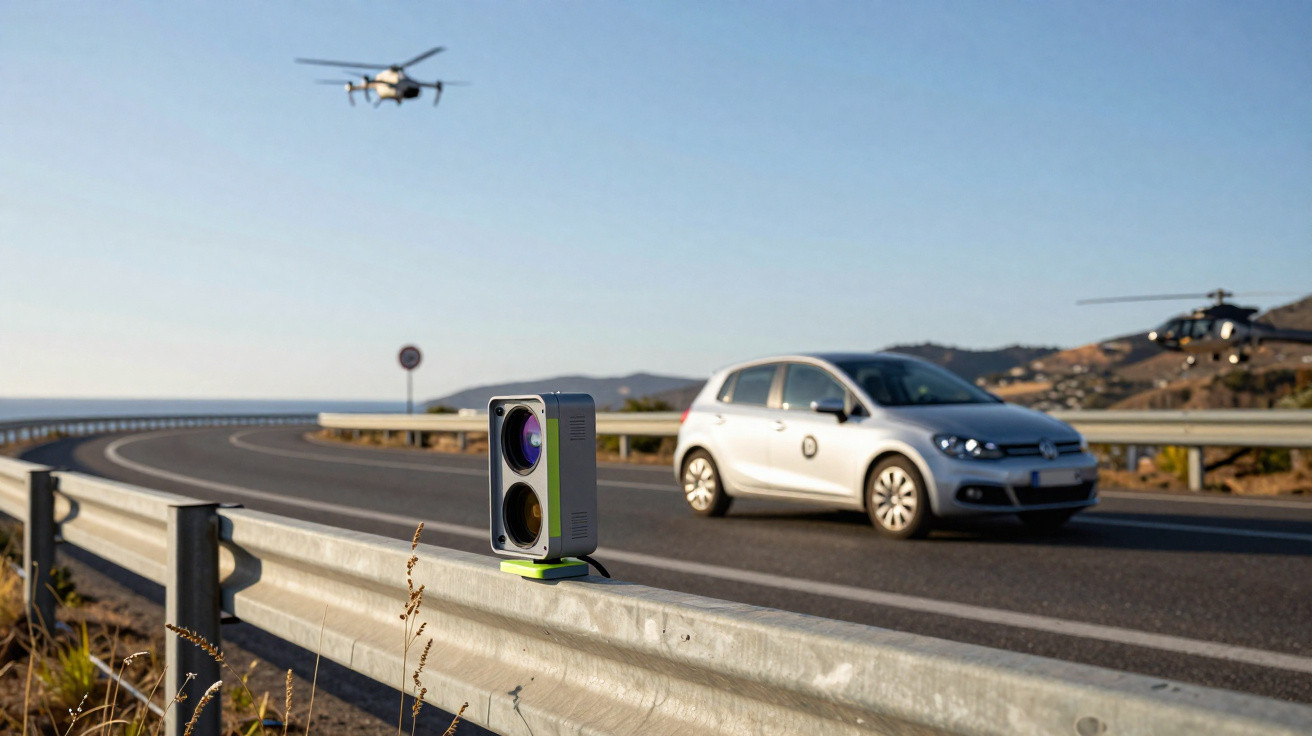
Anyone who enjoys driving a little faster while on holiday in Spain is now putting their driving licence at risk. The traffic authority is deploying new, exceptionally discreet radar systems that can detect speeding drivers from long distances – including from the air. At a time when millions of holidaymakers are heading for the coast, the country is using technology that sounds more like military equipment than conventional traffic enforcement.
Easter traffic, the start of the holidays and an entirely new enforcement plan
Around Easter, Spain’s motorways traditionally become long queues of moving traffic. Families set off on holiday, commuters make a last dash for the seaside, and many people try to arrive on time by adding a few km/h to their speed. It is precisely this combination of stress and impatience that the DGT traffic authority’s new package of measures is targeting.
Rather than relying on clearly visible grey speed-camera boxes beside the road, authorities are increasingly using highly mobile devices that are difficult to spot. The aim is to stop drivers from slowing down briefly before a known speed camera, only to accelerate sharply again afterwards. Speeding motorists are meant to be caught before navigation apps can issue a warning.
Spain is relying on surprise: radar enforcement before the driver even realises they are being monitored.
Velolaser mini radar: so small it is virtually impossible to spot
At the centre of the new strategy is a system called Velolaser. It is a laser radar that is far smaller than traditional devices – compact enough for a police officer to carry in a backpack.
The devices can be placed:
- behind crash barriers, just above the road surface
- on the rear of road signs
- on small tripods in the grass beside the carriageway
- directly on the doors or rear of unmarked vehicles
Anyone travelling at 120 or 130 km/h has virtually no chance of recognising the device in time. Even on open roads, the units can look like harmless small boxes or roadside sensors.
Measurements from more than one kilometre away
The danger for speeding drivers lies in the technology. Velolaser does not wait until a car passes directly in front of it to measure speed. Its laser signals detect vehicles from more than one kilometre away. The system takes several readings per second, compares the data and stores number-plate images at very high resolution.
By the time a driver eventually notices the unit, it is already too late. Whether an offence has occurred is determined from an entire series of measurement points, rather than a single random image. Long, gently downhill straights are particularly favoured locations, where a driver’s right foot can quickly become too heavy.
Another element is that police constantly move the devices to keep traffic services and community apps off balance. Even if users report a location, the Velolaser may be somewhere completely different an hour later.
Monitoring from above: helicopters with zoom vision
The DGT is not concentrating solely on the road surface. Some enforcement now arrives quietly from the sky. Spain operates around 15 specially equipped helicopters fitted with powerful cameras.
At an altitude of around 700 metres, these aircraft often go unnoticed by motorists below. Rotor noise fades into the background, while drivers are more likely to look for speed cameras or police cars than a dot in the sky. The cameras can monitor vehicles within a radius of around one kilometre, analyse speeds and record offences.
Air surveillance tracks speeding drivers between 80 and 350 km/h – while the camera still stays sharp.
From the air, officers chiefly watch road sections where serious accidents repeatedly occur: long straights before dangerous bends, routes leading to holiday regions and stretches with confusing lane changes. Risky manoeuvres such as tailgating, sudden lane changes and driving too close can also be identified clearly from above.
Drones as a quiet addition to helicopter patrols
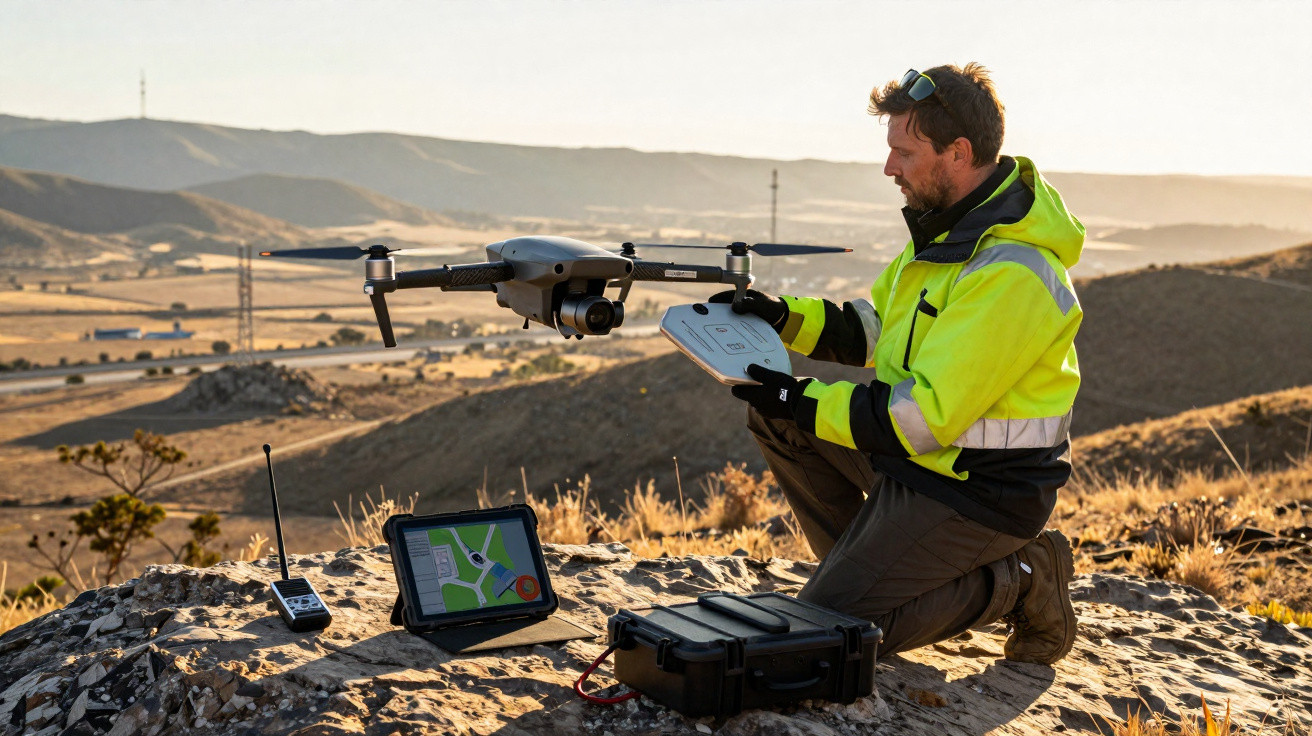
Alongside its helicopters, the authority is sending a fleet of around 40 drones into the air. Ground teams operate them, usually near heavily congested routes, such as before toll stations, urban ring roads or major junctions.
These drones fly much lower than helicopters, generally around 100 metres above the carriageway. This makes them barely noticeable to drivers, particularly in daylight and amid traffic noise. Their operating time is about one hour per deployment – enough to cover peak periods in full.
Fines issued directly from the air
The cameras fitted to the drones are technically similar to those used in helicopters. They record speeds, track vehicles and can produce clear images of number plates. Part of the drone fleet is now even authorised to independently provide evidential images for fines.
This means that, in many cases, there is no longer any need for a patrol to pull the vehicle over later. The material is assessed at the control centre, and the notice is posted to the registered keeper. Holidaymakers often only become aware of the offence days after returning home.
Spain’s strategy: present everywhere, yet barely visible
Combining ground-based equipment such as Velolaser with helicopters and drones creates a dense network intended above all to be unpredictable. Drivers never know exactly where checks are taking place and can no longer rely on a handful of familiar speed-camera locations.
| System | Operating location | Strengths |
|---|---|---|
| Velolaser | Hard shoulders, unmarked vehicles, crash barriers | barely visible, highly mobile, long range |
| Helicopter | 700 m above motorways | broad overview, extensive tracking range |
| Drone | approx. 100 m above sensitive road sections | extremely quiet, precise observation, short response times |
The DGT justifies the extensive deployment by referring to accident figures. Excessive speed remains responsible for many serious injuries. Holiday periods such as Easter and the start of summer are considered particularly critical because they bring many infrequent drivers, hire-car tourists and overtired holidaymakers onto the roads.
What German holidaymakers should consider in Spain
Anyone travelling to Spain in their own car or a hire car should take the new situation seriously. The key points are:
- Speed limits apply even on empty motorways – usually 120 km/h.
- Speeding offences can be enforced later in Germany.
- Apps that warn about speed cameras are restricted or not permitted, depending on the region.
- Hire-car companies often charge additional administration fees for fines.
On long straights towards coastal regions, the speed limit can quickly feel too low. The new technology now penalises that misjudgement consistently. Anyone who is also overtired or distracted not only increases their own risk, but that of everyone else using the road.
Why high-tech radar can also improve safety
As uncomfortable as the prospect of almost invisible surveillance may be, traffic experts also see benefits in these systems. When speed limits are observed consistently, the risk of accidents falls significantly, especially on motorways. Helicopters and drones also help identify dangerous patterns at an early stage – for example, locations where risky overtaking manoeuvres repeatedly occur.
Spain is increasingly using data from these operations for analysis: where do collisions happen frequently? Which sections require structural changes or clearer signs? Where should the limit be adjusted? The technology therefore serves not only as a machine for issuing fines, but also as a basis for long-term improvements.
For holidaymakers, however, the message remains clear: anyone driving in Spain should set cruise control a little more conservatively, plan plenty of breaks and avoid being tempted by the holiday mood into risky games. The radar devices are difficult to see – but their consequences are all the more noticeable.















Comments
No comments yet. Be the first to comment!
Leave a Comment