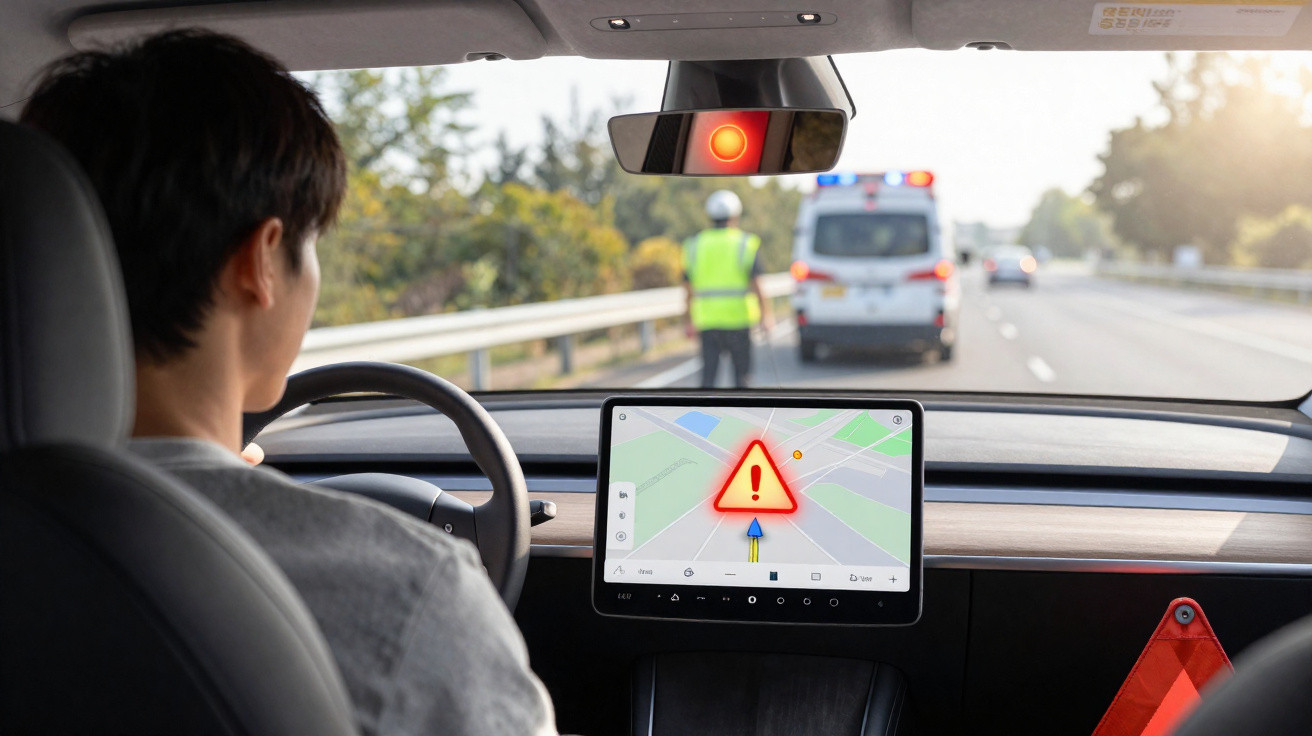
A new Waze feature is intended to make dangerous situations at roadside incidents safer – and could help prevent serious crashes.
The Waze navigation app is gaining a safety feature designed to alert drivers well in advance to roadworks and roadside incidents. What may initially appear to be a small icon on the screen could, in practice, determine whether road maintenance workers return home safely and whether motorists have sufficient time to brake.
How Waze becomes a digital advance warning sign
Waze has been among the world's most popular navigation apps for years. According to the company, around 140 million users access it regularly to view traffic jams, accidents and roadworks in real time. The app relies on reports from its community, supplementing them with official data.
Google, Waze's owner, is now taking the concept further. Working with the relevant road authorities, it is developing a new alert specifically for roadside operations. The aim is to provide greater protection for both motorists and road workers.
“Whenever road maintenance teams or service crews are working beside a road, Waze is intended to warn drivers directly and prompt them to slow down.”
The principle is straightforward: people navigating with Waze receive visual and audible alerts as soon as they approach an active operation. This turns the app into a form of digital advance-warning board, reacting much earlier than a sign positioned beyond a bend.
How the new Waze safety alert works in detail
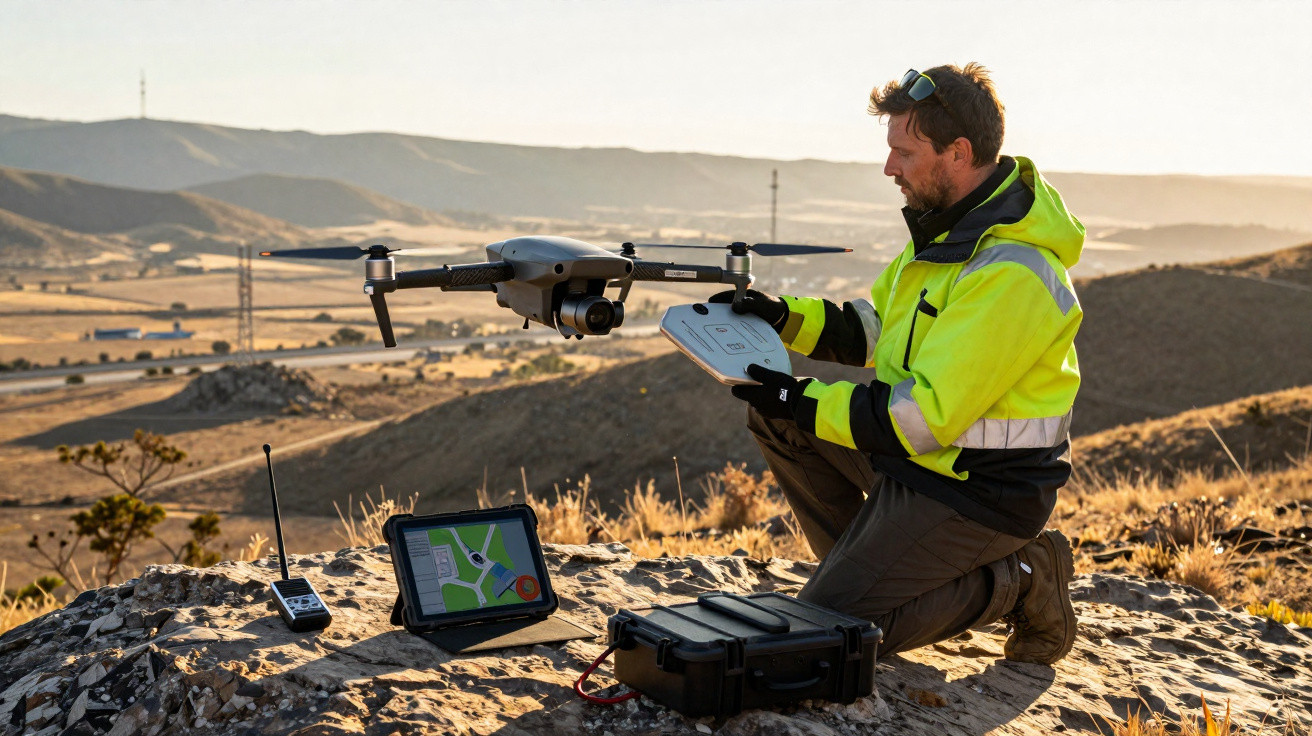
The technical process is relatively simple, yet carefully designed. Road service vehicles are fitted with a dedicated tablet solution linked to Waze. When staff begin working at the roadside, they activate an incident report on the tablet.
That report is then fed into the Waze system in real time and displayed on drivers' screens.
What drivers see and hear on screen
- An icon appears on the map to represent an emergency or service vehicle at the roadside.
- As they approach the operation, drivers also hear an audible alert from their smartphone.
- The alert remains active while the driver is travelling through the affected stretch of road.
- It disappears once the vehicle leaves the area or the road team ends the operation.
This gives motorists more time to reduce their speed, increase the gap to vehicles ahead and, if needed, move into another lane early. Every additional metre of reaction distance matters, particularly on dual carriageways and motorways.
Initial trials in France send a signal across Europe
The partnership began in several French regions, including Brittany, Pays de la Loire and Nouvelle-Aquitaine. Road authorities there have already been using the tablets in day-to-day operations to report live incidents.
Feedback from the responsible bodies has been positive: fewer dangerous situations when securing breakdowns or carrying out maintenance work, clearer information for motorists and greater reassurance for road workers, who otherwise often feel exposed beside fast-moving traffic.
“The goal is a connected road where warnings about obstacles, accidents, roadworks or poor conditions are delivered automatically into the vehicle – without relying on radio bulletins or chance.”
Those involved regard this as only the first stage. In the longer term, more events are expected to be reported automatically and across wider areas, including fallen objects, black ice, sudden fog banks and unsecured sections of roadworks.
Why the new alert could save lives
Anyone who spends a lot of time on the road will know the scenario: you are travelling at 120 km/h on a fast road, and an orange lorry with its hazard lights flashing suddenly appears on the hard shoulder at the last moment. People are often standing close to the carriageway, sometimes protected by no more than a single traffic cone.
In precisely these moments, even minor distractions – a brief glance at the radio, a conversation or a message on a mobile phone – can be extremely dangerous. The new Waze function addresses this by bringing the moment of awareness forward.
| Situation | Without warning | With Waze alert |
|---|---|---|
| Reaction time | often only once the site is visible | much earlier due to sound and icon |
| Risk of emergency braking | high, especially in heavy traffic | lower, as gradual braking is possible |
| Protection for response crews | heavily dependent on on-site signage | an additional digital layer of protection |
Roadside operations can be difficult to spot until very late, especially at night, in rain or on winding routes. A clear and timely alert on the sat-nav display may provide the crucial fraction of a second that prevents a rear-end collision or a worker being clipped.
Potential implications for Germany and German-speaking countries
What is now getting under way in France is likely to become relevant for other countries soon. Waze is widely used in German-speaking countries, particularly by frequent drivers and commuters. If the tablet model in service vehicles proves successful, partnerships with road maintenance authorities in Germany, Austria or Switzerland would be an obvious next step.
The concept also fits existing campaigns in these countries, which repeatedly remind drivers to slow down near accident or breakdown sites and not put emergency services at risk. The digital warning could support those appeals in practical everyday driving.
What could change for users in future
- More official reports in navigation apps, rather than community alerts alone.
- Better coordination between road operators, navigation services and traffic management.
- More information shown directly on the in-car display, provided Waze is connected to the vehicle system.
- In time, warnings about black ice, aquaplaning zones or sudden traffic build-ups as well.
Authorities gain an additional benefit too: they can see how extensively their alerts are actually used and plan traffic measures more effectively. Data from anonymised usage statistics can help identify particularly high-risk stretches of road.
What drivers must still remember
Despite all the technology, one basic rule remains: drivers must not hold their smartphone while driving. Anyone using Waze should secure the phone in a proper mount or connect it through the vehicle's infotainment system. The new alert function is only useful if drivers respond to its signals without taking their attention away from traffic.
Experts repeatedly caution against treating navigation apps as toys. They should assist drivers, not distract them. It therefore makes sense to set the volume of voice directions and alerts so that they can be heard clearly without becoming constantly irritating. Anyone receiving uninterrupted notifications may eventually tune out everything – including the important warning about a roadside service vehicle.
More connected safety: opportunities and risks
Waze's new function illustrates the direction in which road safety is moving: away from static signs and towards dynamic digital information. This offers considerable opportunities, but it also raises questions.
One concern is dependence on apps and mobile data connections. Drivers travelling through an area with no signal may not receive an up-to-date alert. Conventional warning beacons and road signs therefore remain indispensable. Digital warning systems are meant to supplement them, not replace them.
Another issue is confidence in the data. If alerts are inaccurate or out of date, drivers may eventually stop responding to them. This is exactly why the move towards official alerts triggered by authorities is so important: it significantly improves the system's reliability.
Over the long term, a mixed system could prevail: official incident reports from authorities combined with community alerts about unexpected hazards and anonymised driving data from users. The result would be an increasingly dense safety net for everyone travelling by car – and for those who work on and beside the roads every day.















Comments
MichaelKed
При выборе мебели для детской комнаты важно правильно подобрать материал https://mebel-er.ru/portfolios/myagkaya-mebel
гибкие условия изготовления и оплаты https://mebel-er.ru/photogallery
В зависимости от пожеланий клиента, процесс изготовления и сборки мебели занимает разное время https://mebel-er.ru/portfolios/raznoe
Также крупные фирмы предлагают услугу бесплатной установки готовой мебели;
После подписания договора фирма-изготовитель приступает к созданию мебели https://mebel-er.ru/photogallery
Дизайн-проекты такой мебели ограничены только воображением малыша https://mebel-er.ru/portfolios/gostinnye
Можно заказать декоративные элементы, отражающие увлечения ребенка https://mebel-er.ru/portfolios/mebel-dlya-spalni
Например, кровать в виде машины, стеллаж с декоративными якорями https://mebel-er.ru/for-designer
Для изготовления мебели из редких пород дерева лучше всего обратиться к зарекомендовавшим себя профессионалам, например фирмам:
LarryScase
В работу брокера входит широкий спектр того, чем ему приходится заниматься https://белый.москва/zhk-lunar
Например, он полностью ведет сделку как организационно, так и юридически https://белый.москва/projects
Причем здесь нужно понимать, что чем больше сделка, тем ее сложнее закрыть https://белый.москва/projects
Однако хороший брокер отлично понимает потребности своего клиента, хорошо знает все тонкости рынка недвижимости https://белый.москва/zhk-vnukovo-country-club
Причина в том, что брокеры обычно выбирают себе определенную нишу, в которой реализуют свои профессиональные навыки https://белый.москва/
Например, загородная элитная недвижимость, зарубежная недвижимость, премиум-сегмент и так далее https://белый.москва/zhk-champine
В чем смысл брокера?
Хранение документов, необходимых для сделки https://белый.москва/zhk-vnukovo-country-club
Анализ рынка недвижимости и поиск перспективных проектов для девелоперов https://белый.москва/projects
Leave a Comment