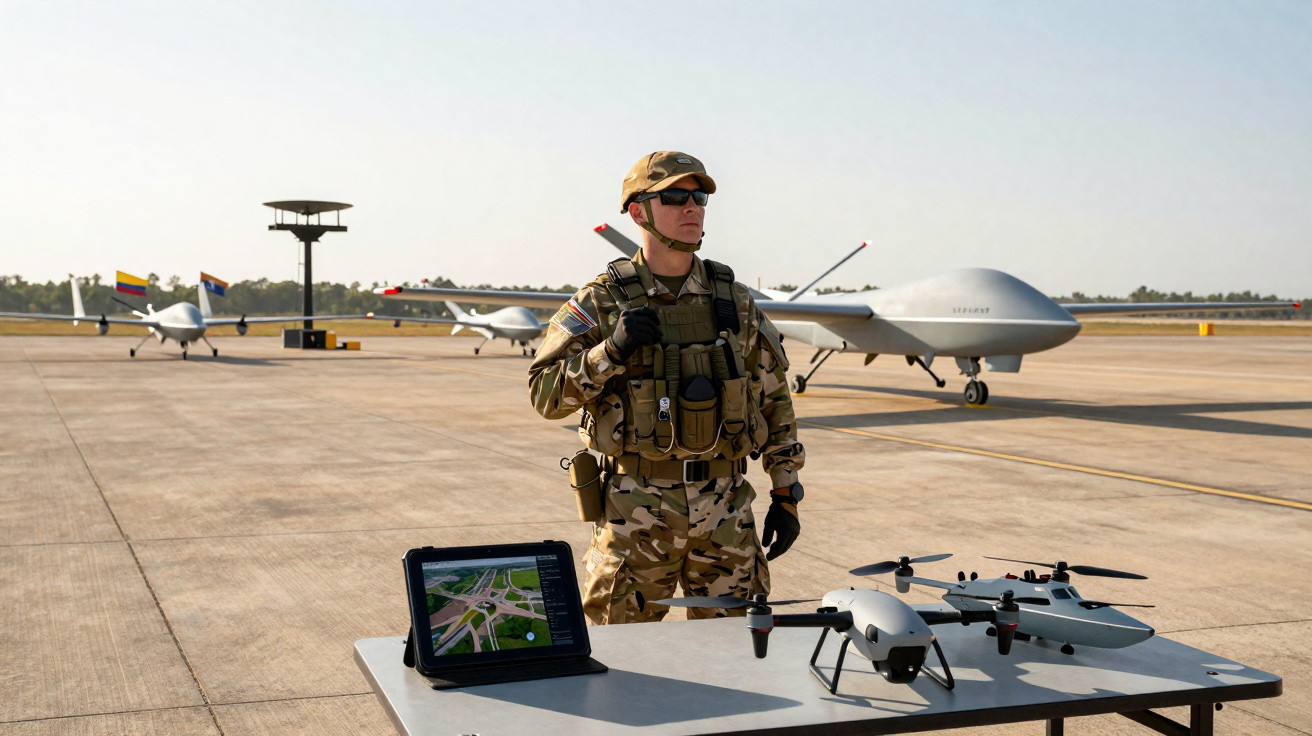
Colombian Army activates the Unmanned Aircraft Battalion (BANOT)
As part of the 30th anniversary commemorations for the Army Aviation branch, the Colombian Army has activated its first Unmanned Aircraft Battalion (BANOT) at Tolemaida Military Fort, a pioneering unit focused on counter-drone operations. The milestone signals a new phase for Colombian military aviation, formally introducing capabilities for managing, operating and neutralising unmanned systems. With its command post based in Boyacá, the BANOT supports the institution’s modernisation and technological innovation programme, intended to strengthen operations across the country.
The BANOT was created in response to the need to counter attacks using unmanned aerial vehicles (UAVs) carried out by armed groups in several parts of Colombia. As these threats have become increasingly common, the Army has had to establish a specialised structure able to detect, track and neutralise hostile drones, while also incorporating its own platforms for surveillance, intelligence and battlefield support missions. Project background indicates that the initiative began taking shape in 2024, following a number of incidents that exposed troops’ vulnerability to improvised or modified aerial devices used for offensive purposes.
Countering drones and closing the technological gap
The Unmanned Aircraft Battalion also represents an effort to narrow the technological gap with other armies in the region. Although Colombia was relatively late in incorporating unmanned systems into its defence structure, the new unit clearly demonstrates the institution’s determination to adapt to emerging technologies and update its operational doctrine. Military sources state that BANOT personnel are expected to receive specialist training through cooperation programmes and joint training with allied countries and NATO, with the aim of developing effective tactics against unconventional aerial threats.
The circumstances behind the project illustrate the growing complexity of Colombia’s internal conflict. According to figures from the Office of the President of the Republic, more than one hundred drone-related incidents were recorded in 2024 alone. In southern departments, several attacks involving explosive devices dropped from drones have injured civilians and military personnel, while illegal armed groups continue to use these tools for surveillance and intelligence tasks. At the same time, authorities have identified the use of unmanned surface vehicles (USVs) in drug-trafficking operations, including the recent seizure in the Caribbean Sea of a device capable of carrying 1.5 tonnes of narcotics.
A revised approach to military drone use
This new environment has led the Ministry of Defence to reassess its approach to the military use of drones. For years, various specialists warned about the lack of strategic vision and the absence of a comprehensive plan to address such threats. However, the current administration, led by Minister Iván Sánchez, appears to have recognised the urgency of establishing genuine defence and counterattack capabilities against armed drones or so-called “kamikaze or suicide” drones. It has prioritised investment in military systems while putting aside civil or symbolic projects that contribute little to national security.
Ultimately, the BANOT’s activation is a historic development for Colombian defence. It not only enhances the National Army’s capabilities in an increasingly technological operational environment, but also creates opportunities to develop new doctrines, partnerships and research programmes. If this course of action is maintained, Colombia could become one of Latin America’s leading nations in counter-drone defence and unmanned aircraft operations in the coming years.
















Comments
No comments yet. Be the first to comment!
Leave a Comment