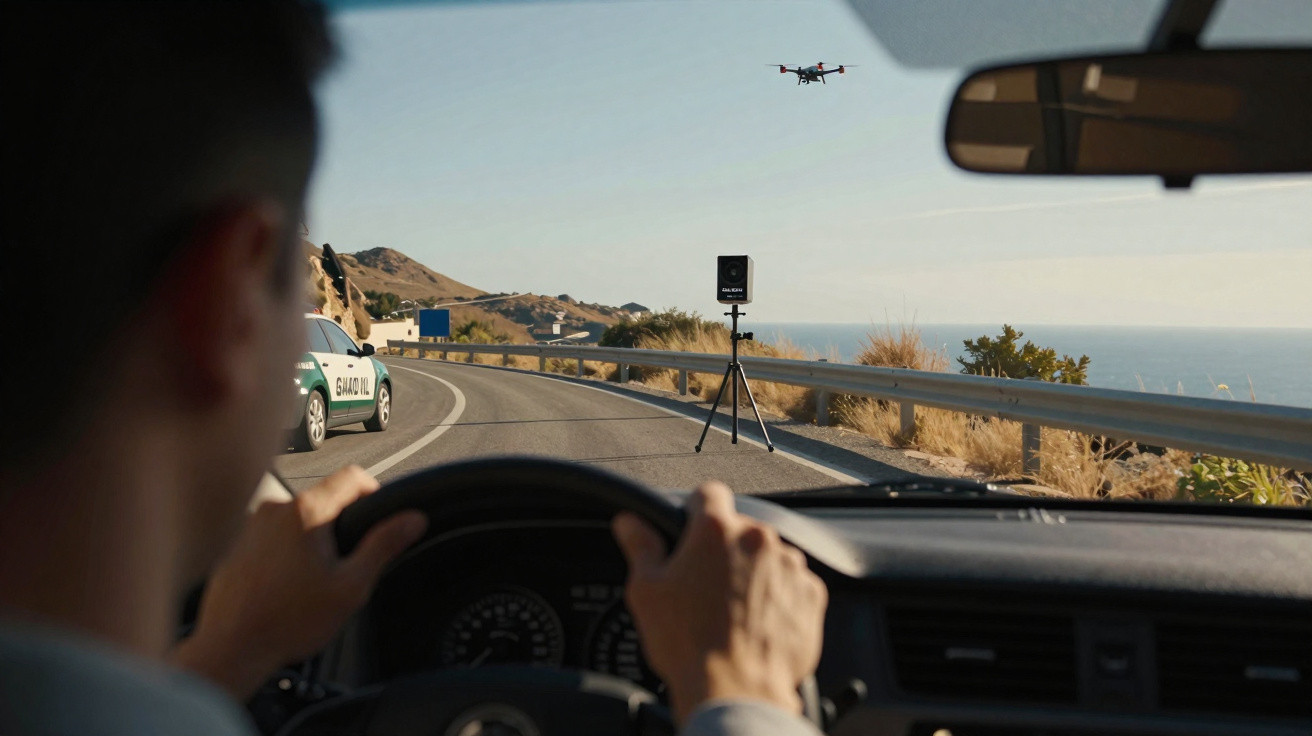
Anyone driving to Spain in the coming weeks should keep a close eye on their right foot. The country’s traffic authority is increasingly replacing conventional speed cameras with tiny laser radars, while backing them up with helicopters and drones. The aim is to catch speeding motorists sooner, outsmart apps and keep the holiday-route traffic surge under better control.
Why Spain is introducing almost invisible radars
Around public holidays such as Easter, Spain’s motorways regularly reach breaking point. Millions of domestic and international holidaymakers head towards the coast, the mountains or family visits. In this mix of congestion, impatience and long straight roads, accidents caused by excessive speed become more frequent.
The DGT, Spain’s traffic authority, is responding with a substantially tougher approach. The familiar grey roadside speed-camera columns, visible from hundreds of metres away, are no longer enough. Instead, it is deploying flexible, highly mobile systems that virtually blend into the traffic environment – and that is precisely what makes them effective.
“The new devices are intended to catch speeders before navigation apps can report them – and before drivers even see them.”
Spain is chiefly targeting two groups: habitual speeders who trust their reaction times and technology, and holidaymakers who believe that adding a few km/h can make long journeys easier.
Velolaser: every speeder’s nightmare
At the heart of the new strategy is a device with an innocuous-sounding name: Velolaser. It is a radar system small enough to fit inside a rucksack and capable of appearing at almost any point along a road.
Tiny, mobile and difficult to spot
Velolaser devices are sufficiently small to be concealed very effectively. Officers can position them, for example:
- behind crash barriers or protective fencing, just above the road surface;
- on the rear of road signs;
- on discreet tripods in the verge; or
- directly on the doors of unmarked police vehicles.
For motorway drivers passing by, they look like some sort of box, casing or measuring device – if they are noticed at all. At 120 or 130 km/h, there simply is not enough time to search for them deliberately.
Measuring speed from more than a kilometre away
Even more troublesome than their concealment is their range. Velolaser uses laser beams to record a vehicle’s speed from more than a kilometre away. Crucially, by the time a driver finally spots the device, it is already too late.
The system checks speed several times a second, stores the readings and photographs the registration plate in very high resolution. Spanish officers are particularly fond of placing these miniature radars on long, straight stretches, where many motorists briefly accelerate considerably.
“The combination of long range, high precision and changing locations makes the devices virtually impossible for speeders to predict.”
Because the equipment is easy to transport, police continually change its position. Popular navigation apps that report speed cameras are therefore limited in what they can do, as alerts often arrive after the measurement has already been completed.
An airborne speed trap: helicopters with zoom cameras
Spain is not restricting its checks to the ground. The sky now plays an active role too. The DGT operates a fleet of helicopters equipped with powerful cameras and measurement systems.
Monitoring from 700 metres up
The aircraft circle almost silently above motorways at approximately 700 metres. Few people in the cars below realise that they are being monitored from the air. Their cameras can detect and track vehicles travelling at 80 to 350 km/h, while observing an area with a radius of just over one kilometre.
The crew’s screens show registration plates, lane position and the distance to other cars in sharp detail. This makes it possible to document not only straightforward speeding offences, but also dangerous behaviour such as tailgating and aggressive lane changes.
| Type of surveillance | Height/location | Typical operational role |
|---|---|---|
| Velolaser on the ground | Hard shoulder, crash barrier, unmarked vehicle | Targeted speed checks, element of surprise |
| Helicopter | Approx. 700 m altitude | Wide-area surveillance, tracking speeders |
| Drones | Approx. 100 m altitude | Targeted checks, direct enforcement from the air |
Drones that issue fines directly from the air
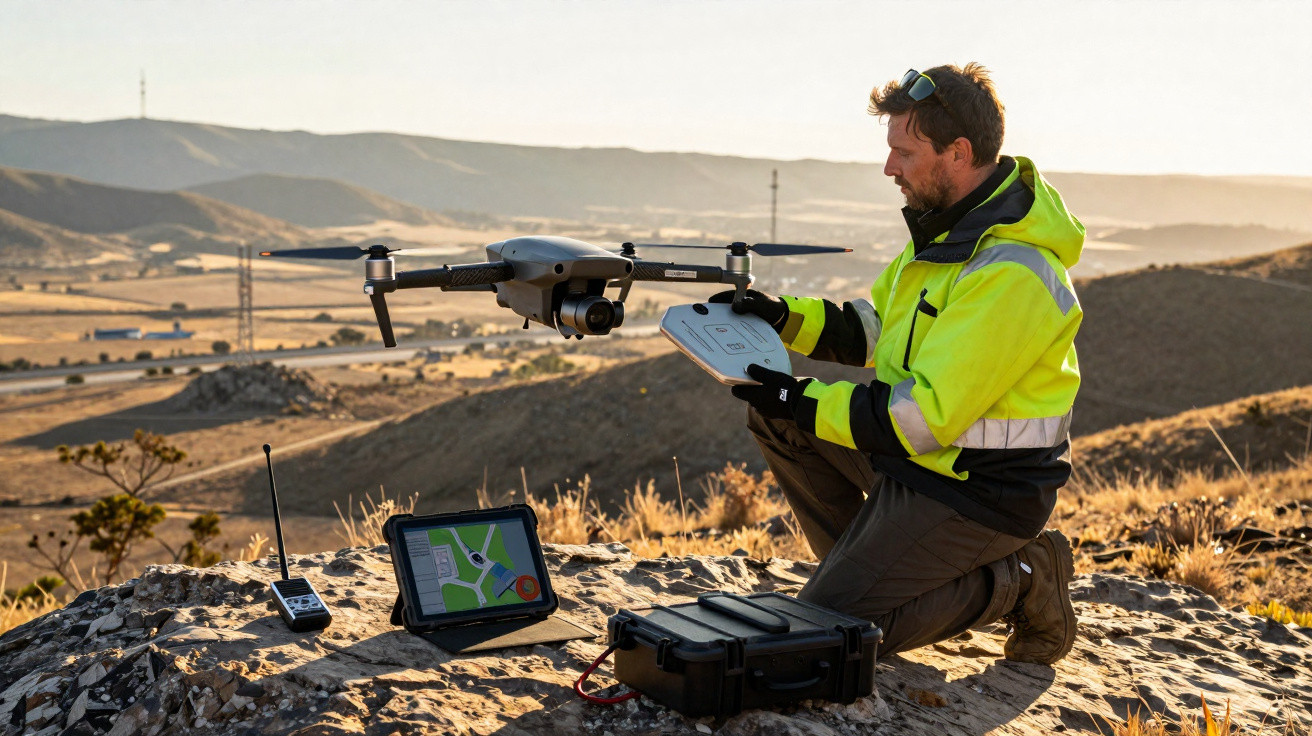
Several dozen drones are also in use. They fly much lower than helicopters, generally only around 100 metres above the road. This makes them even harder to locate.
Short flight time, major impact
Although the drones can only reach speed ranges of around 80 km/h and usually fly for just under an hour, their optics are top-of-the-range. Images of registration plates, safety distances and drivers using a mobile phone are clearly visible and can be used as evidence.
Especially significant is that around half of this drone fleet is now officially authorised to issue fines directly from the air. This means that a police patrol does not even need to wait at the roadside. The evidence images are sent digitally to the control centre, and the notice arrives in the post later.
“Motorists face a closely meshed system that leaves hardly any gaps – whether on motorways, rural roads or in holiday regions.”
What this means for holidaymakers from Germany
German travellers driving to Spain should also prepare for this new enforcement network. Anyone who thinks they can get away with being “a little faster than permitted” is taking a substantial risk – including with their holiday budget.
Consequences of speeding offences
Fines from Spain can now be enforced in Germany relatively easily once they exceed a certain amount. Anyone who assumes that a penalty notice will disappear somewhere abroad is mistaken. Depending on the speeding offence, Spain may also impose:
- substantial fines even for moderate excess speeds;
- points in the Spanish system, which can have consequences when using a hire car;
- criminal proceedings for extreme offences.
Moreover, excessive speed when approaching the end of a queue, roadworks or a vehicle braking suddenly ahead can shift an entire holiday from the motorway straight to hospital. On lengthy holiday drives in particular, many people underestimate how greatly concentration and reaction times decline with every hour spent behind the wheel.
How to drive through Spain safely and without stress
The new checks are not aimed solely at punishment. The authorities want to reduce overall speeds, lessen the severity of accidents and, above all, make peak periods during public holidays safer. Those who take this into account will arrive more relaxed.
Practical tips for the journey
- Enable speed-limit information in your satnav and check it regularly.
- Plan generous breaks so that the urge to “make up time” never arises.
- Stay particularly alert on long straight roads – these are where the invisible radars are most often positioned.
- Do not rely on app alerts, as mobile systems are constantly moved.
- Before setting off, briefly check the current traffic rules in the country.
Laser radars, helicopters and drones may sound like high-tech measures against drivers, but their core message is straightforward: anyone who follows the rules has nothing to fear from the technology. It becomes problematic chiefly for those relying on habit or luck and believing they can outmanoeuvre a sophisticated system.
For families travelling with children, it is also worth viewing these developments differently: every risky manoeuvre avoided and every crash prevented on the way to the coast not only prevents trouble with the police, but may also avert lifelong consequences. Ultimately, the cheapest and least stressful strategy in Spain is simply to drive more slowly.














Comments
No comments yet. Be the first to comment!
Leave a Comment