
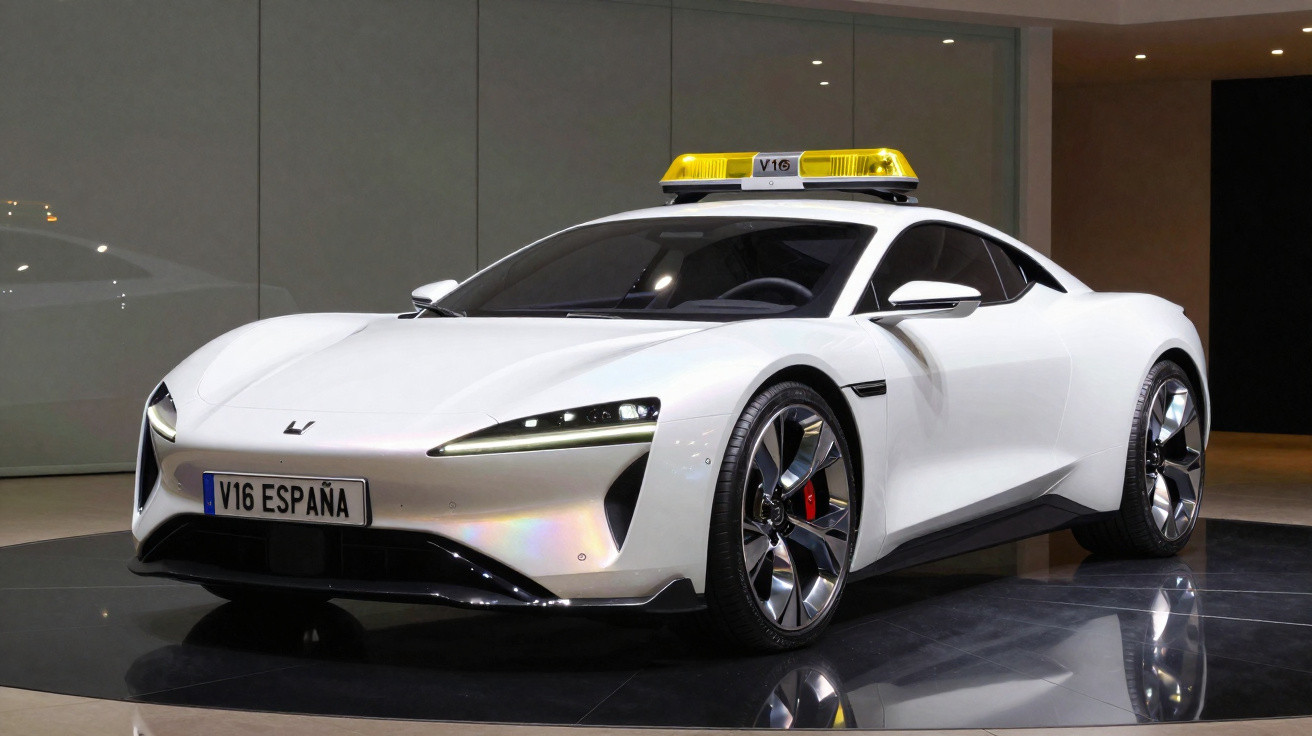
From 1 January 2026, Spain is retiring the familiar warning triangle - considered too dangerous - and replacing it with a newer, more practical device.
For decades, the warning triangle has been a staple item for motorists in difficulty. Set out several dozen metres in front of a broken-down or crashed vehicle, it helped alert other road users to an immediate hazard. That era is now coming to an end, at least in Spain, where the device is being phased out on safety grounds in favour of a more modern alternative.
The warning triangle replaced by the V-16 beacon in Spain
Since 1 January 2026, Spain’s traffic authority (the Dirección General de Tráfico) has required vehicles to carry a V-16 beacon. This is a lamp that can be placed on the roof of the car without the driver needing to get out, so that a danger can be signalled and the vehicle becomes instantly visible in the event of an accident or breakdown.
A change introduced in stages
The V-16 warning beacon officially came into force on 1 July 2021. From that date, it existed alongside the traditional warning triangle. While both devices were permitted up to January 2026, the V-16 beacon is now the only option allowed.
How the V-16 emergency beacon works
In practical terms, this compact emergency rotating beacon uses a magnetic base, and the driver only needs a few seconds to attach it to the roof of the vehicle. Unlike a warning triangle, there is no need to leave the car and walk several metres - sometimes in critically poor visibility - to put the device in place.
Another advantage credited to the V-16 emergency beacon is the built-in GPS, which automatically sends the vehicle’s location to the emergency services. From 1 January, this new piece of equipment is therefore mandatory for all vehicles registered in Spain.
Does the rule apply to foreign drivers?
To the question, “will this obligation also apply to foreign drivers travelling in Spain?” For the time being, the answer is no. The Spanish authorities have confirmed that vehicles registered abroad do not have to carry the V-16 beacon, provided they have a warning triangle, as already required under French regulations.
More recently, a study commissioned by the UK Department for Transport highlighted a different issue - this time concerning car headlights, which are said to have become too dangerous.



Comments
No comments yet. Be the first to comment!
Leave a Comment