
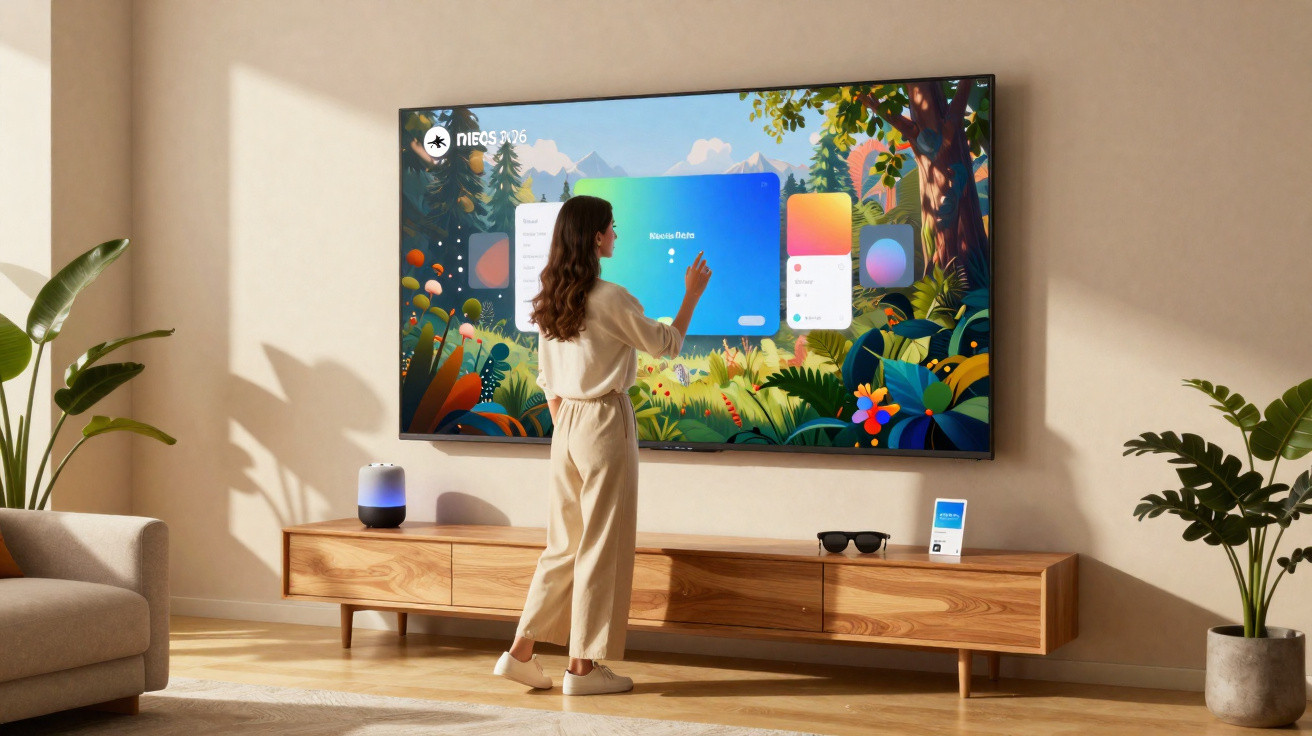
TV brands arriving at CES 2026 are preparing to unveil a fresh class of screens known as Micro RGB, pitched as a route to deeper colour, greater brightness and a deliberate step beyond the now-established OLED chapter.
Micro RGB: the next big swing after OLED and Mini‑LED
For much of the last ten years, the premium end of the TV market has largely meant OLED - and, more recently, Mini‑LED LCD models that lean heavily on local dimming. CES 2026 signals a new pivot, with Micro RGB panels emerging as the flagship change and being championed by major names including LG, Samsung, Sony and Hisense.
Rather than using a broad white or blue backlight that is then shaped by colour layers, Micro RGB is built around dense arrays of extremely small red, green and blue LEDs that generate colour directly. In effect, each pixel is responsible for its own light output, instead of depending on a single backlight unit sitting behind the panel.
"By removing the white backlight and shrinking RGB LEDs below 100 microns, Micro RGB aims to tighten color control and cut visual artifacts."
LG and Samsung are both highlighting RGB LEDs that measure under 100 microns, which is where the “Micro” tag comes from. At that scale, manufacturers can pack pixels more tightly, produce smoother tonal transitions, and drive higher peak brightness while reducing the haloing that can appear on some Mini‑LED televisions.
How Micro RGB differs from today’s premium screens
To see why TV makers are putting so much emphasis on Micro RGB, it helps to set it against the two main premium options currently dominating shop floors.
| Technology | Light source | Strengths | Main trade‑offs |
|---|---|---|---|
| OLED | Self‑emissive organic pixels | Perfect blacks, high contrast, thin panels | Brightness limits, burn‑in risk, higher cost |
| Mini‑LED LCD | White/blue backlight + local dimming zones | Strong brightness, decent contrast, cheaper | Blooming, less precise per‑pixel control |
| Micro RGB | Direct red, green, blue micro‑LEDs | Richer colour, high brightness, low persistence | Early‑stage pricing, brand confusion, unknown yields |
Micro RGB is positioned as an attempt to combine the hard-hitting brightness associated with Mini‑LED with the fine-grained control that comes from pixel-level light management. Because every micro‑LED outputs a specific colour, the panel avoids relying on a colour filter to carve white light into red, green and blue. The result, in principle, is less wasted light and more scope for higher brightness and wide colour gamuts such as Rec.2020.
Manufacturers are also pointing to lower image persistence. That should mean fewer visible trails on fast sport, smoother scrolling text, and less smearing in racing games than you might see on certain conventional LCD models.
Naming chaos: when marketing steps on the tech
In theory, Micro RGB is a straightforward term. In practice, CES show floors tend to complicate things. The largest brands are applying different names to what is broadly the same underlying idea, which can easily trip up anyone who is not inspecting specifications in detail.
- LG and Samsung stick to the term “Micro RGB”.
- Sony calls its version “True RGB”.
- Hisense uses “RGB Mini‑LED” for what is effectively a Micro RGB design.
That final label is particularly awkward. “RGB Mini‑LED” can sound like a modest tweak to existing Mini‑LED backlighting, rather than a meaningful change towards per‑pixel RGB emitters. It also puts retailers in a difficult position when they need to explain the gap between a bright Mini‑LED TV and a Micro RGB set that carries a similar badge.
"Micro RGB is not the same as Micro LED, and mixing those two labels could mislead buyers on price, contrast and expectations."
Micro RGB vs. Micro LED: the expensive ghost in the room
For years, Micro LED has hung over the TV industry as an almost mythical end goal: microscopic LEDs with per‑pixel control and near‑perfect blacks, but priced far beyond everyday living rooms. Early Micro LED walls and televisions landed with costs closer to luxury cars than consumer electronics.
Micro RGB deliberately backs away from that fully self‑emissive ideal. It aims to keep costs realistic for mainstream homes while accepting some limitations on black levels. Blacks may not reach the absolute depths associated with Micro LED, but brands argue that the step up in colour intensity and brightness versus traditional LCD designs should still be easy to spot.
Manufacturers are also betting that Micro RGB can sidestep the punishing production yields that have dogged Micro LED. With less complicated assembly, smaller building blocks and supply chains that look more familiar, prices could fall faster - provided panel makers meet their manufacturing targets.
From black rectangles to digital decor
This panel shift is landing alongside another direction in TV design: sets that act more like décor than a dormant black slab on the wall. Multiple companies are lining up Micro RGB televisions that can operate as art frames or ambient displays when you are not actively watching.
LG’s Gallery TV range pushes this concept further. Instead of a blank standby screen, these models rotate through a curated collection of roughly 4,500 artworks. Owners can use the television as a digital canvas, switching between classic art, photography and graphic design to suit the room or their mood.
"Manufacturers want the TV to feel less like an appliance and more like furniture that adapts to the room’s style."
That design language mirrors wider living-room preferences: slimmer bezels, flush-to-wall mounting, frame-like textures, and ambient modes that quietly display art or personal photos. Micro RGB’s promised colour accuracy and brightness should help artwork stay vivid, even in rooms with lots of daylight.
Wireless video and the quiet spread of home AI
Another recurring theme around these new screens is reducing visible cabling. Several CES 2026 models move most connections to an external wireless hub, which then transmits video to the TV without a clearly visible HDMI cable. The intention is straightforward: a tidier wall and fewer wires trailing around furniture.
That wireless push is arriving alongside more assertive on-device AI. Brands are describing processors that learn how a household uses the TV and then quietly adjust picture presets, sound profiles and even interface layouts.
- Picture modes that auto‑tune for bright afternoons or dim movie nights.
- Sound EQ that adjusts for room reflections and background noise.
- Content suggestions based on viewing habits, time of day and even weather.
These AI features come with familiar trade-offs. Some viewers will welcome effortless optimisation that avoids digging through menus. Others will be uncomfortable with ongoing data capture, profile building, and algorithms that may quietly decide what appears most prominently on the home screen.
Durability, energy use and long‑term risks
Brands showcasing Micro RGB are arguing for longer lifespan than certain current alternatives. The logic is that inorganic micro‑LEDs should degrade more slowly than the organic materials used in OLED, potentially sustaining peak brightness for longer and lowering the risk of permanent image retention from static interface elements.
Power efficiency could improve too. With direct RGB emission, less light is lost inside the panel stack, which may deliver Mini‑LED‑like brightness at a lower energy cost. In markets where electricity prices continue to rise, that difference can add up across a TV’s lifetime.
However, several questions remain unanswered. Micro RGB depends on manufacturing very small parts accurately at large scale, so early runs could show uniformity problems or colour drift if calibration is inconsistent. Servicing may also be more complicated if panels are built from tightly integrated modules rather than backlight systems that are easier to replace.
What buyers should watch as Micro RGB arrives
Once Micro RGB televisions start appearing in shops, the surrounding marketing will likely be loud. A handful of practical checks can help distinguish real gains from labels and slogans.
- Compare peak brightness and colour volume, not just “HDR compatible” labels.
- Look closely at dark scenes for blooming, banding or colour shifts.
- Ask whether the model uses a true Micro RGB pixel structure or a refreshed Mini‑LED backlight under LCD filters.
- Check power ratings and expected panel lifetime against current OLED and Mini‑LED options.
- Review the AI features and data policies so the smart functions match your comfort level.
Micro RGB could be particularly attractive to gamers. With low persistence and tighter control of rapid transitions, motion clarity should improve. Combined with HDMI 2.1 features such as variable refresh rate and 120 Hz or 144 Hz modes, the experience could feel notably different from older LCD TVs with slower response times.
For video professionals and enthusiasts, Micro RGB may also make colour‑critical work at home more straightforward. Wider gamuts and more consistent brightness across the screen can support grading and review without relying on a dedicated studio monitor, even though true reference displays remain in a separate category.





Comments
No comments yet. Be the first to comment!
Leave a Comment