
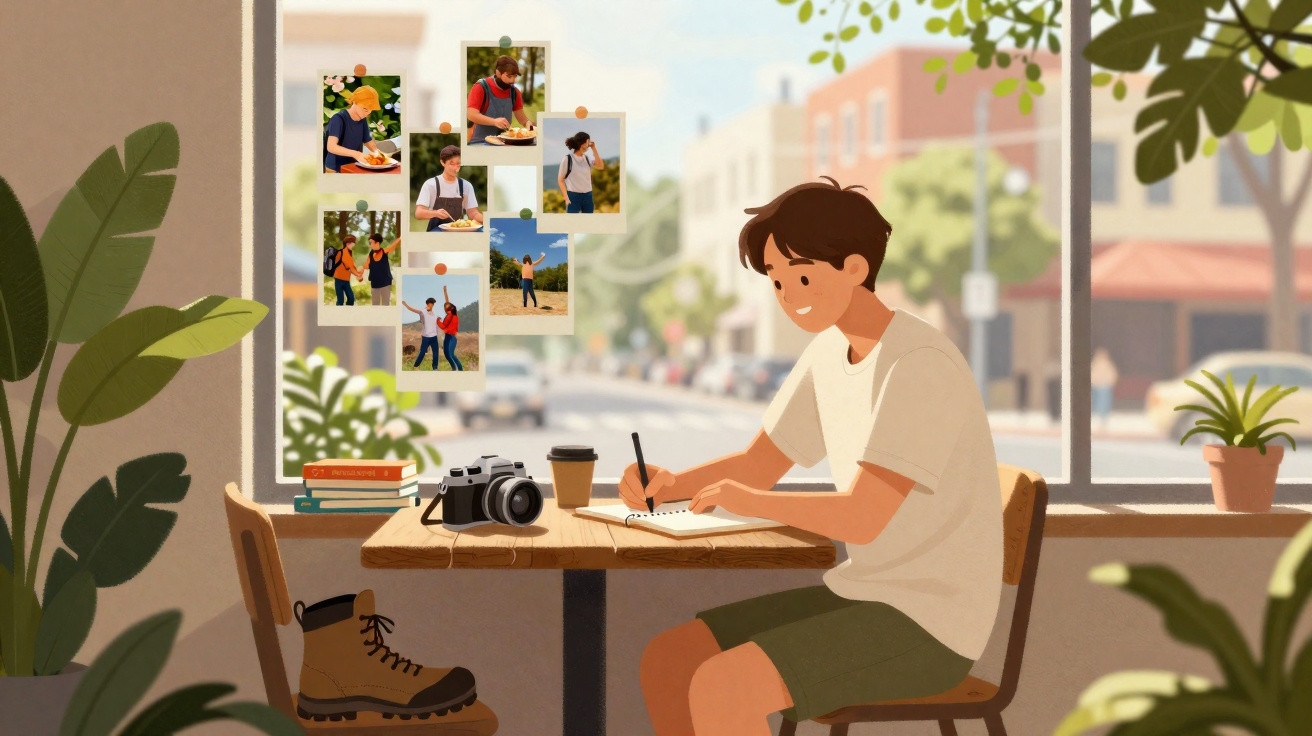
Some single people view a free Saturday as an empty slot that needs filling. Others see it as space to attempt something they have never tried before. Single people in that latter camp say they feel more content with their lives.
This trend emerges from three recent studies of single adults in Canada and the US. The researchers examined both what people thought their years of singlehood could be like, and how they actually spent that time.
Those beliefs were pivotal. When people regarded singlehood as an opportunity for development, they felt more satisfied with being single, had more of their psychological needs met, and were less anxious about a single future.
Singlehood is far from a fringe situation. Census figures and related research suggest that more than 40% of adults are not in a romantic relationship, including people who are single again following a break-up.
Growth mindset predicts happiness
In psychology, the underlying motive is known as self-expansion – the drive to broaden your sense of self through new skills, new places and new perspectives. For decades, most research in this area has centred on couples.
Falling in love can rapidly widen a person’s sense of who they are. A new partner brings their own friends, preferences and routines, and some of these can become part of your life too.
In long-term relationships, trying unfamiliar activities can also help keep things feeling new. Yet single people were largely missing from this framework, and the new research explores what happens when self-expansion plays out within single life.
The team assessed what it terms singlehood self-expansion potential using a five-item belief scale. One of the statements is, “Being single has the potential to make me grow as a person in the future.”
For the first study, 130 single adults completed a daily diary for 14 days, producing 1,574 daily reports. Participants with higher scores on the belief scale tended to report better days.
The effect also carried over into the following day. Satisfaction with being single increased, fear about being single decreased, and both patterns persisted beyond the day on which they were recorded.
Everyday activities drive growth
In the second study, 146 single students filled in a weekly diary for six weeks and noted any new or exciting things they had done. Many of the examples were everyday activities, and that ordinariness is precisely what makes the findings useful.
Physical activity came first at about 20% of all activities reported. Next were parties and celebrations and socialising, at 15% each. Eating out and successes at work or university followed, at about 9% each.
The rest was largely made up of hobbies, short breaks, shopping, films, games and self-care. Almost none of the activities listed depended on having money, having a partner, or taking a flight.
“Self-expanding activities can really be anything, so long as it is novel or exciting,” lead author Elina Moreno told Earth.com.
Moreno conducted the research with Yuthika Girme at Simon Fraser University in British Columbia, alongside Anastasiia Burik and Sarah Stanton at the University of Edinburgh.
Most new experiences involve others
The second study also recorded who participants did these activities with. Friends made up half of companions, family members accounted for 22%, acquaintances for 7%, and strangers or romantic interests for about 2% each.
In roughly 8 in 10 cases, self-expanding activities were done with someone else. Single people were still developing through relationships – simply not romantic relationships.
The remaining 18%, or about one in five activities, were done alone. Time spent alone appeared to have its own value, consistent with research suggesting that being outdoors can shift how people perceive themselves.
This division matters if you are reading the findings as encouragement to do everything solo. The implication is closer to the reverse.
“Single people who are looking to self-expand could leverage the support of friends and family to make trying something new potentially less daunting,” says Moreno.
Some singles miss the opportunity
The researchers then explored who is likely to hold this belief in the first place. The results point towards the very people who could benefit most if they did.
Adults who were single involuntarily, who wanted a committed relationship, or who felt that nobody is complete without a partner were less inclined to view singlehood as space for growth.
Self-esteem showed the opposite pattern. People with a more positive view of themselves were more likely to believe their single years could help them expand.
In the first study, length of time single was also linked to lower belief: the longer someone had been single, the less potential they perceived in it. That association did not appear again in the second study.
The authors interpret this as a potential trap. The single people most unhappy about being single may also be the ones distancing themselves from something that could help.
Changing beliefs proved difficult
To investigate causality, the researchers ran an experiment with 324 single adults aged 18 to 76. One group wrote down novel activities they could do while single, while the other group listed routine activities.
The intended manipulation failed. Writing about exciting future plans did not shift people’s core belief about singlehood.
Two other outcomes did change. Compared with the control group, the novel-activity group reported greater self-expansion and a better mood – a modest boost produced by a writing exercise lasting only a few minutes.
When the responses were coded, they offered a clue as to why the belief stayed fixed. Both groups mentioned many of the same activities. What changed was what people imagined doing, not how they understood their single life.
How to grow while single
Moreno is clear about the practical takeaway. Mindset is the starting point, and the behaviours are more accessible than people often assume.
“Our hope is that single readers take away the importance of their mentality,” she told Earth.com. “If single people believe that singlehood is an opportunity for them to engage in personal growth, they will not only be more satisfied with their singlehood, but also with their life in general.”
Next comes actually scheduling it. A restaurant you have not tried, a show you have never seen, or a walk on the far side of town: the diary entries suggest that novelty at this scale is what counted for participants.
Taking someone with you can make the first try feel easier, and it is what most participants did anyway. Being single is not the same thing as going through life alone.
Moreno also stresses that the result should not be stretched into a hierarchy. Earlier research suggests that remaining single is better than staying in a poor relationship, but this research is not intended as a ranking either.
“We do not intend to say that singlehood is better than being in a relationship, or vice versa,” she says.
Study has important limits
The main caveat is the research design. Two of the three studies are diary-based, which means they demonstrate association rather than cause. The experiment designed to clarify causality did not achieve that aim.
It is even possible the relationship works in the opposite direction. People who already feel happier being single, and already seek out new experiences, may be the ones who come to see singlehood as full of potential.
The samples also leaned young. Both diary studies used Canadian university students, who are already in a naturally expansive life stage. Their belief scores may therefore be unusually high.
The next step is to test broader groups across different ages and different singlehood histories. The study materials, data and code have been made publicly available for anyone who wants to review them.
“Singlehood is becoming increasingly common, yet we know so little about the lived experiences of people in singlehood,” says Moreno, who is now at the University of Toronto.


Comments
No comments yet. Be the first to comment!
Leave a Comment