
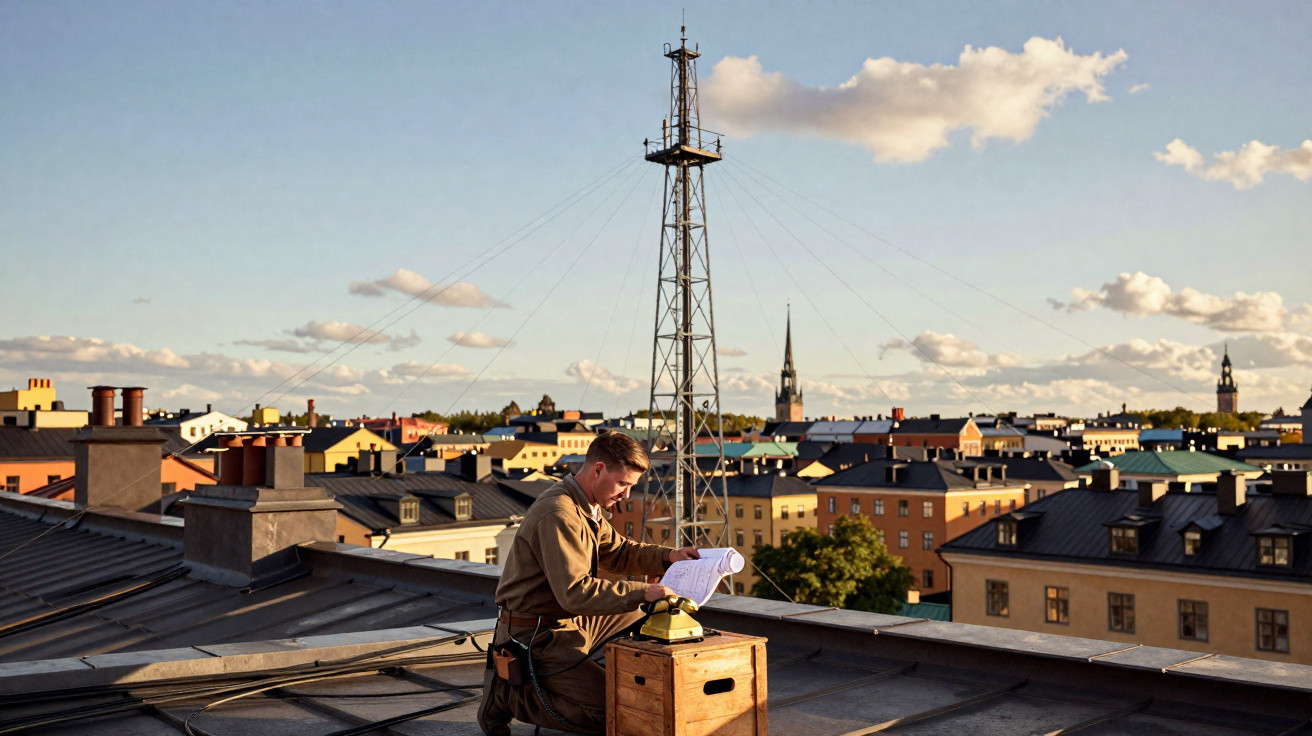
Decades before underground cables, aerial masts and smartphones, thousands of conversations crossed Stockholm’s skies via a web of wires anchored to a vast steel framework. Opened in 1887, Telefontornet linked roughly 5,500 telephones and turned the Swedish capital into an unexpected proving ground for modern communication.
Why did Stockholm have so many telephones?
By the late 19th century, owning a telephone was still unusual across much of the world. Stockholm, however, adopted the device at remarkable speed. Founded in 1883, Stockholms Allmänna Telefonaktiebolag promoted the notion of putting a telephone in every home and priced connections to be more affordable.
That approach helped Sweden become a leader in telephony. When the new exchange opened on 12 July 1887, the city had around 5,500 handsets in use. King Oscar II attended the launch, and the facility was designed to accommodate up to 8,500 lines.
How did the enormous telephone tower work?
The tower was erected on top of the company’s headquarters in central Stockholm. Rising about 45 metres above the roof, the structure carried roughly 4,000 wires that fanned out in multiple directions. Altogether, the city’s telephone lines extended to about 5 thousand kilometres.
Every subscriber needed a direct physical connection to the network. Cables ran over buildings, streets and chimneys until they reached the exchange, where operators manually patched calls through. To speak to someone, a user would request the number and wait while an operator made the correct connection.
Why did the wires become a problem?
For visitors, the cable-covered tower was striking and became a symbol of a new age. In winter, frost collected on the lines, creating an almost otherworldly scene. Yet the same arrangement brought technical and visual issues that worsened as more subscribers joined the network:
- Cables formed a dark web above rooftops;
- Winds and storms could damage connections;
- Ice increased the weight borne by the structure;
- Maintenance required reaching thousands of elevated wires;
- Residents found the tower unattractive.
Objections to its appearance emerged even before it opened. The company ran a competition to make the structure look more refined, and architect Fritz Eckert added decorative features, including four small corner turrets. The design softened the industrial feel, but it could not remove the tangle that dominated the skyline.
How did the technological marvel become obsolete?
As Telefontornet drew attention, a less conspicuous alternative was spreading beneath the streets: underground cabling. This newer system shielded lines from the weather, reduced visual clutter and made it easier to expand the network. By 1913, the burial programme was complete, and the tower no longer served its original purpose.
Even so, the structure remained part of Stockholm’s cityscape. After carrying telephone wires, it was repurposed to support advertising. In 1939, it was fitted with a large illuminated clock for the Nordiska Kompaniet department store, turning a former piece of utility infrastructure into a well-known urban landmark.
What happened to Stockholm’s tower?
In July 1952, a fire struck the building and left the metal structure unsafe. The tower was dismantled the following year, bringing to an end a story that had begun 66 years earlier. The famous advertising clock was saved and later installed elsewhere in the city, where it remained on display.
Telefontornet vanished, but it left behind a vivid reminder of how quickly technology can change. What was once hailed as the future became outdated within a few decades. Looking back at its story is a prompt to remember that even today’s most impressive inventions may seem odd tomorrow-much like a sky filled with thousands of wires.






Comments
No comments yet. Be the first to comment!
Leave a Comment