
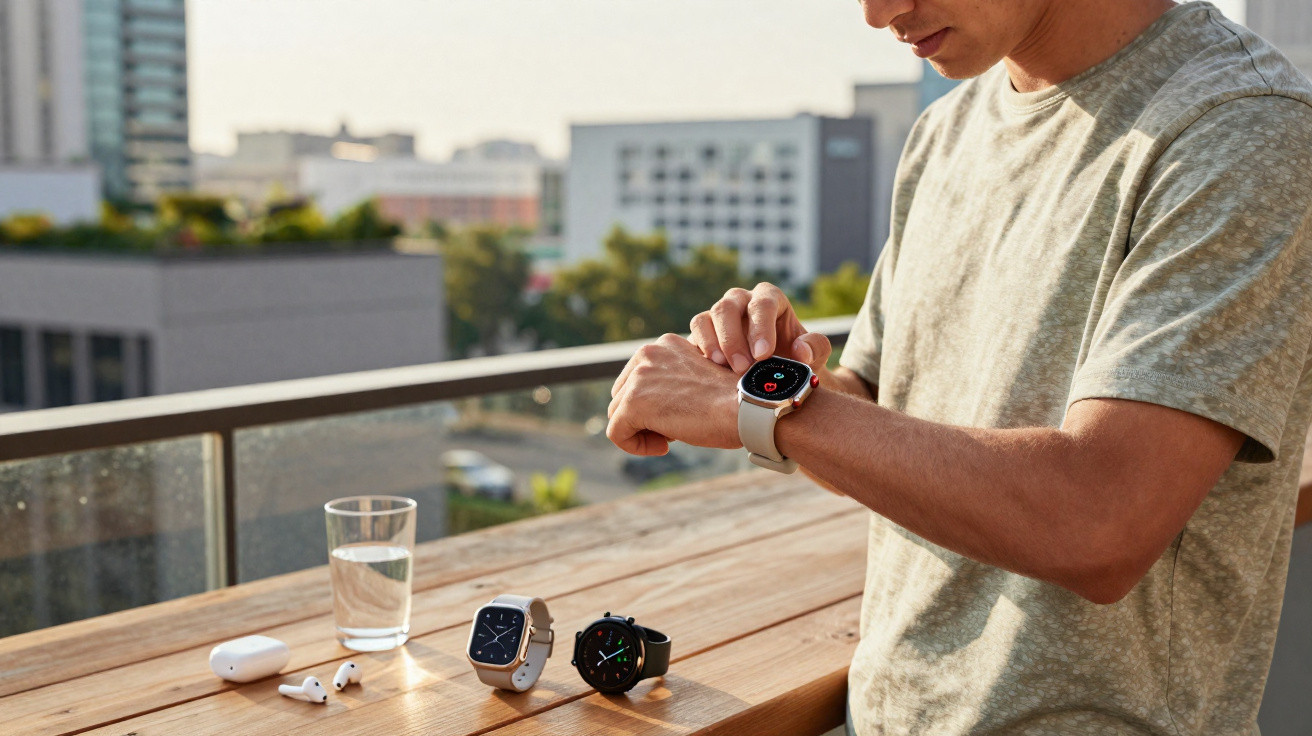
Anyone who spends their days bouncing between work, family and free time can easily lose track of what their body is trying to say. Modern smartwatches aim to close that gap: they track heart rate, sleep, stress, blood pressure or even antioxidants, then turn the numbers into clear prompts telling you when to slow down. For 2026, manufacturers are lining up several notable new models.
Why health features are now setting the pace for smartwatches
Not long ago, connected watches mainly counted steps and pushed WhatsApp alerts to your wrist. Now, for many people, they function more like a pocket-sized health cockpit. Around the clock, they log heart rate, sleep stages, breathing patterns, stress levels and blood oxygen saturation-then present it in apps in a way that non-experts can actually understand.
"Smartwatches don’t replace a doctor, but they can give an early warning when something in the body changes."
To make that promise believable, sensors need to become more accurate, batteries must last longer, and software has to draw smarter conclusions from the data. Those are exactly the areas where the most interesting 2026 devices are pushing ahead.
The most exciting health smartwatches of 2026 at a glance
The watches below reflect three big themes: measurements that feel closer to medical devices, deeper insight into recovery and sleep, and AI-supported interpretation of health data.
- Huawei Watch D2: smartwatch with an integrated blood pressure monitor.
- Apple Watch Series 11: a health all-rounder within the Apple ecosystem.
- Samsung Galaxy Watch 8: measures antioxidants and leans on Gemini AI.
- Withings ScanWatch 2: hybrid watch with ECG and temperature tracking.
- Amazfit Active 2: an affordable entry point with plenty of core metrics.
- Huawei Watch GT 6 Pro: endurance-focused watch for sleep and stress tracking.
- Garmin Venu 4: combines health data with detailed nutrition tracking.
Huawei Watch D2: blood pressure like at the GP
The standout feature of the Huawei Watch D2 is its built-in blood pressure monitor. Inside the strap sits a small air bladder that inflates automatically to take a reading-much like the traditional cuff used at a GP surgery. On top of that, it continuously tracks heart rate, breathing rate, sleep and stress.
Measurements are captured automatically and displayed in a structured way in the companion app. Instead of isolated readings, users can follow patterns across days and weeks. If you live with high blood pressure-or you’re at risk-it becomes easier to see how day-to-day life, diet or stress can push numbers upwards.
"The stress analysis and warnings are especially helpful when the body is running at full tilt for too long."
Apple Watch Series 11: a health hub for iPhone users
With the Watch Series 11, Apple is putting even more emphasis on health. The focus remains on continuous heart-rate monitoring, movement data, sleep tracking and cardiovascular alerts. If the watch detects unusual changes-such as an unexpectedly high resting heart rate-it flags them straight on your wrist.
All of the data flows seamlessly into Apple Cloud storage and can be reviewed on an iPhone or iPad. Anyone using multiple Apple devices benefits from the tight integration-for instance, when training data, resting heart rate and sleep quality are assessed together. The idea is that this is a watch you genuinely wear every day, day and night.
Samsung Galaxy Watch 8: an antioxidant check with your thumb
Samsung is taking an unusual approach with the Galaxy Watch 8: it’s designed to check antioxidant levels-more specifically carotenoids. You place your thumb on the back of the watch to take the measurement. The results act as an indicator of diet quality, such as how colourful and plant-rich your eating habits are.
Beyond that, the watch tracks heart rate, activity, sleep and stress, aiming to build a combined picture of movement, recovery and nutrition. Another headline feature is that Gemini AI runs directly on the watch and can answer questions without you having to pick up your phone-handy during workouts or while travelling.
"The antioxidant check makes the Galaxy Watch 8 a real conversation starter on the wrist."
Withings ScanWatch 2: a classic watch with clinic-style features
Visually, the Withings ScanWatch 2 looks more like a premium analogue wristwatch than a miniature smartphone. Inside, however, it packs a full sensor suite: continuous monitoring of heart rate, blood oxygen saturation, breathing rhythm and temperature changes.
At the press of a button, the watch produces an ECG on your wrist in around 30 seconds. That can help you spot irregular heart rhythms earlier. Its sleep tracking is also notably detailed, factoring in breathing patterns, sleep duration, sleep depth and unusual night-time events.
Amazfit Active 2: lots of data for less money
The Amazfit Active 2 is aimed at anyone who wants to keep an eye on their health without paying a premium price. It evaluates heart rate, blood oxygen saturation, stress levels and sleep stages, bringing everything together in an interface that’s easy to follow.
What’s particularly useful is how it visualises recovery windows and peak strain. If you regularly feel drained during the day, the app often reveals when your body is effectively running on reserve. Because the watch is lightweight, it stays unobtrusive on the wrist-ideal if you also want to wear it overnight.
Huawei Watch GT 6 Pro: a battery beast for heavy sleepers
Huawei’s Watch GT 6 Pro is designed for people who don’t want to charge a watch every day. Thanks to its long battery life, it can keep up continuous tracking of heart rate, blood oxygen saturation, stress and breathing. Huawei has put special effort into sleep analysis.
The software breaks the night into different sleep stages, rates recovery, and shows how that translates into daytime form. If you’re always tired even though the watch shows eight hours in bed, you’ll often find that deep sleep and REM stages are coming up short.
Garmin Venu 4: health data plus a nutrition radar
With the Venu 4, Garmin goes a step further. Alongside heart rate, stress, heart rate variability and sleep quality, it provides detailed insight into recovery and “energy reserves”. The app evaluates how training load, work stress and sleep debt add up-and when taking a rest day would be the smarter call.
"A highlight is the new nutrition tracking with Active Intelligence in the Garmin Connect app."
Calories, protein, fats and carbohydrates can be logged directly in the app. With a large food database, a barcode scanner and AI image recognition, tracking is significantly less tedious than it used to be. That creates a clearer link between what you eat, how you train and how well you sleep.
Which smartwatch suits which type?
| Type | Key features | Suitable models (examples) |
|---|---|---|
| Cardiovascular focus | Blood pressure, ECG, heart rate | Huawei Watch D2, Withings ScanWatch 2 |
| Fitness and everyday users | Activity, sleep, stress | Apple Watch Series 11, Huawei Watch GT 6 Pro, Amazfit Active 2 |
| Nutrition-conscious users | Antioxidants, macronutrients | Samsung Galaxy Watch 8, Garmin Venu 4 |
| Design fans | Premium look, discreet display | Withings ScanWatch 2 |
How useful are near-medical features on the wrist?
Many brands emphasise that their watches don’t provide diagnoses-they offer indicators. Blood pressure, ECG and blood oxygen saturation can all be affected by movement, posture or wearing the watch poorly. For that reason, repeated unusual readings should always be discussed with a medical professional.
At the same time, smartwatches can be genuinely helpful for spotting patterns. Does blood pressure rise every time you come out of stressful meetings? Does sleep regularly break after 2 am? Has recovery dipped since you started doing evening workouts later? With newer data sets, questions like these are far easier to answer.
Practical tips: how to get the most from your health watch
- Wear it consistently: only day-and-night use creates meaningful trends.
- Adjust the strap properly: too loose or too tight can distort readings-especially heart rate and blood pressure.
- Don’t view data in isolation: a single outlier is rarely dramatic; repeated patterns are what matter.
- Take alerts seriously: have recurring anomalies checked medically.
- Use sleep reports: late meals, alcohol or screen time can be matched against poor nights.
Terms such as heart rate variability (HRV) can sound technical, but the core idea is simple: how well can the body switch between tension and relaxation? Higher variability is regarded in many studies as a sign of better adaptability and resilience. Many current watches now present this value in a way that users understand as an “energy level” or “recovery index”.
It gets more interesting when smartwatch data is linked to other parts of life. If you roughly log your meals, you can see how a very carbohydrate-heavy dinner influences sleep. Runners can check whether extra interval sessions are destroying recovery. And people with high-pressure office jobs often notice that even short walks or proper breaks pull the stress curve visibly down.
Ultimately, it’s not the sheer number of sensors that matters, but whether the watch nudges you into small, realistic changes: taking the stairs more often, keeping the last hour before bed phone-free, turning in earlier, or booking a GP appointment in good time when values look concerning. That’s where the strength of the 2026 smartwatch generation sits.




Comments
No comments yet. Be the first to comment!
Leave a Comment