
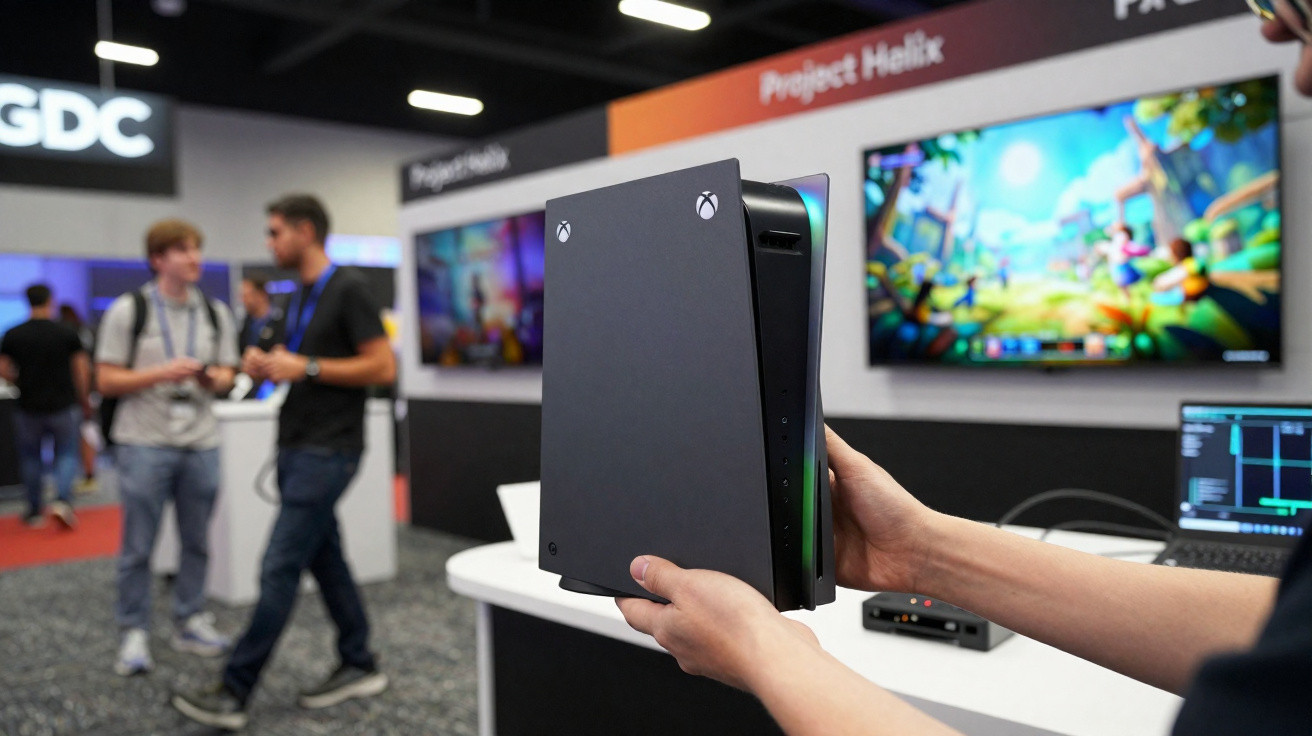
Microsoft has unexpectedly published images of a new developer device at the Game Developers Conference. Officially, the company is only talking about studio hardware, but plenty suggests we may be looking at an early prototype of Project Helix - the next Xbox, designed to bring console and PC closer together than ever.
What Microsoft actually showed at GDC
The pictures came from the official “Microsoft Game Dev” account and feature a black-and-white unit clearly labelled as an Xbox Development Kit (XDK). Kits like these normally appear only in development offices, long before any console reaches shops.
In the shots, you can see a casing that will look familiar to seasoned observers. The shape strongly echoes earlier dev-kits, such as the one for Project Scorpio, which later became the Xbox One X. That resemblance, more than anything, is what has set the rumour mill spinning.
The first images point to a developer prototype that is more than just recycled hardware - Project Helix could already be running at full tilt behind the scenes.
Microsoft has not addressed the speculation directly. Even so, the timing of the post - right in the middle of GDC, in front of thousands of developers - feels anything but accidental.
How much Project Helix is inside this prototype?
No one has officially named the device, but the codename Project Helix has been cropping up far more often in recent weeks. Asha Sharma, Microsoft’s new head of gaming, has already used the term in internal and public remarks.
The core concept is straightforward: Helix is meant to be a hybrid console between a traditional Xbox and a PC. That does not mean putting a full Windows desktop machine in the living room, but it could make the boundary between console and desktop gaming far less distinct.
- An architecture that more closely mirrors modern gaming PCs
- Improved compatibility with existing PC games
- Deeper integration with Xbox Game Pass and cloud offerings
From a developer’s perspective, that would be a major shift. Teams that currently optimise separately for PC and Xbox could move much closer to a single, unified platform. For players, the best-case outcome would be more games, faster ports, and fewer technical trade-offs.
Reusing old casings or genuinely new hardware?
The biggest question after the leak is how new the device really is. One detail has puzzled many fans and hardware watchers: the unit’s casing appears heavily based on familiar dev-kit designs.
That leaves a few plausible scenarios:
- Microsoft is reusing older dev-kit shells while fitting them with entirely new internals.
- It is an early transitional model, and the true Helix enclosure is not ready yet.
- The prototype relies on a modular design that can be configured flexibly in-house.
One thing is certain: XDK devices typically reach only a small group of selected studios and partners. If Microsoft shows one publicly, it is doing so with intent - especially for those planning their next games and signing off budgets.
The message between the lines: “The next Xbox generation is being built - those who get in early will have an advantage later.”
Why GDC was the perfect moment for the leak
The Game Developers Conference (GDC) in San Francisco is widely seen as the industry meeting point for technology, engines and tools. The audience is not fans in branded T-shirts, but programmers, producers and studio leads.
That is exactly who Microsoft is targeting with these dev-kit images. Rather than putting on a huge consumer-facing show, the company is opting for a technical whisper behind closed doors: something new is coming - start preparing.
Microsoft has used this playbook for years. Long before a console is officially unveiled, dev-kits reach studios, tech demos circulate at internal events, and developers receive documentation and roadmaps. The newly released images feel like the starting gun for the next phase of the Xbox ecosystem.
Xbox in transition: why Helix matters so much
Microsoft’s gaming division is currently in a period filled with question marks. The company is investing heavily in acquisitions and Game Pass, while fans also speak up critically when exclusives slip or studios are shut down.
On top of that, there have been personnel changes in Xbox leadership. When familiar figures leave the stage, pressure rises on the next big initiatives - and that is where Project Helix moves into the spotlight. The console is expected to signal where Xbox is heading over the coming years.
| Aspect | Today’s Xbox generation | Possible Helix direction |
|---|---|---|
| Hardware focus | Console with PC connectivity | PC-like hybrid platform |
| Ecosystem | Combination of console, PC, cloud | More unified environment |
| Game Pass | Subscription as an add-on | Central cornerstone |
| Development | Parallel PC and console builds | More tightly integrated development workflows |
What a hybrid Xbox could mean for players
The real test will be what a hybrid console feels like day to day. In theory, it could bring several benefits:
- Faster ports: PC games could reach the new Xbox with fewer adjustments.
- Better backwards compatibility: A more PC-like architecture makes it easier to support older titles.
- More flexibility: Cloud streaming, local play and potentially PC-style features could work more closely together.
At the same time, there are risks. If the platform becomes too open, the classic console advantage - plug it in, press start, it works - could come under strain. If hardware options and modes become overly complex, less technically minded users could be left confused.
Microsoft therefore has a narrow line to walk: enough PC DNA to excite developers and core players, but enough simplicity to ensure the new Xbox still feels like a comfortable living-room device.
Why dev-kits are so crucial to the future of games
If you are only waiting as a player for a new console, it is easy to miss how early the real work begins. Dev-kits are the backbone of that early phase. They provide not just hardware, but also tools, debug menus, telemetry, and extensive documentation.
Studios use them to trial new rendering techniques, optimise memory access, check load times and simulations. The earlier they gain access, the better they can adjust their roadmaps. That is why Microsoft is keen to send precisely this signal: the next step is ready - plan your projects around it.
Terms like XDK may sound purely technical, but to developers they are invaluable. They indicate that the platform is concrete enough to build for seriously, even if details are still subject to change. For big productions with development timelines of five years or more, that is essential.
What could happen next with Project Helix
There are no official dates for a full reveal. A gradual roadmap would be realistic: more technical detail at developer conferences, then a major Xbox event focused on games, and finally a traditional console presentation covering design, price and release date.
Anyone who has followed the industry for long knows leaks like these photos are rarely random. Microsoft will be gauging how the community and media respond, how strong the interest is, and which questions keep coming up. That feedback does not only influence messaging - sometimes it also feeds back into hardware and software planning.
For players, it is worth paying closer attention now to terms like Project Helix, XDK and hybrid architecture. Behind those buzzwords sits a strategic shift that could shape where and how we play games in the long run - whether on the sofa, at a desk, or streamed to any device around the home.






Comments
No comments yet. Be the first to comment!
Leave a Comment