
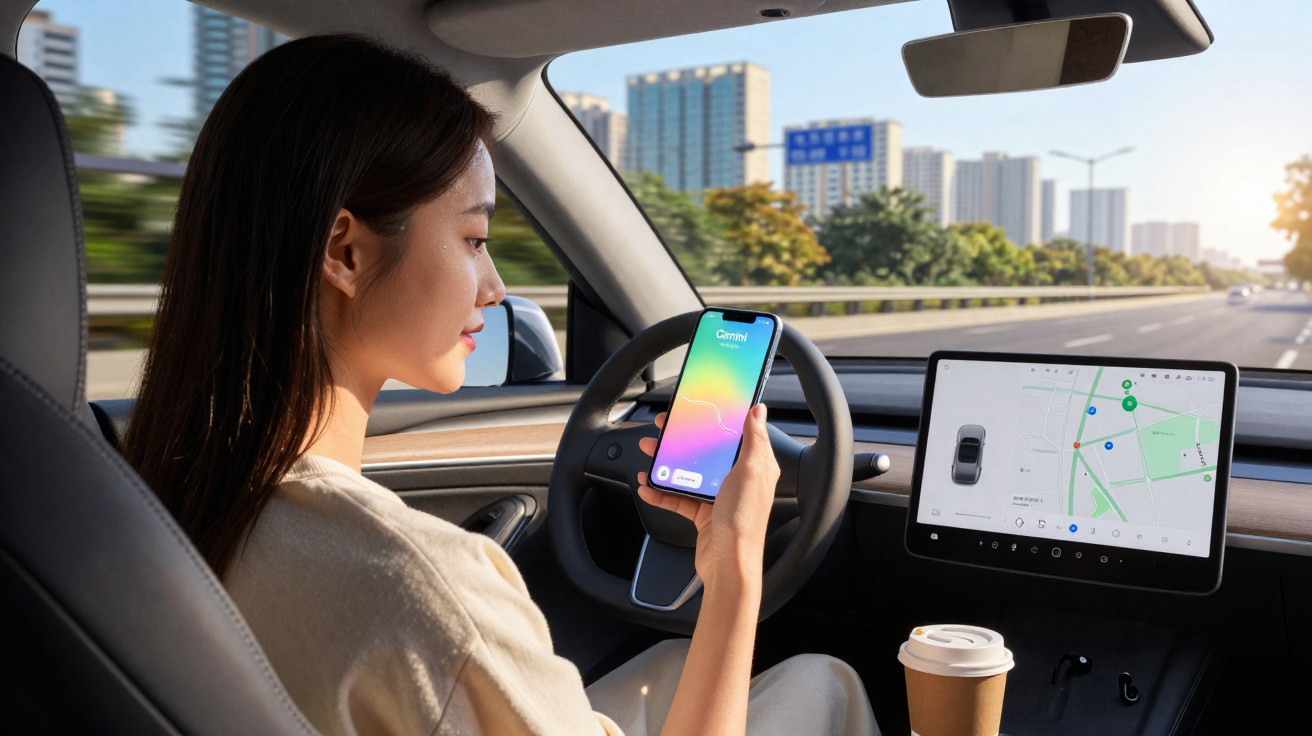
Gemini is arriving in the Google Maps app too, letting you do more while keeping your hands on the wheel.
Google is gradually swapping out Google Assistant for Gemini across its products and services. This week, Google Maps is next in line. From now on, when you use the navigation app, Gemini becomes your new voice assistant. The update will roll out over the coming weeks everywhere Gemini is available, on both Android and iOS versions of Google Maps. Google also plans to make the same switch on Android Auto.
Gemini replaces Google Assistant in Google Maps
With Google Assistant giving way to Gemini, using Google Maps while your hands are busy becomes much easier. Amanda Leicht Moore, a product director at Google Maps, says it feels like having a well-informed friend in the passenger seat. Thanks to Gemini’s conversational strengths, interactions with Google Maps’ voice interface are more fluid and natural. On top of that, you can make more sophisticated requests while you’re on the move.
More natural, hands-free voice requests with Gemini
For instance, you’ll be able to ask Gemini to run multi-step searches. And during a conversation, you can also ask Gemini to save an appointment-provided you allow the AI to access your calendar. Reporting incidents or obstructions should also be simpler, as you can just describe what you’re seeing to the AI. Put another way, it should feel far more like talking to a real person, one that can handle more complex tasks.
Subscribe to Presse-citron
Navigation changes too with Gemini
Google has also announced a navigation change that, unfortunately, will not be available in the United States yet. Even so, it sounds notably more convenient. Instead of instructions such as “turn right in 500 metres”, you’ll get directions based on landmarks-for example, “turn right after the Thai Siam restaurant”.
According to Google, Gemini delivers this landmark-based guidance by analysing map data alongside Street View. However, the company has not yet said when this updated navigation experience will roll out to the rest of the world.
Google has also designed a Google Maps feature that can proactively warn you if an obstruction is detected, even when you are not actively using navigation. That feature, too, is currently limited to users in the United States.






Comments
No comments yet. Be the first to comment!
Leave a Comment