
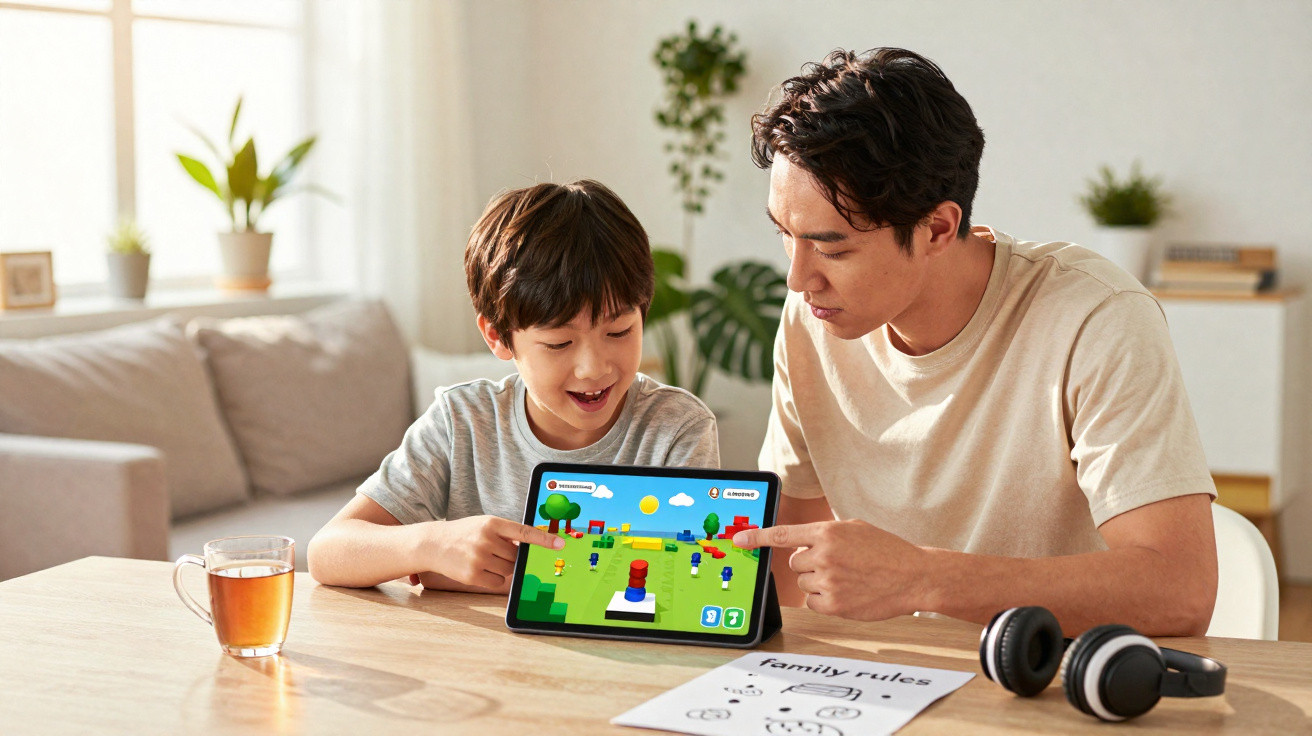
Roblox is far more than a standard video game: it is an enormous virtual world in which close to 90 million people worldwide build, play and socialise.
That audience includes around 34 million children under 13, who spend an average of 2.6 hours a day on the platform. That makes Roblox one of the most powerful digital platforms shaping the lives of children and teenagers.
For young users, the appeal lies in the sheer number of virtual experiences available. They can do everything from adopting and dressing virtual pets to joining an online game of hide-and-seek that uses GPS. Children can also create their own games for others to play.
Yet alongside the fun come genuine risks, particularly for children. Potential harms include cyberbullying, sexual exploitation, grooming by paedophiles, and recruitment attempts by violent extremists.
In response, Roblox has rolled out a set of new safety features intended to reduce the likelihood of children being harmed, following consultation with a range of specialists (myself included).
Even so, many parents will still be asking: "Should I let my kid play Roblox?"
What are the new safety features?
The latest changes focus on three areas: who children can communicate with on Roblox, what content they can access, and how much oversight parents have over their child’s activity.
Parents now have more detailed tools to manage the content their children can view, the advertisements they might see, their friend lists, and their communication options. Parents can also set daily limits for screen time.
Roblox has also updated how it rates experiences, moving away from age-based categories and towards maturity-based labels (similar to film classifications).
These labels are optional. However, experiences published without a label will only be available to users aged 13 and above. This shift moves away from the notion that one approach fits every child. Parents understand children develop differently: what one 13-year-old is prepared for may not be the same as what another 13-year-old is ready to handle.
Children under 13 are also no longer permitted to chat with other users outside mini-games and experiences.
Overall, these are encouraging developments.
The elephant in the room
To use this new set of parental controls, parents must first open a Roblox account and then link it to their child’s account. Doing so requires parents to provide either identity documents or credit card details, which introduces a risk for parents.
Personal data is being commercialised at speed and scams are widespread, which makes it hard for platforms such as Roblox to guarantee the security of personal information.
Another aspect of Roblox that is often overlooked is the constant prompting to spend money. Players are encouraged to purchase items to wear on their avatar, pay for in-game upgrades to make play more enjoyable, and buy add-ons for virtual pets-among many other options. This can send a clear message that spending is necessary to have more fun.
The central issue is that many of the changes designed to protect children sit inside parental controls. This means parents must be highly hands-on, yet digital skills, limited time, work pressures and busy family life can all make that difficult.
Safety measures should not depend solely on what parents do.
Stronger protections could include clearer separation between experiences-more like distinct playgrounds for primary school children, lower secondary pupils and older users-helping parents feel more confident that content is age-appropriate.
A subscription-based model could also be used instead of the current set-up, which might lessen the ongoing pressure on children to spend money.
It may also be more effective to introduce youth-led safety initiatives, where older children guide their peers and younger players on staying safe online, rather than relying only on traditional parent-led advice. Children often listen more closely to peers who understand their digital lives from the inside.
The bottom line?
These new safety features represent progress. They will not remove the risk of inappropriate content or unsafe communication. However, they should reduce children’s exposure to worrying material and give parents stronger ways to manage their child’s online experience.
Would I allow my child to use Roblox? Yes-but not on a "set and forget" basis. Keeping children safer on the platform depends on ongoing conversations about what they are seeing and doing.
In practical terms, we cannot simply allow children to roam these vast virtual spaces without that. Parents also have a powerful form of control available-talking with their child.
Joanne Orlando, Researcher, Digital Literacy and Digital Wellbeing, Western Sydney University
This article is republished from The Conversation under a Creative Commons licence. Read the original article.



Comments
No comments yet. Be the first to comment!
Leave a Comment