
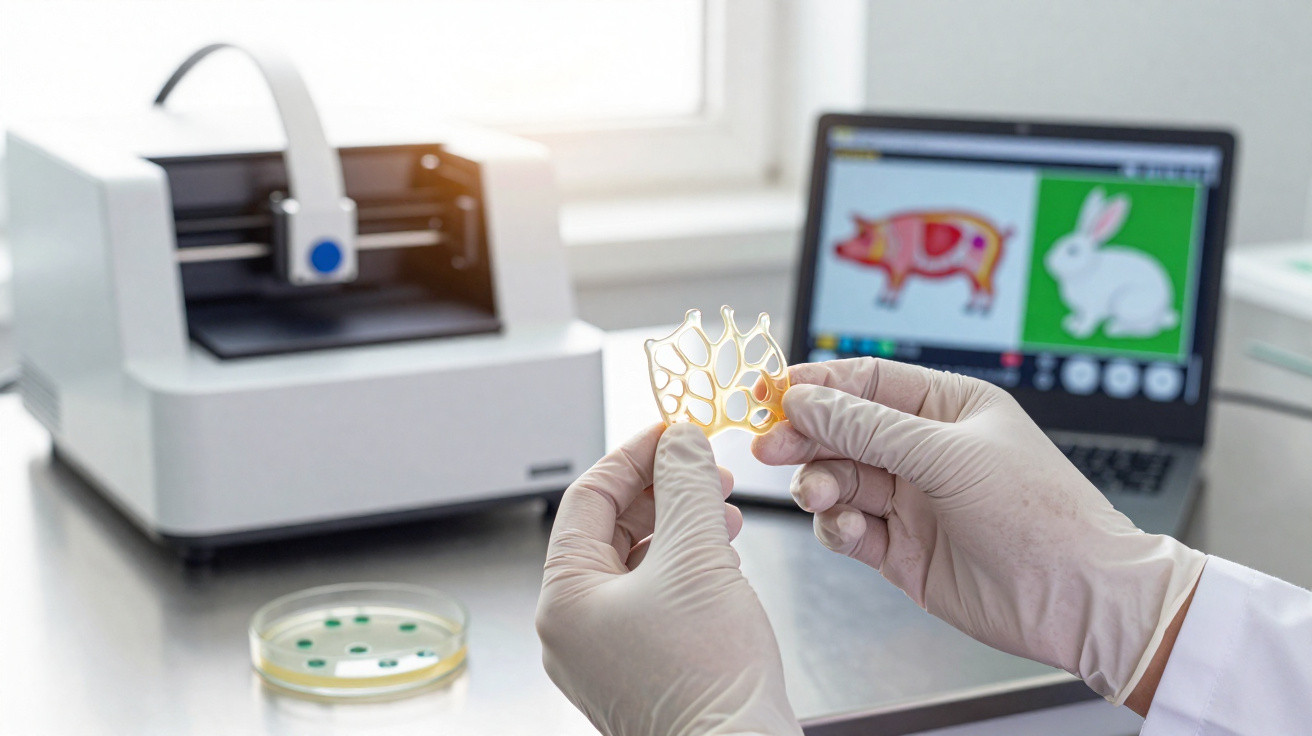
A 3D-printed penis implant has, for the first time, brought back erectile function in rabbits and pigs.
In pigs whose penile tissue had been damaged, this bespoke procedure did more than restore erections: their success in producing offspring rose from 25 percent to 100 percent.
Why the corpus cavernosum is so difficult to replicate
The penis contains one of the most intricate vascular network structures in the human body. For years, scientists have been trying to build a working model of the corpus cavernosum - the spongy tissue within the penile shaft - with the aim of helping people with erectile defects.
A new study from researchers in China, the US, and Japan now describes a physiological model capable of reproducing erections in large, living animals.
Building a hydrogel scaffold and adding endothelial cells (ECs)
To construct the model, the team recreated the corpus cavernosum using a hydrogel-based scaffold designed to be strong enough to cope with the internal pressure generated when the structure fills with blood.
They then seeded this scaffold with pig or rabbit endothelial cells, the key cells that line blood vessels. Endothelial cells (ECs) can form an "adaptable life-support system" in tissues rich in blood vessels, supporting the restoration and improvement of function.
Testing the 3D-printed penis implant in Bama pigs and New Zealand rabbits
To examine whether this approach could work in living animals, the researchers implanted the hydrogel scaffold and ECs into dozens of Bama pigs and New Zealand rabbits with erectile defects affecting the corpus cavernosum.
Some of the rabbits and pigs received the artificial penis implant without ECs. However, the animals given both the ECs and the implant showed better erectile function overall - with results that came close to those seen in animals without erectile dysfunction.
"These findings indicate that the implants markedly improved functional recovery, and the combination with ECs further enhanced this effect, demonstrating notable improvements in tissue regeneration and functional recovery," write the authors, led by biological engineer Zhenxing Wang from South China University of Technology.
"The fertility of the EC groups demonstrates the recovery of erectile function and the ability to ejaculate, suggesting the restoration of the cavernous tissue in the treated males."
In pigs that received the EC-based model, inflammation levels after surgery were low, and as the hydrogel scaffold degraded at the defect site, new tissue formed progressively.
When these pigs were allowed to breed a few weeks after surgery, pregnancy rates increased from 25 percent in the defect group to 75 percent in the implant without ECs group.
Male pigs that received the implant with ECs successfully impregnated every single female pig they mated with.
Potential future uses for erectile dysfunction and other vessel-rich organs
The researchers suggest this penis model could, in time, support the treatment of human erectile dysfunction and conditions that scar deeper penile tissues and lead to painful erections.
The work may also guide the creation of other artificial organs that rely on dense blood-vessel networks, such as the heart.
"Currently, developing transplant materials that support nerve regeneration and effectively integrate with the host's urethra and vascular networks presents a major challenge," the authors write.
"These approaches could help overcome current obstacles in repairing large-scale penile injuries."
Some research indicates that more than half of men aged 40 to 70 experience mild to moderate erectile dysfunction that becomes more common with age; and although it can be treated, it is not always curable.
"These findings underscore the potential clinical applications of biomimetic corpus cavernosum for the treatment of penile injuries," conclude Wang and colleagues.
"Furthermore, this study advances the clinical application of 3D-printed artificial tissue organs."
The study was published in Nature Biomedical Engineering.






Comments
No comments yet. Be the first to comment!
Leave a Comment