
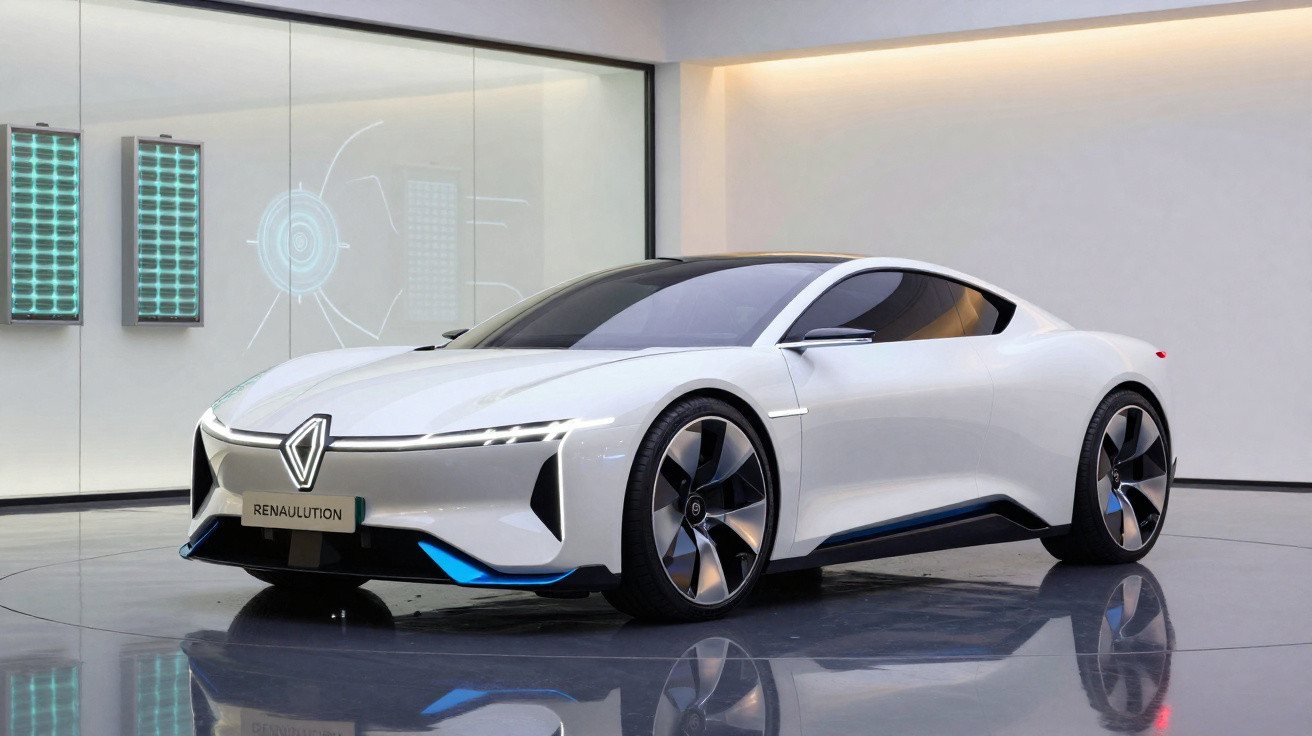
The Renault Group has taken another significant step in its “Renaulution” strategic plan by announcing two agreements focused on the design and manufacture of batteries for electric vehicles.
In a statement, the French group led by Luca de Meo confirmed a strategic partnership with Envision AESC, which will build a gigafactory in Douai, and also announced a memorandum of understanding with Verkor that will result in the Renault Group taking a stake of more than 20% in the start-up.
Together with the Renault ElectriCity industrial complex in northern France, these two partnerships are expected to generate around 4,500 direct jobs in the country by 2030. The site is set to become the “heart” of Renault’s industrial strategy for electric-vehicle batteries.
Affordable electric vehicles in Europe
As part of its electric-vehicle roadmap, the Renault Group has teamed up with Envision AESC, which will develop a gigafactory in Douai, in northern France. The plant is planned to have a production capacity of 9 GWh in 2024, rising to 24 GWh by 2030.
With Envision AESC set to invest around €2 billion, the Renault Group expects to “increase significantly its competitive advantage and greatly improve the efficiency of its electric vehicle production chain”. The aim is “to produce the latest battery technology with competitive costs, low carbon emissions and safe for electric models, including the future R5”.
Renault Group to acquire more than 20% of Verkor
Alongside the Envision AESC partnership, the Renault Group also disclosed the signing of a memorandum of understanding to acquire a stake of more than 20% - without specifying the exact percentage - in Verkor. The goal is to develop a high-performance battery for Renault’s electric vehicles in the C segment and above, as well as for Alpine models.
In the first phase, this collaboration will lead to an R&D centre and a pilot line in France for prototyping and producing battery cells and modules, starting as early as 2022.
In the second phase, in 2026, Verkor will roll out a plan to create the Renault Group’s first high-performance battery gigafactory, also in France. Initial capacity will be 10 GWh, with the potential to reach 20 GWh by 2030.
44 GWh of capacity in 2030
By 2030, the two gigafactories could deliver a combined production capacity of 44 GWh, a decisive figure for enabling the Renault Group to meet the commitments it has already made: achieving carbon neutrality in Europe by 2040 and worldwide by 2050.
According to the group, sales of electric vehicles will already account for 90% of all Renault brand sales by 2030.
In its statement, the Renault Group also confirmed that these two new partnerships “are aligned with existing programmes”, including the “historic agreement with LG Chem which currently supplies battery modules for Renault’s range of electric models and for the upcoming MéganE”.





Comments
No comments yet. Be the first to comment!
Leave a Comment