
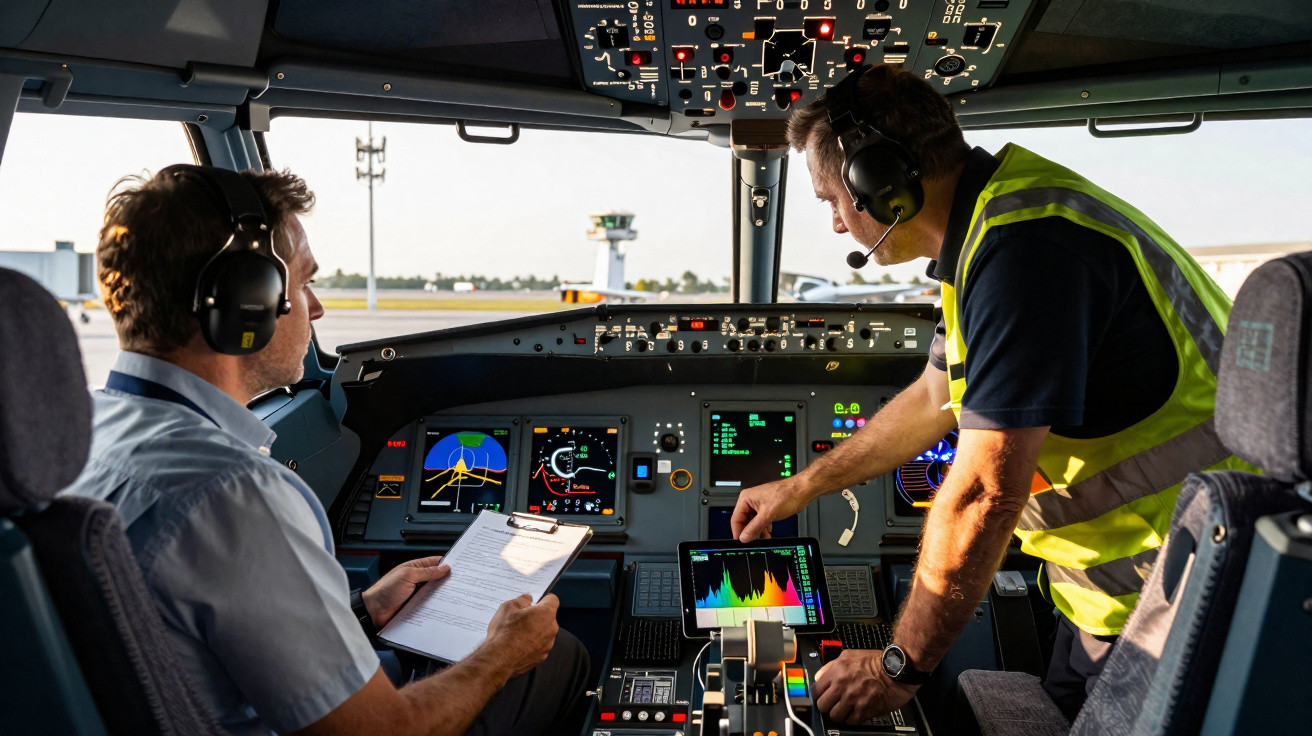
The Federal Aviation Administration (FAA) is expected to publish a new rule this summer requiring radio altimeters on every aircraft in the United States to be upgraded, aiming to prevent interference linked to 5G transmissions. Under the proposals being discussed, mobile network operators could be required to help meet the cost of those upgrades.
FAA radio altimeter upgrades and the 5G interference risk
The Federal Communications Commission (FCC) intends to begin auctioning radio spectrum in the 3.98 to 4.14 GHz range - the “Upper C-band” - in 2027, targeting mobile operators looking to extend their 5G networks.
According to the FAA, that band sits close to the frequencies used by aircraft radio altimeters, which operate between 4.2 and 4.4 GHz. Because of the proximity, the FAA says there is a risk of interference that could affect critical aircraft systems.
In January, the FAA proposed that roughly 59,000 altimeters fitted across 41,000 aircraft should be upgraded, with an estimated cost of at least US$ 4.5 billion. The forthcoming rule is expected to formalise this requirement. The FAA also issued guidance on 30 June covering 5G interference for flights in Canada.
FCC “Upper C-band” auction and who pays
The FCC is scheduled to vote on 22 July to approve the “Upper C-band” auction. The approved plan would require auction winners to contribute funding to subsidise altimeter upgrades, with the aim of ensuring the safe coexistence of 5G operations and aviation navigation equipment.
What happened with the “Lower C-band” and the revised industry timeline
Concerns about 5G-related interference have surfaced before, when mobile operators started using the “Lower C-band” (3.7 to 3.98 GHz). At that time, the FAA issued instructions to update altimeters and limited operations at certain airports. Operators also temporarily reduced transmissions to mitigate potential interference.
However, those earlier updates do not protect against interference associated with the new “Upper C-band”, which is close to being put into use.
Initially, the aviation industry pushed back against an upgrade schedule running only until 2032, arguing it was difficult to bring the deadline forward. In March, though, operators shifted their stance, saying they believed the work could be completed by 2029 - provided financial support is available to cover the costs.





Comments
No comments yet. Be the first to comment!
Leave a Comment