
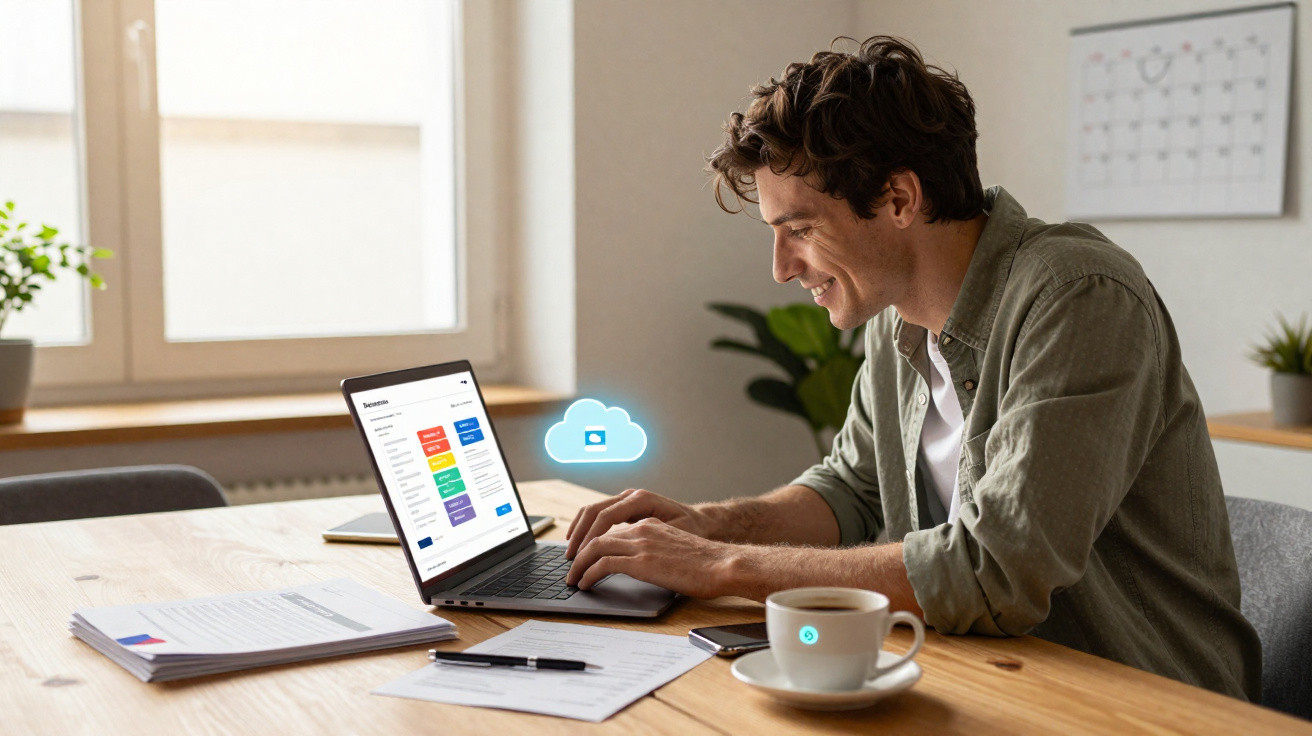
With the electronic invoicing reform causing concern, practical tools are beginning to appear to support micro-entrepreneurs. Solo, a platform created for independents, is one such option.
A major shift is on the horizon for micro-entrepreneurs-and it is approaching fast. From 1 September 2026, every business established in France and liable for VAT will be required to be able to receive invoices in an electronic format, with no exceptions. Nearly 10 million economic players are affected, from large corporations to micro-entrepreneurs.
The rollout is phased. SMEs and micro-enterprises will have until 1 September 2027 to be fully ready to issue an electronic invoice. In practical terms, even a micro-entrepreneur who invoices only a handful of clients each month will soon need an approved platform simply to receive supplier invoices. Many people still do not realise this-and it is also a source of real anxiety.
Widespread uncertainty
Although the countdown has started, confusion remains widespread in day-to-day reality. “This is something we see every day: *for many independents, ‘electronic invoice’ still means a PDF invoice***,” warns Audrey Lagerqvist, COO of Betao, a Franco-Swedish technology company that notably publishes the leading site Portail Auto-Entrepreneur. In reality, the standard PDF will be replaced by structured data formats that must pass through dedicated platforms.
Between a timeline many consider unclear and worries about additional admin costs, electronic invoicing is often viewed as a threat to profitability. “Micro-entrepreneurs are the most economically fragile. When we are talking about an extra €10 or €20 a month, that is far from trivial for their day-to-day management,” the executive reminds us.
Beyond cost, it is the operational complexity that unsettles people. “Micro-entrepreneurs are often the ones who get overlooked-the government’s communication efforts are not really aimed at them,” regrets Ingalille d’Armaillé, Head of Public Relations at Betao. This lack of information amplifies concerns, especially among those still operating without advanced digital tools.
Unlike SMEs, micro-entrepreneurs frequently manage everything alone, without an accountant. “Without sufficiently clear government communication, the real risk is leaving many independents behind,” she adds. Many see the reform as yet another administrative hurdle, but ignoring it is no longer an option: each business will soon have to appoint its Approved Platform (PA) to remain compliant.
“Compliance should not cost money”: Solo’s bet
To clear up these grey areas, independents can turn to long-standing specialists. Betao-supporting more than 600,000 independents for 12 years through its ecosystem-has launched its management platform, Solo. On 13 February 2026, it obtained Approved Platform (PA) status from the Direction Générale des Finances Publiques (DGFiP). This registration gives users the assurance of full compliance.
“Our tool is built around real-world needs. For example, we don’t force them to open a dedicated bank account to use our services,” says Audrey Lagerqvist. As a result, Solo allows the entrepreneur to choose their own financial partner.
The platform also prioritises human support. “We offer a premium plan with expert support. In under two minutes, an entrepreneur can reach us by phone to get an answer to their question,” the COO promises. That know-how can be invaluable, given that the administration sometimes struggles to provide clear answers for specific micro-enterprise scenarios.
In this context, “Solo Start” is a 100% free plan designed to help with the first phase of the reform. “We believe compliance should not cost money. This free plan will enable all solopreneurs to receive their invoices inside our tool, as required by law on 1 September 2026,” Audrey Lagerqvist explains.
The free plan covers the essentials for a confident start: unlimited receipt of electronic invoices, quote creation, bank connection, and access to a management dashboard. The aim is to help independents get equipped without draining their cash flow, then move up to paid tiers as their business grows.
For those who move beyond the initial stage and begin invoicing regularly, paid plans unlock invoice issuing and more advanced features. “The idea is genuinely to let our customers progress according to their turnover,” the executive sums up.
Why electronic invoicing is also good news
Even though the change requires an adjustment period, it brings practical advantages that go well beyond legal compliance-particularly in terms of financial security. “The state will know every invoice status, *which will provide better visibility of unpaid invoices**,” explains Audrey Lagerqvist. “The receipt status is recorded; it’s information that is difficult to dispute. It brings much more rigour into management*,” she continues. That is significant when a single unpaid invoice can push a micro-enterprise into insolvency.
“We won’t need to send an invoice by email or pay for a postage stamp. The costs linked to paper invoicing will disappear,” the expert lists. Using an approved platform also helps ensure you remain compliant, because the tool simply prevents you from forgetting a mandatory statement.
The message is straightforward: do not wait until the last minute. Preparing now smooths the learning curve without the pressure of the official deadline. “Our role is to carry all the technical complexity. Once the mandate is signed, the entrepreneur is guided. Their experience doesn’t change-it becomes simpler,” reassures Audrey Lagerqvist.
It is also worth noting that this measure is only one step towards broader alignment. The ultimate target is 2030 across Europe, with a standardised invoice that will make cross-border trade easier.




Comments
No comments yet. Be the first to comment!
Leave a Comment