
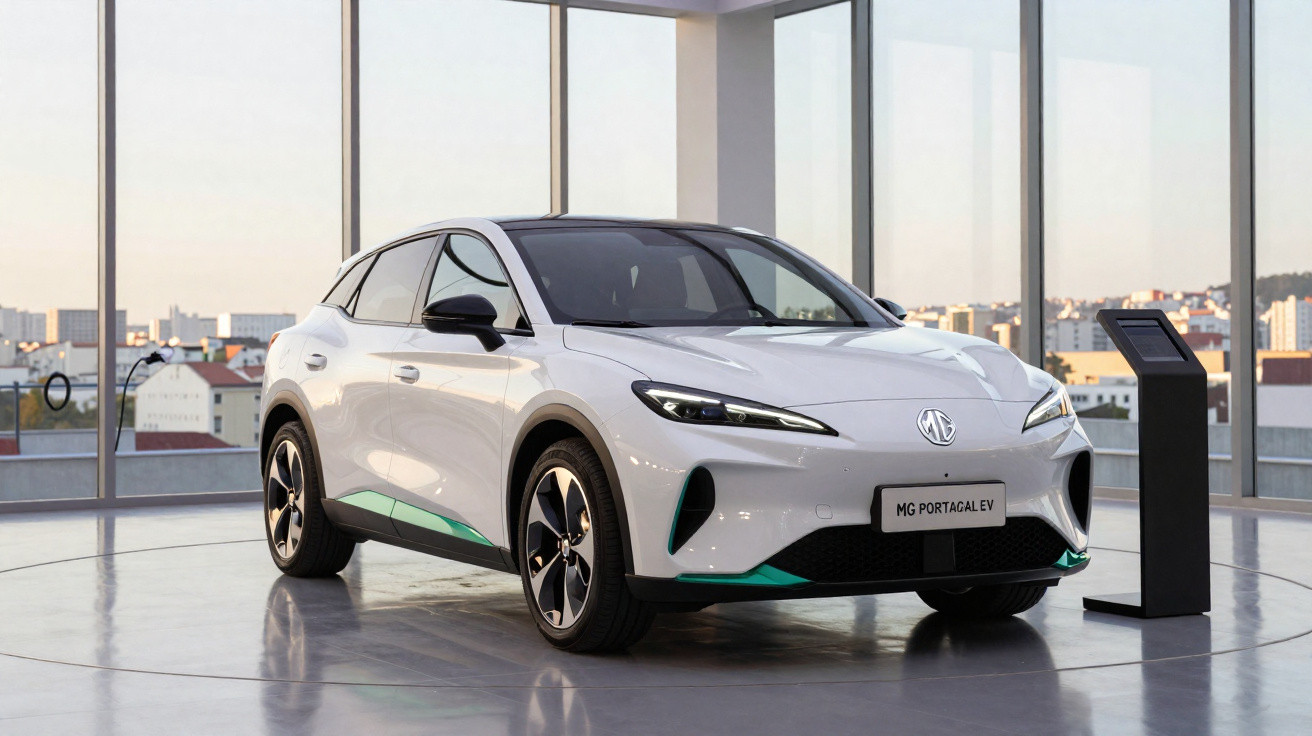
MG does not want to lose the strong momentum it has built in the European market in recent years, and one of its next bets is on new technology. The SAIC-owned brand was the first to fit semi-solid-state batteries to a high-volume production vehicle, and it is now getting ready to introduce them in Europe.
Promising stronger performance and improved safety, the new MG4 EV Urban has been chosen to launch the technology. This is the second generation of the MG4, introduced in China in the middle of last year and which began arriving in the European market this year.
Why MG is bringing semi-solid-state batteries to the MG4 EV Urban
The decision is still an unusual one. While most manufacturers keep their most advanced technology for flagship models, MG is doing the exact opposite.
“Everyone knows China makes the best batteries, we are the leaders.”
Li Zheng, MG’s chief battery scientist, at MG Tech Day
MG’s technical lead, Li Zheng, explained the thinking during the first MG Tech Day held in Europe, which Razão Automóvel attended. According to Zheng, launching the technology first in a high-volume model speeds up industrialisation and helps secure supply-chain quality, while also driving costs down at a pace that a niche vehicle could never achieve.
What are the advantages of the semi-solid-state battery?
Co-developed by SAIC and QingTao Energy Development, the new semi-solid-state battery-named SolidCore-is still a lithium-ion battery. However, it sits between the lithium-ion packs that power almost every EV on the market today-whether LFP (lithium iron phosphate) or NMC (nickel, manganese and cobalt)-and the future solid-state batteries that promise far higher energy density.
The key difference is the electrolyte used: the medium that carries lithium ions between the anode (negative electrode) and the cathode (positive electrode) during charging and discharging, producing electrical current. In LFP/NMC batteries the electrolyte is liquid, and in solid-state batteries it is, as the name suggests, solid. In semi-solid batteries, both forms are present.
In the SolidCore battery, solid particles are suspended in a liquid conductor. Here, the liquid electrolyte portion has been cut to around 5% (versus the typical 20% in conventional lithium-ion batteries). The remaining 95% is solid electrolyte.
Safety and cold-weather performance
Among the benefits, the semi-solid battery has proven safer in testing (successfully passing a three-direction nail-penetration test) and performs better at low temperatures than LFP/NMC, managing to retain up to 75% of its range in sub-zero conditions with pre-conditioning.
As for the MG4 Urban, although European-market specifications have not yet been announced, in China it uses a 53,9 kWh SolidCore battery delivering up to 530 km of range on the more lenient CTLC cycle.
Is it coming to Portugal?
The MG4 EV Urban and its semi-solid-state battery are also due to arrive in Portugal. Even so, it will take a little longer, with the launch expected closer to the end of the year. Prices have not yet been disclosed.
MG’s growth in Europe and the prospect of local production
MG’s rise in Europe has been striking. Last year, it outsold brands such as Nissan, Tesla and BYD, recording more than 307 mil vehicles sold-equivalent to 26% growth compared with 2024.
With figures like these, MG is starting to weigh up production on the continent-other Chinese manufacturers have already decided to build in Europe-but no plans have been confirmed so far.



Comments
No comments yet. Be the first to comment!
Leave a Comment