
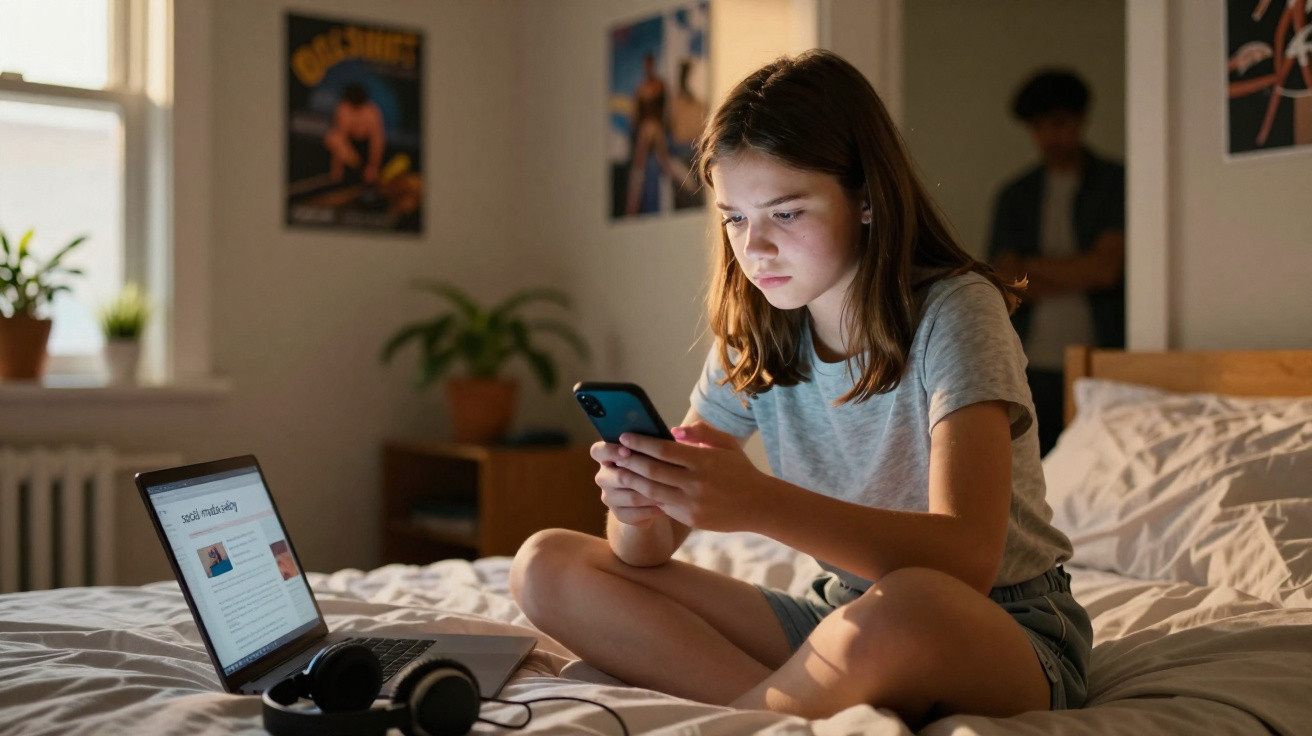
The social network is once again facing a wave of criticism.
Survey findings on risky health content among young people
“83% of 15- to 24-year-olds say they have been exposed to content that poses a health risk over the past 12 months.” That is one of the headline findings from an Ifop study conducted for the Fondation April, which specialises in health prevention, and the Fondation Jean-Jaurès, and shared by Le Parisien.
In the same survey, 77% of young respondents said they had changed their behaviour after watching content on a social network-another sign, if any were needed, of how influential these platforms can be.
A TikTok test using a 13-year-old profile and the algorithm
To see what that influence looks like in practice, our colleague set up a fake teenage account: Chloé, aged 13-the minimum age required to register on TikTok. To avoid steering the algorithm, the journalist scrolled through stories at a steady pace and never liked or commented on anything.
At first, the feed looked fairly random: the Marseille star Jul rapping, a giant pizza being showcased, or an airline employee breaking into song. Before long, however, a stream of bleak videos began to dominate, with sadness and distress becoming the prevailing tone.
Quoted by the newspaper, researcher Arthur Grimonpont-author of “Algocratie” (Actes Sud)-explains:
These distress-related contents hold young people’s attention, so they stay connected for as long as possible. That is TikTok’s business model.
Over the following days, the exercise reinforced the idea that the fictional user was being trapped in an algorithmic bubble and bombarded with horrific stories. The videos included self-harm, and even “a desire to kill oneself staged in a glamorous, trendy way”. Our colleague adds:
“Do you want to kill yourself?” It shows us a bath filled with water so we can drown in it. Then images of a coffin loop over and over, as if to show us what we still have to do.
TikTok responds
By way of reminder, we discussed last year a report by the NGO Amnesty International, which provided further evidence of how the social network exposes its youngest users to content that can be harmful. As in this investigation, the algorithm can end up normalising-or even idealising-depression, self-harm, or suicide.
For its part, TikTok replied that “this experiment was designed to achieve a predetermined outcome” and says it is doing everything possible to protect young users. “Nine videos out of ten that violate our rules [are] removed before they are even viewed,” the platform states.




Comments
No comments yet. Be the first to comment!
Leave a Comment