
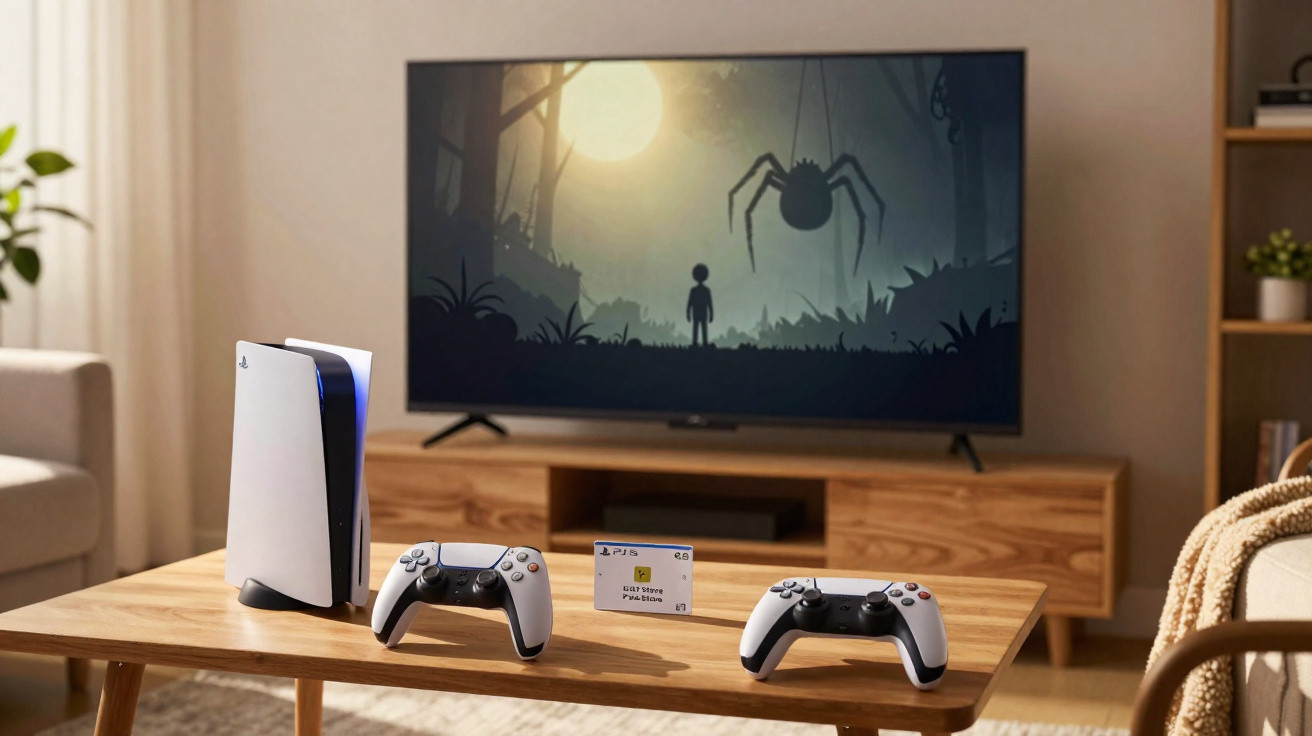
For the next few days, two of the most respected indie platformers of the past 15 years are selling for almost nothing on PS4 and PS5. With both titles reduced at the same time, anyone who skipped them originally can pick up what is quietly one of the best budget pairings on Sony’s store.
A landmark indie for the price of a mobile app
The main offer is straightforward: Limbo, Playdead’s breakout game from Denmark, has been cut to €1 on the PlayStation Store. The offer ends on 12 March and covers the PS4 release, which runs on PS5 through backwards compatibility.
Limbo is 90% off on PlayStation Store, dropping the price to €1 on PS4 and PS5 via backward compatibility until 12 March.
First released in 2010, Limbo rapidly became a defining example of what smaller studios could deliver without blockbuster spending. Its high-contrast black-and-white look, clever environmental puzzle design and quietly unsettling mood helped it secure a 90/100 score on Metacritic, cementing it as one of the era’s standout indie releases.
On PlayStation, it sits in the PS4 catalogue, but PS5 owners can simply download and play it as normal. Trophies and save data work through the standard PlayStation system, so it feels as seamless as any modern release.
What makes Limbo still worth playing in 2026
Limbo is a side-scrolling puzzle platformer built around guiding a young boy through a dangerous world of traps, physics-driven obstacles and eerie silhouettes. There is no spoken dialogue, almost no on-screen text, and the narrative is left deliberately unexplained.
The absence of dialogue pushes players to read the environment, turning each screen into a small puzzle of both mechanics and meaning.
That minimalist approach is a big reason the game made such an impression on Xbox Live Arcade, and it remains distinctive today. Most challenges are rooted in simple verbs-dragging boxes, operating levers, judging jump timing-but the combinations stay varied and surprising all the way through.
The fear factor is more psychological than graphic. The sequence involving the giant spider is still notorious, and the ever-present chance of abrupt, almost slapstick death keeps the pressure on. Regular checkpoints keep things from becoming punishing, so trial and error becomes part of the intended cadence rather than a setback.
How long it takes and who it’s for
Limbo is a brief experience. Many players will reach the credits in roughly four hours, and quicker still if they already remember the solutions. Trophy hunters can extend the playtime by pursuing goals tied to careful exploration or completing the game with minimal deaths, which adds a bit of replay value.
- Genre: Puzzle platformer
- Estimated length: About 4 hours
- Best for: Fans of atmospheric games, puzzle lovers, players with limited time
- Age feel: Dark themes, but no explicit gore
If you’re used to sprawling 80-hour action RPGs, Limbo is closer to sitting down with a tightly edited film and finishing it in one go. That compactness is part of the draw-particularly at a €1 asking price.
Inside, the even higher-rated follow-up, is also on sale
The deal isn’t limited to Limbo. Its spiritual successor, Inside, is also heavily discounted on the PS Store, falling to €2.49 thanks to the same 90% reduction.
Inside expands on Limbo’s ideas with richer environments, more complex set-pieces and an even higher 93/100 Metacritic score.
Arriving in 2016, Inside polishes almost everything that made Limbo memorable. The visuals are still largely monochrome, but with stronger colour accents and more detailed animation work. The camera work feels more fluid, the staged sequences are bigger, and the narrative suggestions are even more unnerving.
As with Limbo, it’s a side-scrolling puzzle platformer centred on environmental challenges. You play as an unnamed boy fleeing shadowy pursuers, guard dogs and disturbing experiments, with the plot communicated entirely through movement and staging. A lot of critics regard it as one of the defining indie games of its generation.
Short, intense, and designed to be finished
Inside is similarly sized to Limbo. Plan for around four hours on a first run, potentially a little longer if you go looking for hidden areas. During the sale, that puts both games together at around eight hours of carefully shaped content for under €4.
| Game | Price during sale | Metacritic score | Approx. length |
|---|---|---|---|
| Limbo | €1.00 | 90/100 | ~4 hours |
| Inside | €2.49 | 93/100 | ~4 hours |
This sort of concentrated experience is ideal if you can’t spare weeks for a single game. Both can be finished over a weekend, or spread across a couple of evenings after work.
Why these Playdead games still matter
Danish studio Playdead hasn’t put out a new release since Inside in 2016. The team has continued working quietly on a new project and has occasionally shared concept art, but concrete information remains limited. Even with that long gap, Limbo and Inside still show up regularly in conversations about the most influential puzzle platformers.
Limbo and Inside are often used as reference points in game design courses when discussing pacing, visual storytelling and environmental puzzles.
You can see their impact in newer games that favour minimal HUDs, ambiguous storytelling and physics-based problem solving. For players who grew up on big-budget live-service titles, picking up these smaller, self-contained adventures is a quick reminder of how indie design shifted wider expectations.
Good value for new players and returning fans
If you’ve never played either title, this discount is hard to ignore. The price is tiny, the downloads are small, and both games run well on PS4 and PS5 without requiring patches or extra add-ons.
Even if you’ve played them before, there’s a case for buying again. Coming back years later with only half-remembered puzzles can make them feel new in surprising ways. Their stylised presentation also means they’ve aged gracefully, without depending on cutting-edge technical spectacle.
What “indie” really means in this context
Limbo and Inside are frequently labelled “indie games”. In practical terms, that points to development by a relatively small team, initially without direct support from a major publisher. With tighter budgets, the projects could take creative swings that a typical blockbuster sequel might avoid.
For players, that usually means experiences built around mood, experimentation and a strong identity rather than sheer volume. There are no endless side quests or battle passes-each scene is deliberately arranged to deliver a specific feeling or idea.
How to approach these games if you’re used to big action titles
If you mainly play fast shooters or open-world sandboxes, slower puzzle platformers can feel awkward at first. A few small adjustments in approach can help.
- Expect to fail often. Death is part of learning, not a sign you are “bad” at the game.
- Slow down and watch moving parts. Many puzzles are solved by observation rather than reflexes.
- Play with headphones. Sound design is a core part of the atmosphere in both titles.
- Treat each game like a film. Sit down for an evening and commit to reaching the credits.
With that mindset, Limbo and Inside land as compact, high-tension journeys rather than filler between bigger releases. At their current PlayStation Store prices, they’re also among the cheapest ways to try two of the most talked-about indie games of the last decade and a half.

Comments
No comments yet. Be the first to comment!
Leave a Comment