
Amazon has decided to drop the Kuiper name for its satellite internet network. The shift is anything but accidental, coming as the company makes it clear it intends to take on SpaceX.
"We started out modestly, with a small group of engineers and a few sketches on paper. Like most early Amazon efforts, the programme needed a code name, and the team began work under the name 'Project Kuiper'," the e-commerce giant explains in a press release. The label was borrowed from the Kuiper Belt, a ring of asteroids that stretches beyond Neptune’s orbit.
"That code name stayed with us through our early milestones: filing for and receiving our first licences, signing the largest suite of launch contracts in history, completing a prototype mission, and deploying our first full batch of production satellites earlier this year," Amazon continues.
From Project Kuiper to Amazon Leo
But it is now time to step up a gear with a permanent name: Amazon Leo. The choice is straightforward, as it points to “Low Earth Orbit”, the region up to 2,000 kilometres above Earth where the constellation operates.
Amazon signs up more customers
This rebrand marks another phase for the company, which still has to contend with the Starlink juggernaut. SpaceX now has more than 10,000 satellites in orbit, while Amazon currently operates 153. Even so, it is gaining traction with well-known customers such as Sky Brasil, DirecTV Latin America, and Australia’s National Broadband Network.
In addition, it has secured a partnership with airline JetBlue to provide its high-speed connection on the carrier’s low-cost passenger flights. Here too, it is treading on SpaceX’s turf.
Satellite production, customer terminals and the 3,236-satellite target
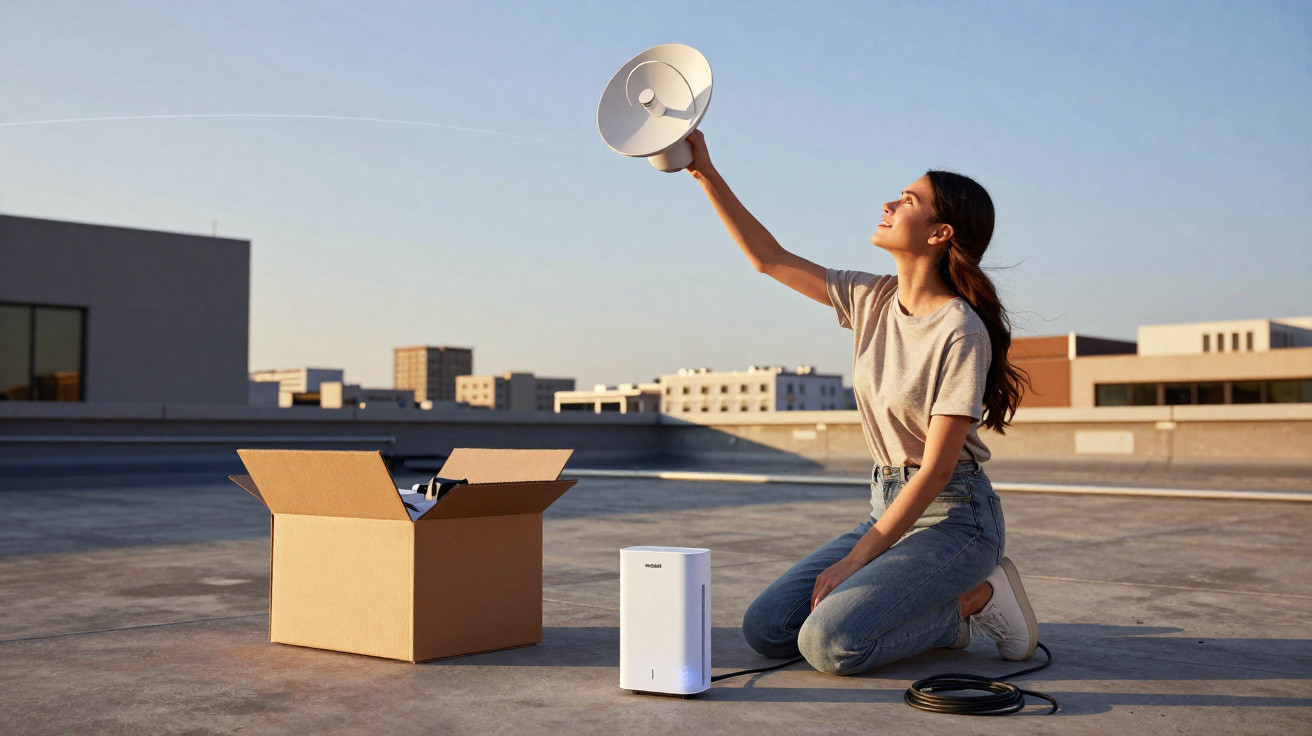
"Our long-term mission remains unchanged, and we are making strong progress towards it. Today we run one of the largest satellite production lines in the world. We have created some of the most advanced customer terminals ever built, including the first commercial electronically steered phased-array antenna able to support gigabit-class speeds," the company says. Ultimately, the Kuiper Leo constellation is expected to comprise 3,236 satellites.
Subscribe to Presse-citron
Amazon plans to lean on its vast ecosystem-especially Amazon Web Services (AWS)-to speed up Leo’s adoption. Starlink may have cause for concern…






Comments
No comments yet. Be the first to comment!
Leave a Comment