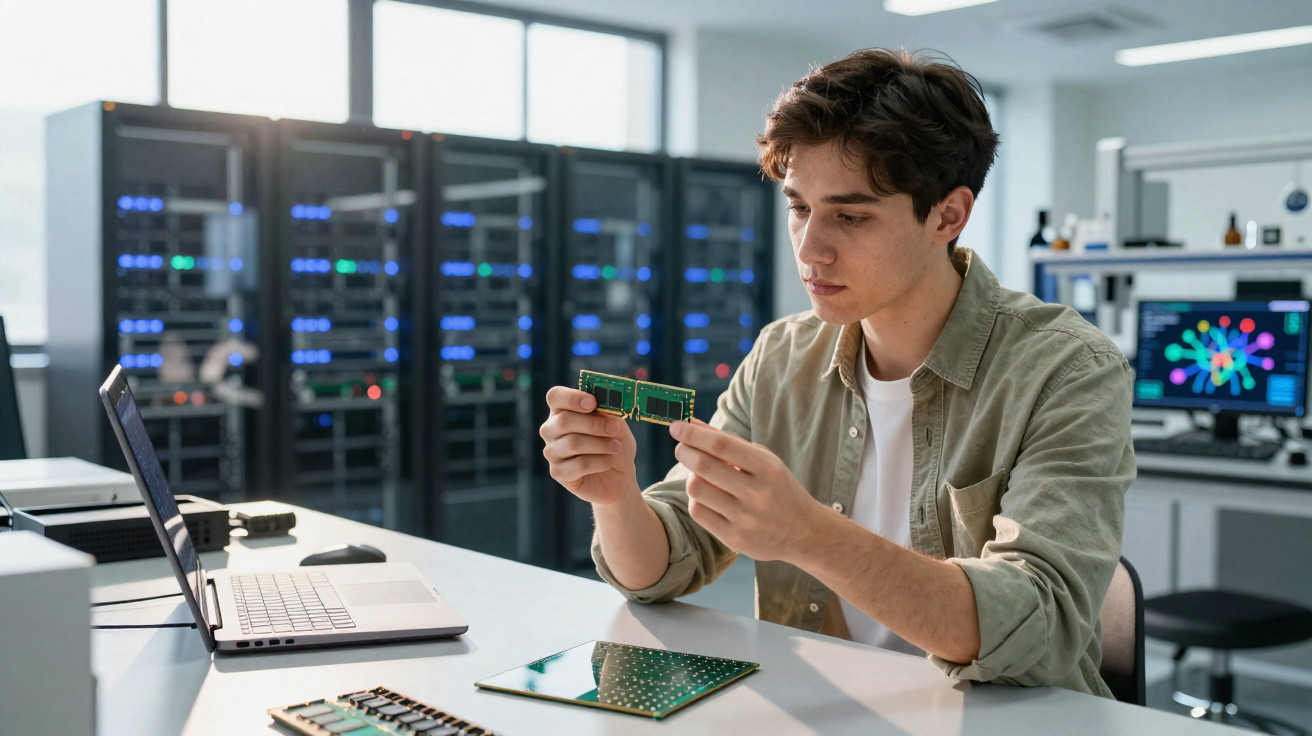
Could the shortage of RAM be here to stay? That is the worrying forecast from a major industry player.
The shortage of DRAM, the RAM used in our electronic devices, has now been ongoing for almost a year. There is little sign of the situation easing, and it may even become a lasting feature of the market. That is the view of Chen Li-Bai, president of Taiwanese computer-components company ADATA. In his view, DRAM manufacturers have no intention of adapting quickly, a stance that is likely to weigh on the market.
AI-driven DRAM shortage
To recap, the DRAM shortage has been brought about by the rise of artificial intelligence. The sector's giants require astronomical amounts of RAM for their data centres. As a result, DRAM makers - Samsung, Micron and SK Hynix - have redirected their output towards HBM (High Bandwidth Memory), leaving the consumer market behind. Micron has even dropped its Crucial brand to focus exclusively on B2B.
The practical consequence is that manufacturers of PCs, smartphones, consoles and every other type of tech product must compete for the available stock. Prices are therefore soaring. This could be described as an “AI bubble”, yet it may actually persist far longer than expected, according to Chen Li-Bai in an interview with Commercial Times:
“After 2030, we will be able to discuss the possibility of an AI bubble in 2040 or 2050.”
A shortage expected to last at least another ten years
Chen Li-Bai believes demand for HBM will keep rising as models expand, across B2B, B2C and government sectors alike. Demand is consequently far above market forecasts and, above all, is being underestimated over the long term. RAM manufacturers initially hesitated to increase output because they feared the bubble would burst and demand would collapse. Li-Bai expects the situation to remain unchanged for at least ten years.
He says the RAM market's three dominant players remain cautious and will adjust production only through gradual, rational expansion. The arrival of new competitors, particularly in China, also takes time. Building factories and then beginning large-scale production requires time, investment and suitable access to equipment. Add the fact that the shortage benefits manufacturers by allowing them to raise their margins, and the result is an explosive mix. As usual, consumers will foot the bill. He stresses that this is not a phase in a conventional supply-and-demand cycle, but a profound structural shift that manufacturers are struggling to address.
Can RAM manufacturers ease the pressure?
Chen Li-Bai's assessment is pessimistic. However, an ever-changing market could prove him wrong. Prices for consumer products are rising sharply; smartphones and PCs are therefore selling less, which in turn makes AI less accessible. Some RAM manufacturers are already hoping to find solutions. SK Hynix, for instance, announced a few weeks ago that it intends to triple its DRAM production by 2034. The most optimistic forecasts place the end of the crisis in 2027-2028.












Comments
No comments yet. Be the first to comment!
Leave a Comment