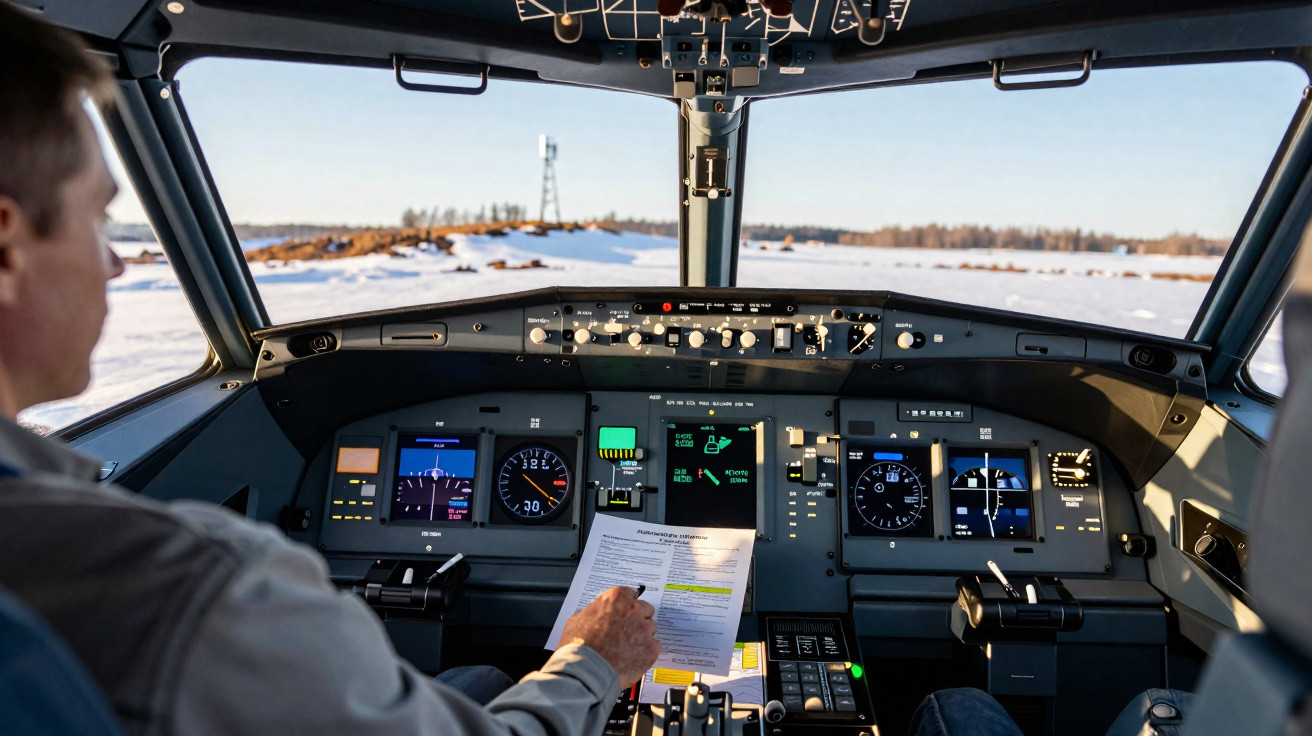
The US Federal Aviation Administration (FAA) yesterday (26) issued three new Airworthiness Directives (ADs) placing operational restrictions on several Boeing aircraft types because of the risk that 5G networks could interfere with radio altimeters during operations in Canadian airspace.
The new directives - AD 2026-13-10, AD 2026-13-11 and AD 2026-13-13 - cover the Boeing 747-8/-8F, 777 and 787-8/-9/-10, as well as most of the 737 family. The exception is certain Classic-series 737-200/-200C aircraft fitted with the SP-77 flight-control system.
According to the FAA, radio altimeters operating in the 4.2–4.4 GHz range cannot be treated as reliable if they are affected by 5G networks using the lower C-band, between 3.7 and 3.98 GHz, during operations in Canada, as reported by Aviacionline, an AEROIN partner.
FAA 5G restrictions for Boeing aircraft in Canada
The requirements will take effect on 1 July 2026, the same day Canada will remove the 5G exclusion and protection zones around its airports. Following this regulatory change, only aircraft fitted with radio altimeters deemed “tolerant” of interference will be able to operate without further restrictions.
For aircraft whose radio altimeters are not certified as interference-tolerant, the FAA has instructed operators to review the limitations and, in certain cases, the operating procedures contained in the Aircraft Flight Manual (AFM) before conducting any flight in Canadian airspace.
The restrictions differ by aircraft type. Operators of non-modified Boeing 747 and 777 aircraft will be barred from dispatching flights to Canadian airports or landing in Canada.
For Boeing 787 aircraft, the restrictions apply to Minimum Equipment List (MEL) items related to braking and anti-skid systems. Landings on runways with a runway condition code of 1 or 0 are also prohibited, while specific procedures must be followed for landing-distance calculations and the manual use of thrust reversers, speedbrakes and autothrottle.
For the Boeing 737 aircraft included in the new directive, additional limitations and procedures have been introduced for ILS approaches, speedbrake deployment, go-arounds and missed-approach procedures.
Radio altimeter upgrades and temporary FAA measures
Aircraft equipped with radio altimeters meeting the FAA’s interference-tolerance criteria will not need to comply with these restrictions. The agency said that upgrading the equipment removes the operational limitations set out in the new directives.
The action forms part of the FAA’s ongoing response to the risk of interference between 5G networks and radio altimeters, an issue that resulted in several directives being issued in the United States between 2021 and 2023. In Canada, the new requirements have been introduced because of regulatory changes made by Innovation, Science and Economic Development Canada (ISED).
The FAA also stated that the restrictions are temporary while it monitors the effects of Canada’s regulatory changes. Airlines operating regular services to the country will need to determine which aircraft in their fleets have interference-tolerant radio altimeters and assess possible equipment upgrades to limit operational disruption.
















Comments
No comments yet. Be the first to comment!
Leave a Comment